
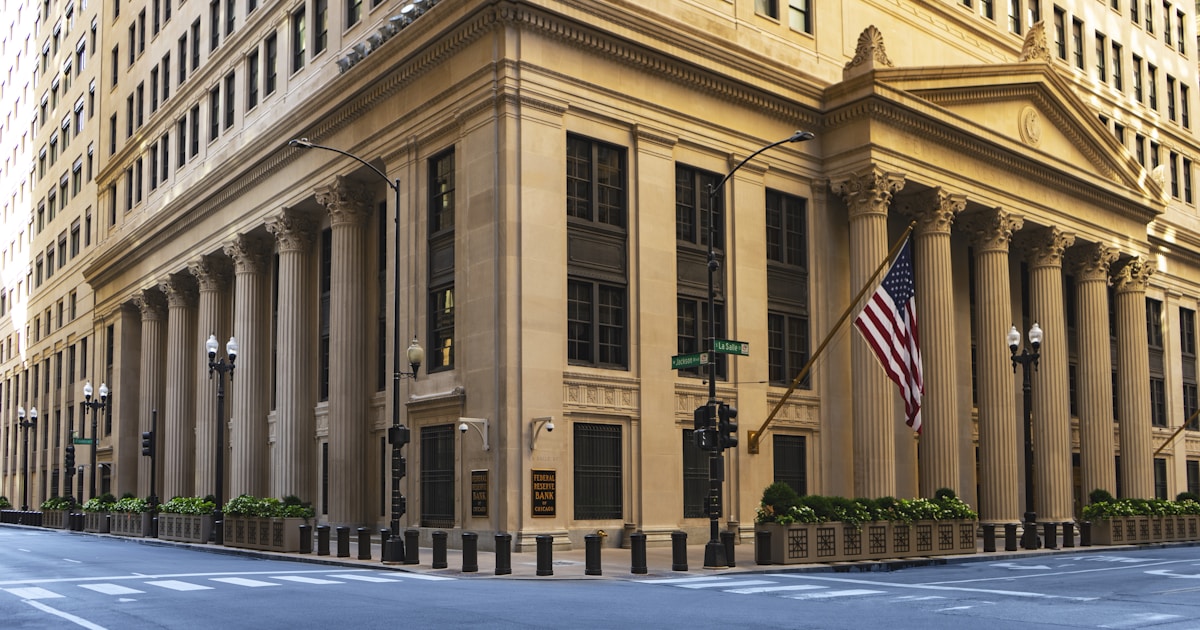
Federal Reserve Chair Kevin Warsh gavels his second Federal Open Market Committee meeting to order today. The two-day session runs July 28-29, 2026, and it is the first FOMC gathering since May’s stubborn 4.1% PCE print pushed hike probabilities back into the conversation and since the June meeting held rates unchanged at 3-1/2 to 3-3/4 percent.
Unlike the March, June, September, and December meetings, the July session does not include a Summary of Economic Projections, so investors will parse the statement wording and Chair Warsh’s press conference for guidance rather than dot-plot revisions. That places unusual weight on a single 45-minute Q&A on Wednesday afternoon.
Warsh’s hawkish reputation meets a hot data tape
Warsh was sworn in as chair on May 22, 2026, and the FOMC formally selected him as chair the same day. He inherited a policy stance that had been progressively eased over three consecutive 25-basis-point cuts in the second half of 2025 — September, October, and December — bringing the target range from 4.25-4.50% down to the 3.50-3.75% level that still holds today.
His June meeting produced a unanimous 12-0 vote to keep policy on hold. That silence has ended. Since June:
- The May PCE reading landed at 4.1%, the highest headline print since 2023.
- Consumer confidence for July fell as households flagged higher expected prices.
- Geopolitical tension around Iran has added a fresh inflation-risk premium to oil and to breakeven inflation.
Warsh’s own history is well known to the rates market. As a Fed governor from 2006 to 2011, he was the lone dissenter in favor of tighter policy during parts of the post-crisis easing cycle, arguing that asset-market froth was underappreciated. Bond desks have spent the past six weeks reading his early speeches for signals that the June hold was a pause rather than a plateau.
What the FOMC has actually done, 2025-2026
| Meeting date | Action | Target range (%) | Chair |
|---|---|---|---|
| Sep 17-18, 2025 | Cut 25 bps | 4.00-4.25 | Powell |
| Oct 28-29, 2025 | Cut 25 bps | 3.75-4.00 | Powell |
| Dec 9-10, 2025 | Cut 25 bps | 3.50-3.75 | Powell |
| Jan 27-28, 2026 | Hold | 3.50-3.75 | Powell |
| Mar 17-18, 2026 | Hold | 3.50-3.75 | Powell |
| Apr 28-29, 2026 | Hold | 3.50-3.75 | Powell |
| Jun 16-17, 2026 | Hold (unanimous) | 3.50-3.75 | Warsh |
| Jul 28-29, 2026 | TBD | ? | Warsh |
The rate path, at a glance
What bond desks are watching
Three questions dominate the rates-market conversation heading into the statement release on Wednesday at 2:00 p.m. ET:
1. Does the statement drop “in support of” language?
The June statement said the Committee acted “in support of the Federal Reserve’s dual mandate.” A shift toward language emphasizing that inflation is “unacceptably above” the 2% goal — a phrase Warsh has used in past commentary — would be read as opening the door to a September hike, even if July itself is a hold.
2. Any dissents?
The June vote was 12-0. A hawkish dissent this time — even a single one — would immediately reprice the front end of the curve. Watch the regional bank presidents on the roster who have written recently about services inflation.
3. Balance-sheet housekeeping
The post-QT reinvestment mix tilted meaningfully toward Treasuries and away from MBS in the trailing year. The July statement is unlikely to formally revise the reinvestment framework, but any hint about the mix would matter for MBS spreads and for coupon supply projections that Treasury will refresh at the next quarterly refunding.
Credit and issuance implications
Investment-grade issuers pulled forward calendars into early July when the June minutes read more balanced than expected. If Warsh’s press conference sounds meaningfully more hawkish than the statement itself — a common Warsh pattern from his governor days — primary desks may see August windows narrow again. High-yield markets, which have been supported by tight all-in yields and constrained new supply, are more exposed to a spread widening if 2-year yields push back through the June highs.
The IPO calendar, which set a $251 billion first-half record, is also rate-sensitive. Bookrunners have been guiding late-summer deals against a stable-to-falling front end; a materially more hawkish Fed shifts pricing dynamics for growth-heavy issuers whose implied cost of capital is highly sensitive to two-year yields.
Bottom line
The consensus base case is another hold, but the risk distribution is asymmetric: a hike would be a genuine shock, a hold with hawkish forward guidance would still lift the front end, and a straight-down-the-middle hold with cautious guidance would rally rates modestly. Warsh’s press conference is the true event risk. His first year in the chair will be defined less by any single meeting than by whether he can re-anchor inflation expectations without breaking the credit cycle he inherited.
Sources
- Federal Reserve — FOMC meeting calendars
- Federal Reserve — Open Market Operations (rate history)
- Federal Reserve — Warsh sworn in as Chair (May 22, 2026)
- Federal Reserve — June 17, 2026 FOMC statement
- ECMSource — May PCE Hits 4.1%; Hike Odds Jump to 68%
- ECMSource — Fed’s Post-QT Pivot
Disclosure: It is for informational purposes only and is not investment advice.