
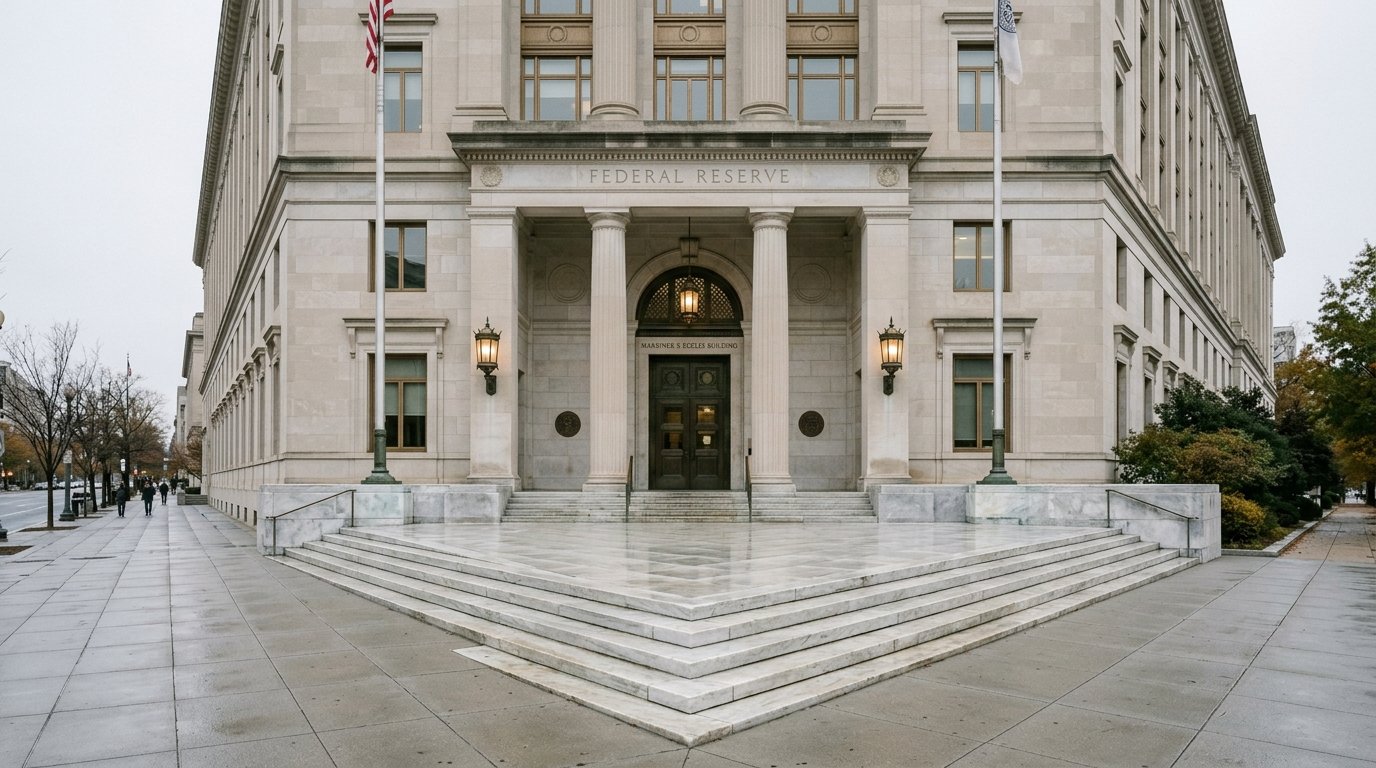
The Federal Reserve Board finalized changes to enhance the transparency and public accountability of its supervisory stress test and reduce volatility in stress test-related capital requirements on September 30, 2026. The regulatory package introduces two-year averaging for the Stress Capital Buffer starting in 2028, opens supervisory models to annual public comment, and subjects Wall Street trading desks to two distinct market shock tests each year. By smoothing regulatory capital fluctuations, the overhaul gives large banks greater balance-sheet predictability for corporate lending, debt syndication, and capital returns.
For institutional capital markets, the stress test is not merely an annual regulatory exercise; it directly dictates how much Common Equity Tier 1 (CET1) capital the largest domestic and foreign banks must hold above statutory minimums. Under the prior regime, small shifts in hypothetical recession parameters or internal Fed loss models created unpredictable, single-year swings in required equity buffers, frequently disrupting syndicated credit facilities, bond underwriting appetite, and multi-year share buyback plans.
Key Takeaways for Capital Markets
- Two-Year SCB Averaging: Under the second final rule, the Board will average results from the two most recent annual supervisory stress tests when calculating stress capital buffer requirements starting in 2028.
- Dampened Capital Volatility: The finalized changes are likely to reduce year-over-year volatility in capital requirements by approximately 50 percent and are not expected to materially affect aggregate capital requirements across the banking system.
- Dual Market Shocks: Banks with large trading books will now be tested against two global market shock components each year, with the Board using the shock that produces the largest losses to calculate results.
- Model Transparency: The first final rule requires the Federal Reserve Board to invite public input annually on stress test scenarios and any material model changes, ending the legacy "black box" approach.
How Two-Year Averaging Smooths Capital Requirements
The core mechanism governing large bank capital distribution is the Stress Capital Buffer (SCB). Established under Dodd-Frank and Basel III frameworks, a bank’s required CET1 ratio consists of a 4.5% statutory floor, a risk-based Stress Capital Buffer determined by peak-to-trough projected losses under the severely adverse scenario plus four quarters of planned common stock dividends, and any applicable G-SIB surcharge. In previous cycles, such as the June 2026 supervisory stress test results where 32 participating institutions absorbed hypothetical losses, individual bank buffers often swung sharply between annual tests.
Starting with the 2028 supervisory cycle, the Federal Reserve will calculate each bank’s effective SCB by taking the arithmetic mean of its two most recent annual test results. The delay to 2028 ensures that only models vetted through the new public-comment process will factor into multi-year calculations.
| Regulatory Feature | Prior Framework | Finalized 2026 Framework |
|---|---|---|
| SCB Calculation | Single-year point-in-time stress loss | Two-year rolling average (effective 2028) |
| Capital Requirement Volatility | Subject to sharp annual swings | Reduced by approximately 50 percent |
| Global Market Shock (GMS) | Single market shock component | Two distinct market shocks; largest loss applied |
| Supervisory Model Changes | Internal revisions without notice | Annual public comment on scenarios and models |
| Fee Income Modeling | Uniform noninterest income projections | Proposed model capturing business model diversity |
Illustrative SCB Smoothing Impact
To understand the quantitative benefit, consider a hypothetical regional or money-center bank subject to consecutive annual stress losses. Suppose the firm experiences a 3.4% projected loss in Year 1 and a 4.6% projected loss in Year 2 due to localized commercial real estate stress in the hypothetical scenario. Under the old single-year rule, the bank’s SCB would immediately jump by 1.20 percentage points (120 basis points), forcing management to restrict capital distributions or curtail risk-weighted asset expansion. Under the two-year averaging rule, the bank’s Year 2 SCB equals (3.4% + 4.6%) / 2 = 4.0%, cutting the single-year regulatory leap from 120 basis points down to 60 basis points.
Dual Global Market Shocks for Trading Banks
For Tier 1 Wall Street dealers with massive capital markets exposures, the final rule revamps the Global Market Shock (GMS). Historically, institutions with significant trading operations were evaluated against a single synthetic financial shock that combined equity drawdowns, widening credit spreads, and foreign exchange turmoil. Beginning with the 2027 stress test cycle, the Federal Reserve will evaluate these institutions against two distinct global market shocks each year, binding each bank to whichever scenario produces the larger loss.
This dual-shock structure addresses a long-standing criticism from both bank treasurers and regulators: a single hypothetical scenario often optimized for one type of risk exposure (such as a sudden interest rate surge) while understating vulnerabilities to another (such as a credit spread blowout or sovereign debt crisis). By applying the more punitive of two tailored market shocks, supervisory testing prevents dealer desks from structuring their balance sheets around a single expected regulatory scenario.
Proposed Overhaul of Fee and Noninterest Income
Alongside the two finalized rules, the Board published an accompanying proposal with a 60-day public comment window targeting noninterest fee income. The proposal seeks to replace the Board’s uniform noninterest income stress model with a revised framework that better distinguishes between business models, such as trust and custody banks, investment banking advisory franchises, and retail consumer transaction processors. Commenters have argued that uniform stress assumptions unfairly penalized fee-generating institutions whose advisory and custody revenues do not follow typical commercial loan loss cycles during recessions.
Market Transmission and What to Watch Next
Because the Federal Reserve explicitly noted that the finalized rules are not expected to materially affect aggregate capital requirements across the banking sector, the primary transmission mechanism to capital markets is structural stability rather than capital relief. Stabilizing required equity buffers allows corporate treasurers, institutional debt syndicates, and primary bond dealers to operate with greater horizon certainty.
Key milestones for market participants to monitor include the publication of the noninterest income rule in the Federal Register, the release of the 2027 stress test hypothetical scenarios under the newly instituted public input process, and the formal initiation of two-year SCB averaging in 2028. For a wider perspective on bank capital plumbing, explore the ECMSource market framework.
Sources & Further Reading
- Federal Reserve Board: Final Rules on Stress Test Transparency and Capital Requirement Volatility, September 30, 2026.
- ECMSource: All 32 Banks Pass Fed 2026 Stress Test in B Scenario, June 24, 2026.
- ECMSource: Capital Markets & Financial Institutions Guide.
Disclosure: This article is for informational purposes only and is not investment advice.