
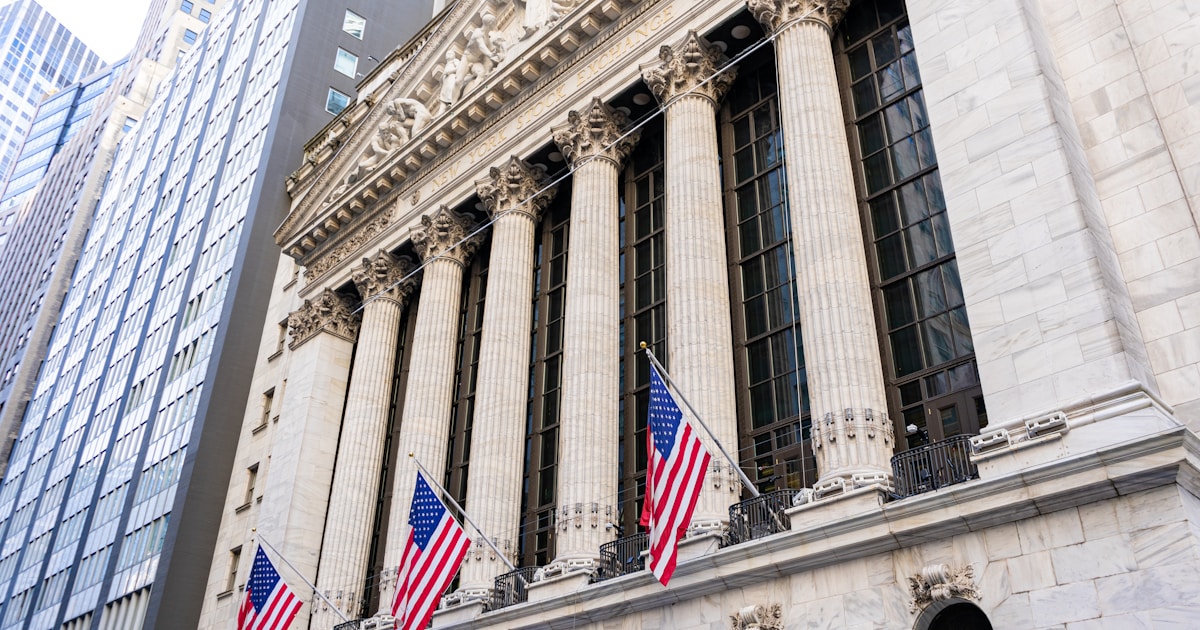
TL;DR. An IPO is the moment a private company sells stock to the public for the first time. The mechanics behind it are not magic: a registration statement (the S-1) is filed with the SEC, investment-bank underwriters spend a few weeks asking institutional investors what they would pay for the stock (the bookbuild), the shares get allocated to those investors the night before trading opens, and an option called the greenshoe lets the underwriters stabilize the price in the first 30 days. This guide walks the timeline end to end.
The IPO timeline at a glance
From the first underwriter pitch to the opening trade, a US IPO typically takes six to nine months. Some pieces are flexible — companies can stay in confidential review for as long as they want — but the regulatory sequence is fixed.
Step 1: The S-1 and the quiet period
The legal centerpiece of a US IPO is a registration statement filed with the Securities and Exchange Commission. The SEC defines a registration statement as “a filing with the SEC making required disclosures in connection with the registration of a security, a securities offering or an investment company under federal securities laws,” and notes that Form S-1 is the most common registration form used for IPOs.
The S-1 is long for a reason. It includes audited financial statements, a description of the business and its competitive position, every material risk factor, who the executives are, how they are paid, who owns what, and what the company plans to do with the cash it raises. Anyone can read it for free on the SEC’s EDGAR system the moment it becomes public.
From the day the S-1 is filed until the day the SEC declares it “effective,” the company is in what practitioners call the quiet period. The SEC explains that during this window an issuer “must ensure that its offering-related communications comply with the federal securities laws,” and that violations are known as gun-jumping. In plain English: no hyping the deal, no selective interviews about the upcoming offering, no leaks of unaudited numbers. Sales material outside the prospectus can get the SEC to delay or refuse the offering.
Step 2: Bookbuilding — how the price actually gets set
While the SEC reviews the S-1, the underwriters take the company on the road. The first version of the S-1 lists a price range, not a price. The roadshow’s job is to figure out what the real price is.
This process is called bookbuilding. The lead underwriters circulate the deal to institutional investors — mutual funds, hedge funds, sovereign wealth funds, pension plans — and ask them to indicate how many shares they want and at what price. Those indications go into a centralized “book” on the bankers’ desks. They are non-binding, but a sophisticated PM who walks away from a confirmed indication will struggle to get an allocation on the next deal.
The book tells the underwriters two things: how strong demand is at each price, and which investors are likely to flip versus hold. When demand is far above supply at a given price, the bank can raise the range — what the market calls a “marked-up” deal. When demand is thin, the bank either drops the range, cuts the size of the deal, or pulls the IPO and waits for better conditions.
The final price is set on the evening before the first day of trading, after the SEC declares the S-1 effective. That single number — the offering price — is what the company actually receives for each share (minus underwriting fees, typically 6–7% for a US IPO).
Step 3: Allocation — who gets the shares?
An IPO is not first-come, first-served. The underwriters decide who gets shares, in what size, and on what terms. Allocations almost always go to institutional investors first; retail investors usually see only a small slice, often routed through their brokerage.
The rule that polices this process is FINRA Rule 5130, which prohibits FINRA members from “sell[ing], or caus[ing] to be sold, a new issue to any account in which a restricted person has a beneficial interest.” Restricted persons include officers, directors, and employees of broker-dealers, finders, fiduciaries to the underwriter, portfolio managers at financial institutions, and the immediate family of those individuals (subject to specific tests). The rule exists to keep IPO allocations from being used as quiet kickbacks to people who steer business to the underwriter.
For everyone else, the allocation arrives by email or phone the morning of the first day. A “full fill” means the investor gets every share they indicated for. More often, large orders are scaled back so that no single account dominates the float.
Step 4: The greenshoe — why the price holds in the first 30 days
The most misunderstood feature of an IPO is the greenshoe, also called the over-allotment option. It is the underwriter’s most powerful price-management tool, and almost every US IPO has one.
Here is the mechanic in plain language. On the day of pricing, the underwriters do not sell the offering size. They sell that size plus 15% more. They do this by going short — they have promised investors shares they do not yet own. The greenshoe is a contractual option giving the underwriters the right, for up to 30 days after pricing, to buy that 15% block from the issuer at the offering price, which closes their short.
Two outcomes are possible:
- If the stock trades above the offering price, the underwriters exercise the greenshoe — they buy 15% more shares from the company at the offering price, deliver them to investors, and the company raises a bigger pot.
- If the stock trades below the offering price, the underwriters don’t exercise. They buy the 15% short cover from the open market instead, which is allowed under Rule 104 of Regulation M as a “syndicate covering transaction.” Those market purchases push the price back up. The underwriters net out flat — they shorted at the offer price and bought lower — and the issuer’s stock gets a 30-day floor.
The greenshoe is named after the Green Shoe Manufacturing Company — the first issuer to grant one in a 1960s offering. It is permitted at up to 15% of base shares, and 15% is the convention almost every US IPO follows.
Step 5: After the IPO — stabilization, lock-up, and the first cliff
The first day’s opening trade is set by an auction, not the offering price. If the offering price is $25 but the auction prints at $32, the first day’s “pop” of 28% is real for retail buyers — but the company still received only $25 per share. The classic critique of IPO pricing is that this gap (underpricing) is money the issuer left on the table.
For the first 30 days, the underwriters can quietly support the stock through the greenshoe mechanic above. After that, two events matter:
- The 25-day quiet period for analyst research, after which the underwriting banks’ own analysts begin publishing on the stock. This often coincides with a wave of “buy” ratings — which is exactly why investors discount those reports.
- The lock-up expiry, typically 90 to 180 days after the IPO, when insiders and pre-IPO shareholders are first allowed to sell. We covered this in detail in IPO Lock-Up Periods Explained: When Insider Selling Hits.
How active is the US IPO market right now?
IPO activity is wildly cyclical. The boom of 2021 was a once-a-decade outlier; the bust of 2022–2023 was its mirror image. By 2025 the market had recovered to roughly its long-run average, and 2026 is on pace to track that.
| Year | US IPOs filed | Context |
|---|---|---|
| 2020 | 480 | SPAC wave begins |
| 2021 | 1,035 | All-time record; SPAC peak |
| 2022 | 181 | Fed hikes; IPO window slams shut |
| 2023 | 154 | Trough year |
| 2024 | 225 | Window cracks open |
| 2025 | 347 | Recovery; July hit 37 IPOs |
| 2026 YTD | 179 | On track for a near-normal year |
Common mistakes investors make
- Confusing the offer price with the open price. The “IPO price” you read about is what institutions paid. The first price retail typically transacts at is the opening auction price, which is usually higher in hot deals.
- Treating the first day’s pop as performance. Academic work on IPO underpricing (the gap between offer price and first-day close) has shown for decades that the pop is a transfer from the issuer to allocated investors, not new value created by trading.
- Forgetting the lock-up. The first sustained price discovery often happens at lock-up expiry, when insider supply suddenly arrives. Modeling the float on day one is misleading; what matters is what the float looks like at day 180.
- Reading underwriter research as independent. The same banks that priced the deal publish the first wave of analyst notes after the 25-day quiet period. The structure is legal; the conflict is real.
What to learn next
If you want to keep going on the public-markets plumbing, two related explainers pair well with this one: IPO Lock-Up Periods Explained, which picks up where this guide ends, and What Is WACC?, which explains how the cost of capital newly-public companies advertise to investors actually gets computed.
Sources
- SEC Investor.gov — Registration Statement (Form S-1)
- SEC Investor.gov — Quiet Period
- SEC Investor.gov — Initial Public Offering (IPO)
- SEC EDGAR — Filing search (S-1 / 424B)
- FINRA Rule 5130 — Restrictions on the Purchase and Sale of Initial Equity Public Offerings
- 17 CFR 242.104 — Regulation M Rule 104: stabilizing and syndicate covering transactions
- stockanalysis.com — US IPO statistics by year
Disclosure: It is for informational purposes only and is not investment advice.