
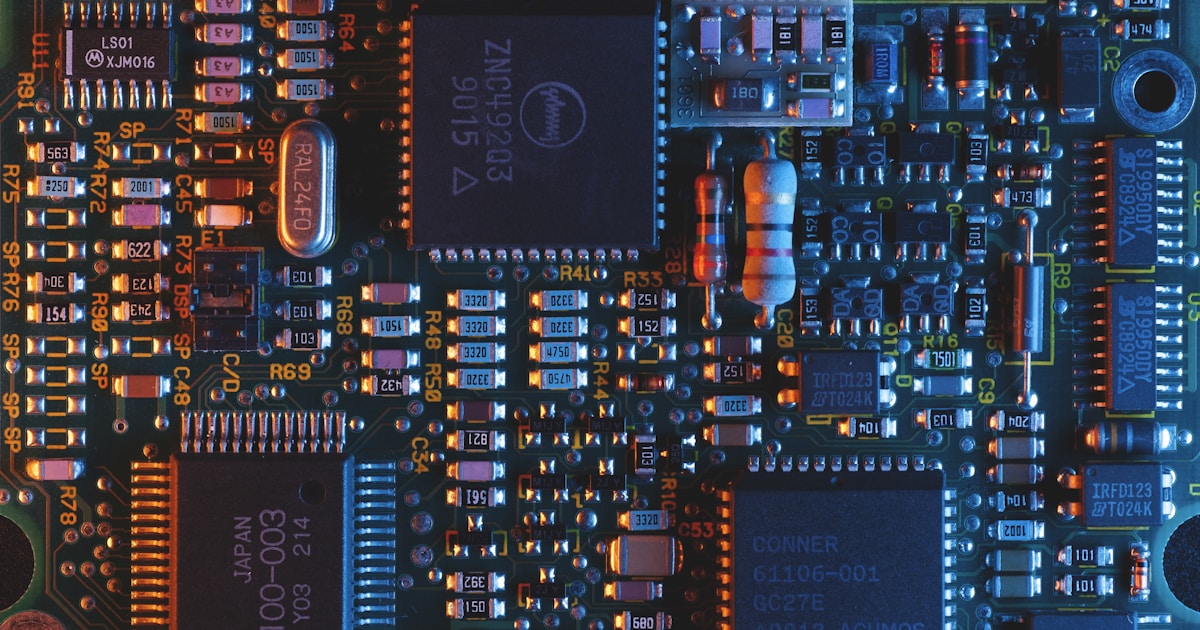
OpenAI on Wednesday unveiled Jalapeño, its first custom-designed AI inference chip, co-engineered with Broadcom (NASDAQ: AVGO) and aimed squarely at one of the most expensive line items in the generative-AI economy: the cost of serving large language models at scale. The announcement, made June 24, 2026 and covered by TechCrunch and Reuters, formalizes a partnership the two companies first signaled in October 2025 and pushes OpenAI into the same custom-silicon club as Google, Amazon, Meta and Microsoft.
Broadcom shares rose 3.4% on the morning of the unveiling, according to CNBC’s market coverage, against a tape that was otherwise weak for mega-cap technology: the Nasdaq Composite slipped 0.43% and the S&P 500 closed essentially flat per Google Finance market snapshots. AVGO needed the win — the stock had been under pressure since early June, and the Jalapeño reveal gave investors the first concrete OpenAI deliverable since the original partnership announcement nearly nine months earlier.
What Jalapeño is — and what it is not
Jalapeño is an inference chip. That distinction matters. AI workloads split cleanly into two phases. Training is the multi-month, capital-intensive process of teaching a model from raw data — it favors flexible, high-throughput GPUs and is where Nvidia’s H100/Blackwell stack has dominated. Inference is the run-time step that fires every time a user types a ChatGPT prompt — far more predictable in shape, far more cost-sensitive, and increasingly a target for purpose-built ASICs that trade away GPU flexibility for performance-per-watt at a known workload.
Greg Brockman, OpenAI’s President, framed the rationale plainly in the TechCrunch interview: “We have a deep understanding of the workload. We’ve really been looking for specific workloads that are underserved.” That sentence is the entire ASIC thesis — if you know the shape of the math you have to do a trillion times a day, you can build silicon that does only that math, and you can do it cheaper than a general-purpose GPU.
What Jalapeño is not:
- A training replacement. Pre-training of OpenAI’s frontier models is expected to continue running on Nvidia hardware for the foreseeable future, per TechCrunch’s reporting.
- A merchant chip. Jalapeño is internal silicon, in the same family as Google’s TPU and Amazon’s Trainium — you cannot buy one in a box.
- Fully deployed. TechCrunch reports the chip is still in testing; commercial roll-out at scale has not been timetabled publicly.
Broadcom’s role and why AVGO moved
Broadcom is the silicon co-design partner. In practice that means OpenAI brings the workload spec and intellectual property for the data-flow architecture; Broadcom contributes its custom-ASIC design IP — the same library it has used for Google’s TPU and other hyperscaler chips — and shepherds the design through a manufacturing partner. Neither company disclosed the foundry or process node for Jalapeño in the June 24 announcement.
The financial logic for AVGO is straightforward: every hyperscaler custom-chip program flows tens of billions of dollars of revenue into Broadcom’s AI semiconductor segment over its lifecycle, on revenue that is contracted and stickier than merchant GPU sales. Broadcom does not break out per-customer ASIC revenue, but the company has previously called out three large hyperscaler customers driving its AI silicon ramp; OpenAI is widely understood by analysts to be among them.
| Hyperscaler | Custom AI chip | First public mention | Workload focus |
|---|---|---|---|
| TPU (v1 → v6/Trillium) | 2016 | Training + inference | |
| Amazon (AWS) | Inferentia, Trainium 1/2 | 2018 / 2021 | Inference, then training |
| Meta | MTIA v1, v2 | 2023 | Ranking + inference |
| Microsoft | Maia 100 | Nov 2023 | Azure AI inference |
| OpenAI | Jalapeño | June 24, 2026 | LLM inference |
The session, in context
The session bracketed a tale-of-two-tapes day for AI hardware. AVGO climbed on the partnership signal while several large-cap software and infrastructure names sold off — Oracle (ORCL) fell 4.62%, Microsoft (MSFT) fell 2.27% and Palantir (PLTR) fell 2.73%, per Google Finance most-active screens. Micron (MU) also surged on a strong earnings print after the bell, a separate but reinforcing data point for the AI-memory complex.
What it means for Nvidia
The natural question every time a hyperscaler ships custom silicon is whether Nvidia’s (NASDAQ: NVDA) addressable market shrinks. The realistic answer for now is more nuanced than the headline implies.
First, training is still GPU territory. The frontier-model arms race that drove three years of Nvidia revenue growth runs on flexibility and software ecosystem — CUDA, NCCL, the entire developer stack — that no hyperscaler ASIC has replicated. OpenAI’s continued reliance on Nvidia for pre-training underlines that point.
Second, inference is a different fight. Inference workloads scale linearly with usage, not with model size, and they are where token economics get measured against gross margin. A 20% reduction in per-token compute cost on the inference side compounds into billions over a year at OpenAI scale — which is precisely why every hyperscaler with the volume to amortize ASIC NRE costs has built one.
Third, this is a multi-year ramp. Even after Wednesday’s announcement, Jalapeño has to clear silicon validation, software porting, and capacity build-out before it meaningfully displaces GPU spend. None of that erodes the next several quarters of Nvidia data-center revenue. It does, however, harden the medium-term competitive moat around custom silicon — which is exactly what Broadcom shareholders bought into on Wednesday.
Bottom line
Jalapeño is the second large positive catalyst for the AI-hardware complex in 24 hours, alongside Micron’s earnings beat after the close. Together the two prints sketch the same picture from different angles: the AI build-out is still spending hard, but the dollars are increasingly going to specialized silicon and high-bandwidth memory rather than to broad software multiples. That is bullish for the picks-and-shovels names — AVGO, MU and select equipment makers — and a tougher tape for the broader application-software cohort that has been bleeding multiple for a month.
Sources
- TechCrunch — OpenAI unveils its first custom chip built by Broadcom (June 24, 2026)
- CNBC — Broadcom stock needs a win; OpenAI-designed Jalapeño chip might do the trick
- Google Finance — US most-active stocks and index snapshots, June 24, 2026
- Google Cloud — TPU product page (history of TPU generations)
- AWS — Inferentia/Trainium product family
- Microsoft — Maia and Cobalt silicon announcement
- Meta AI — MTIA accelerator program
Disclosure: It is for informational purposes only and is not investment advice.