
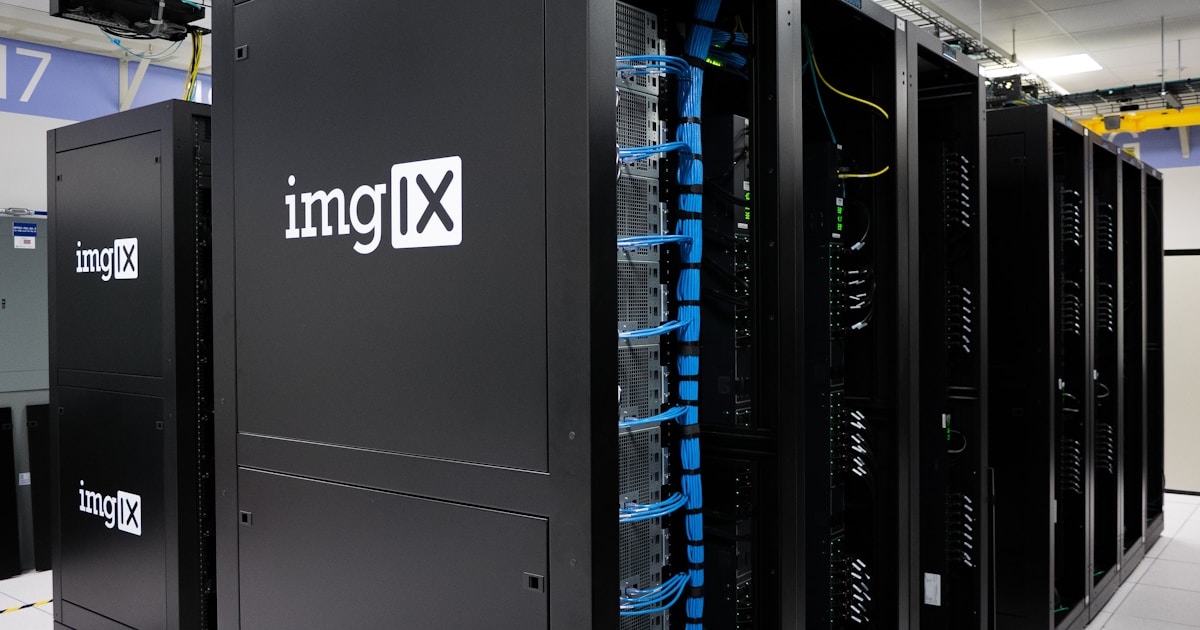
Super Micro Computer (SMCI) shares surged more than 24% on Wednesday, hitting their highest level since late 2025 after the AI server manufacturer reported quarterly revenue that more than doubled from a year earlier — and, critically, showed gross margins snapping back sharply from a concerning dip the previous quarter.
The San Jose-based company posted Q3 fiscal year 2026 revenue of $10.24 billion, up 122.7% year-over-year, with net income of $483 million and diluted earnings per share of $0.72. Gross margins recovered to 9.95% from just 6.30% in the preceding quarter — a rebound that market participants had been watching intently.
More than 127 million SMCI shares changed hands by the close, more than three times the 30-day average volume of 36.4 million, signaling broad institutional participation in the move rather than a thin-market pop.
The Numbers in Full
The table below shows Super Micro’s last three reported quarters, illustrating the revenue trajectory and the key margin recovery that drove Wednesday’s rally.
| Quarter | Revenue | Net Income | Gross Margin | YoY Rev. Growth |
|---|---|---|---|---|
| Q1 FY2026 (Sep ’25) | $5.02B | $168M | 9.31% | — |
| Q2 FY2026 (Dec ’25) | $12.68B | $401M | 6.30% | — |
| Q3 FY2026 (Mar ’26) | $10.24B | $483M | 9.95% | +122.7% |
Gross Margin Recovery: The Story Behind the Story
The most significant data point may not have been revenue — it was the margin reversal. When Super Micro reported Q2 FY2026 results in February, gross margins collapsed to 6.30%, down from the 9–9.5% range the company had been operating at. That compression sparked concern that aggressive pricing to win large AI server contracts was eroding profitability structurally.
Q3’s 9.95% gross margin — the strongest in at least five quarters — suggests the Q2 dip was transient rather than a new floor. The likely explanation is that Q2 saw an unusually large proportion of lower-margin, high-volume shipments to a concentrated set of hyperscaler customers, while Q3’s product mix skewed toward higher-margin, liquid-cooled rack-scale systems where Super Micro commands better pricing. If Q4 holds in the same range, the bull case for SMCI — profitable scale alongside AI capex — gains significant credibility.
Q4 Guidance Points to Continued Strength
Alongside the quarterly results, Super Micro provided full fiscal year 2026 revenue guidance of $38.9 billion to $40.4 billion. With $27.9 billion in cumulative revenue through the first three quarters (Q1: $5.0B + Q2: $12.7B + Q3: $10.2B), the guidance implies Q4 FY2026 revenue in the range of $11.0 billion to $12.5 billion — representing continued year-over-year expansion heading into the fiscal year’s final quarter ending June 2026.
The midpoint of that Q4 range ($11.75 billion) would mark sequential growth from Q3 and extend the company’s streak of triple-digit annual revenue growth.
AI Infrastructure: The Engine Behind the Numbers
Super Micro occupies a distinctive role in the AI buildout. Unlike chipmakers such as NVIDIA, which designs the GPUs, Super Micro designs and assembles the complete rack-scale server systems — including its proprietary direct-liquid-cooling (DLC) technology — that hyperscalers and enterprises deploy in AI data centers. These systems integrate NVIDIA’s H100 and Blackwell-generation GPUs into optimized chassis for large language model (LLM) training and inference workloads.
The company’s ability to move quickly from chip availability to deployable rack-scale systems has made it a preferred partner for cloud providers under pressure to bring AI capacity online fast. Data center operators are also under scrutiny over power consumption; Super Micro’s liquid-cooled systems offer a meaningful energy efficiency advantage over traditional air-cooled alternatives, a selling point that has become more material as utility costs for AI infrastructure rise.
Revenue of $10.24 billion in a single quarter — from a company that was generating less than $5 billion per quarter just two years ago — reflects both the scale of the AI infrastructure buildout and Super Micro’s share of it.
Semiconductor Sector Rallies in Sympathy
SMCI’s move helped lift the broader semiconductor complex. NVIDIA added 5.77% to $207.83, Intel advanced 4.46% to $113.01, and IonQ gained 9.52%. The Nasdaq Composite rose 2.02%, outpacing the S&P 500’s 1.46% gain — reflecting a risk-on tilt concentrated in technology and AI-adjacent names.
SMCI shares reached $34.71 intraday, their highest mark since late 2025. The stock had been trading near $20 as recently as March 2026, meaning buyers at that level saw a near-doubling of their position in approximately six weeks.
What Comes Next
Investors will focus on two questions heading into Q4 FY2026: whether the gross margin recovery at 9.95% is durable, and whether the $11B+ revenue trajectory holds against potential macro headwinds and inventory adjustments in the data center supply chain. Any signs of hyperscaler capex softening or GPU allocation shifts could create headwinds for Super Micro’s top line, given its concentrated exposure to that customer segment.
Q4 FY2026 results are expected in August 2026. Between now and then, NVIDIA’s Blackwell GB300 ramp and any updates from major cloud providers on their 2026 data center spending plans will serve as leading indicators for Super Micro’s order pipeline.
Sources
- Stock Analysis — SMCI Quarterly Financials (Q1–Q3 FY2026)
- Stock Analysis — SMCI Company Overview and TTM Data
- Yahoo Finance — Markets Overview, May 7, 2026
- Yahoo Finance — Top Gainers, May 7, 2026
Disclosure: It is for informational purposes only and is not investment advice.