
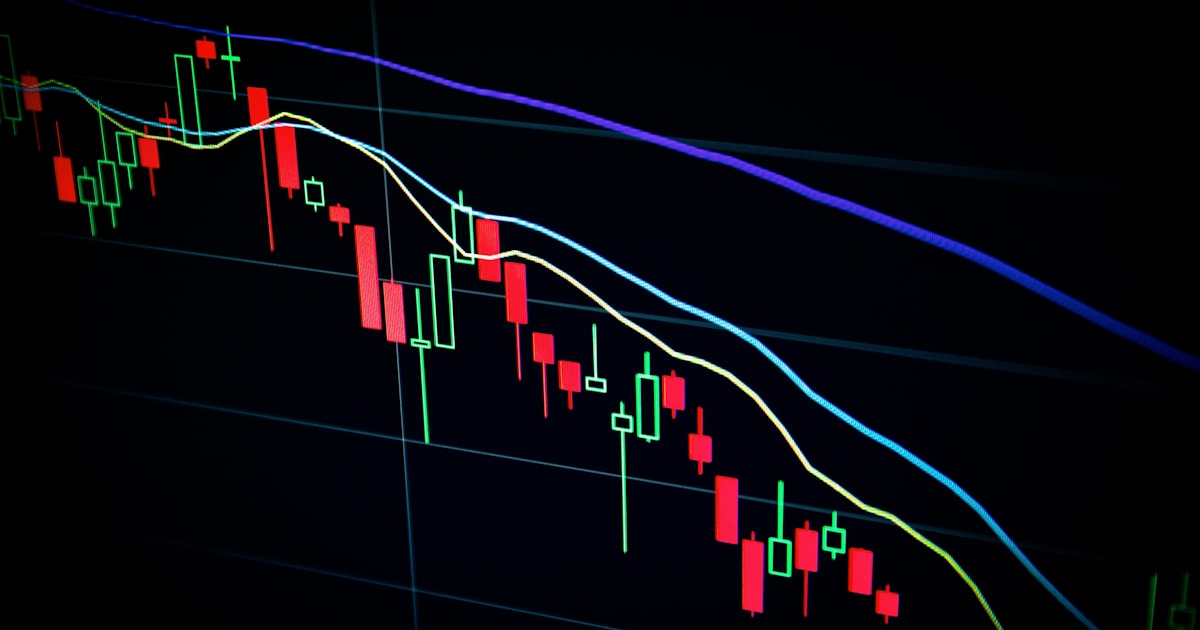
In the spring of 2026, two of Wall Street’s most reliable barometers are sending the same uneasy message at the same time. U.S. equity markets are wrestling with persistent volatility, consumer confidence has cratered to record lows, and the bond market is flashing a suite of indicators that historians of financial crises find deeply familiar. When stocks and bonds warn simultaneously — not in isolation — that convergence has foreshadowed every U.S. recession since 1970.
That fact, now circulating widely across institutional trading desks, is forcing portfolio managers to confront a question they have spent the better part of two years deferring: Is the economic expansion quietly running out of road?
The Signal That Has Never Been Wrong
The pattern at the heart of the current concern is deceptively simple. In the year or two before each of the last eight U.S. recessions, both equity markets and the bond market simultaneously deteriorated in ways that, taken together, provided a more reliable warning than either market delivered alone.
On the equity side, forward earnings estimates compressed, market breadth narrowed, and consumer-facing sectors began underperforming. On the bond side, the yield curve inverted or flattened sharply, credit spreads widened, and real yields rose even as nominal growth started fading.
That precise configuration is visible right now. The 2-year/10-year Treasury spread — the most closely watched yield curve metric — has spent much of the past year in or near inversion territory, a pattern the Federal Reserve Bank of New York has historically associated with a roughly 50–70% probability of recession within 12 months. Meanwhile, investment-grade and high-yield credit spreads have been quietly creeping wider since late 2025 as bond investors demand higher compensation for the risk that corporate earnings disappoint.
What the Bond Market Is Saying
Fixed income markets are often described as “smarter” than equities — slower to react to headlines, more sensitive to macro fundamentals. What bonds are saying in April 2026 is sobering.
The 10-year Treasury yield has climbed back above 4.5%, driven in part by a Consumer Price Index reading of 3.3% year-over-year — the most significant acceleration since 2022 — fueled by the energy shock stemming from the Iran port blockades that knocked more than 10 million barrels per day of global oil output offline in March, according to the International Energy Agency. That supply disruption is feeding into virtually every corner of the inflation picture, from jet fuel to plastics to freight.
The dilemma for the Federal Reserve is that this is stagflationary in nature: inflation is rising because of a supply shock, not demand strength, yet the Fed cannot easily cut rates to support growth without risking further inflation entrenchment. The CME FedWatch Tool currently prices in roughly a 40% probability of a rate cut by September 2026 — a sharp repricing from the 70%+ odds seen earlier this year.
In the credit markets, high-yield spreads over Treasuries — a proxy for investors’ appetite for corporate risk — have widened by approximately 75–90 basis points since January 2026. Historically, spread widening of this magnitude sustained over multiple months has been a reliable leading indicator of tighter financial conditions and eventual economic slowdown.
What the Equity Market Is Showing
Stocks have been more volatile, telling a story of their own. The S&P 500 has seesawed through 2026 as traders weigh hawkish Fed signals against still-resilient corporate earnings from the biggest names in technology.
Yet beneath the index-level figures, market internals are deteriorating. A Bank of America Global Fund Manager Survey conducted in early April found that institutional investors slashed their economic growth expectations by the most in four years — a statistic that historically correlates strongly with reduced capital expenditure and hiring plans in the quarters that follow. Inflation expectations among the same cohort reached nearly five-year highs.
Consumer confidence — the fuel for two-thirds of U.S. GDP — plunged to a record low in April, as the one-two punch of energy price spikes and stock market uncertainty eroded household sentiment. The University of Michigan’s preliminary April reading showed a sharp deterioration across all income groups, a broader signal than the typical divergence between higher- and lower-income households seen in earlier slowdowns.
Taken together: professional money managers are reducing risk, consumers are pulling back on spending expectations, and credit conditions are tightening. That is the textbook precondition for a slowdown.
History as a Guide — and Its Limits
Before drawing straight lines from historical patterns to current outcomes, context matters. The U.S. economy has survived — and even confounded — prior warning signals. The yield curve inverted in 2019 and the recession that followed was triggered by an exogenous shock, not a conventional credit cycle. In 2022–2023, inversion persisted for over a year without the widely anticipated recession materializing as quickly as feared.
What makes 2026 different — and potentially more concerning — is the stacking of multiple independent warning signals at once. It is not just the yield curve. It is the yield curve plus widening credit spreads plus a consumer confidence collapse plus fund managers cutting growth estimates plus an inflationary energy shock that constrains the Fed’s ability to cushion any downturn.
JPMorgan Chase CEO Jamie Dimon, in his most recent commentary following the bank’s strong Q1 2026 earnings beat, explicitly cited “significant turbulence ahead” and warned that the combination of geopolitical instability, sticky inflation, and tightening financial conditions creates an unusually wide range of economic outcomes. Goldman Sachs economists currently assign a 35% probability to a U.S. recession beginning within the next 12 months — elevated, though not a base case.
What to Watch in the Weeks Ahead
Several near-term data points will either validate or ease the current concern. Taiwan Semiconductor Manufacturing’s Q1 2026 earnings, expected this week, will test whether AI-driven semiconductor demand remains robust enough to underpin the technology sector’s valuations. Any miss could send ripples across the growth stocks that have held the S&P 500 aloft.
On the macro front, the April jobs report and the next core PCE inflation reading will directly shape Fed policy expectations. If core inflation remains above 3% while employment starts to soften, the Fed faces its most difficult policy juncture since 2022 — and bond markets will respond accordingly.
For fixed income investors, the current environment favors shorter-duration positions and higher-quality credit, as wider spreads and rate uncertainty create landmines further out on the risk curve. In equities, sector rotation from cyclicals toward defensives — consumer staples, utilities, healthcare — has already begun in earnest among institutional players.
The markets are not predicting recession with certainty. They rarely do. What history suggests, however, is that when stocks and bonds both sound the alarm in concert, the cost of ignoring the signal has historically been far higher than the cost of heeding it.
Disclosure: It is for informational purposes only and is not investment advice.