
Triton Partners announced on June 3, 2026 that it has agreed to acquire Flender — the 125-year-old German specialist in industrial gear units and wind-turbine gearboxes — from The Carlyle Group, closing a roughly five-year ownership cycle for the U.S. PE giant and adding one of Europe’s largest sponsor-to-sponsor secondaries this year to Triton Fund 6.
The transaction is structured as a sponsor-to-sponsor secondary buyout, with closing targeted for the fourth quarter of 2026 subject to regulatory approval. Neither side disclosed an enterprise value in the official Triton press release; deal-wire coverage at the announcement put the transaction at around €3 billion (roughly $3.3 billion at current exchange rates), though that figure is not confirmed by either sponsor.
| Term | Detail |
|---|---|
| Buyer | Triton Partners (Triton Fund 6) |
| Seller | The Carlyle Group |
| Target | Flender (industrial gear units, wind-turbine gearboxes via Winergy) |
| Announced | June 3, 2026 |
| Expected close | Q4 2026, subject to regulatory approvals |
| Employees | ~8,000 across 34 countries |
| Reported value | ~€3B (media reports; not confirmed by parties) |
| Sector | Industrial Tech / energy transition |
| Carlyle hold | ~5 years (carved out of Siemens, closed March 2021) |
Why it’s a capital-markets story, not just M&A
Three threads make Flender a barometer for European private equity right now:
1. Sponsor-to-sponsor exits are how 2026 PE is clearing
Bain & Company’s Global Private Equity Report 2026 calls last year a “narrow recovery”: deal and exit value rebounded, but distributions to LPs stayed stubbornly low and only mega-deals moved the headline numbers. With IPO windows uneven and strategic acquirers selective, PE-to-PE secondaries — sponsor-to-sponsor sales — are one of the few liquidity valves available for multi-billion industrial assets.
Carlyle, like every flagship sponsor, faces an LP base that wants cash back. Flender is the kind of high-quality industrial that can clear a multi-billion check from another sponsor when the IPO window is too thin to absorb it.
2. Triton Fund 6 needs to deploy
Triton closed its sixth flagship fund at a €5.5 billion target — the firm’s largest — and lists Industrial Tech (explicitly including energy transition and industrial automation) as a core sector alongside Business Services and Healthcare. A carve-out the size of Flender materially deploys Fund 6’s industrial sleeve in a single transaction, an attractive option in an environment where firms are pushing back against the “deploy slowly, look smart” stigma of the last 18 months.
3. Wind exposure is now an investable theme
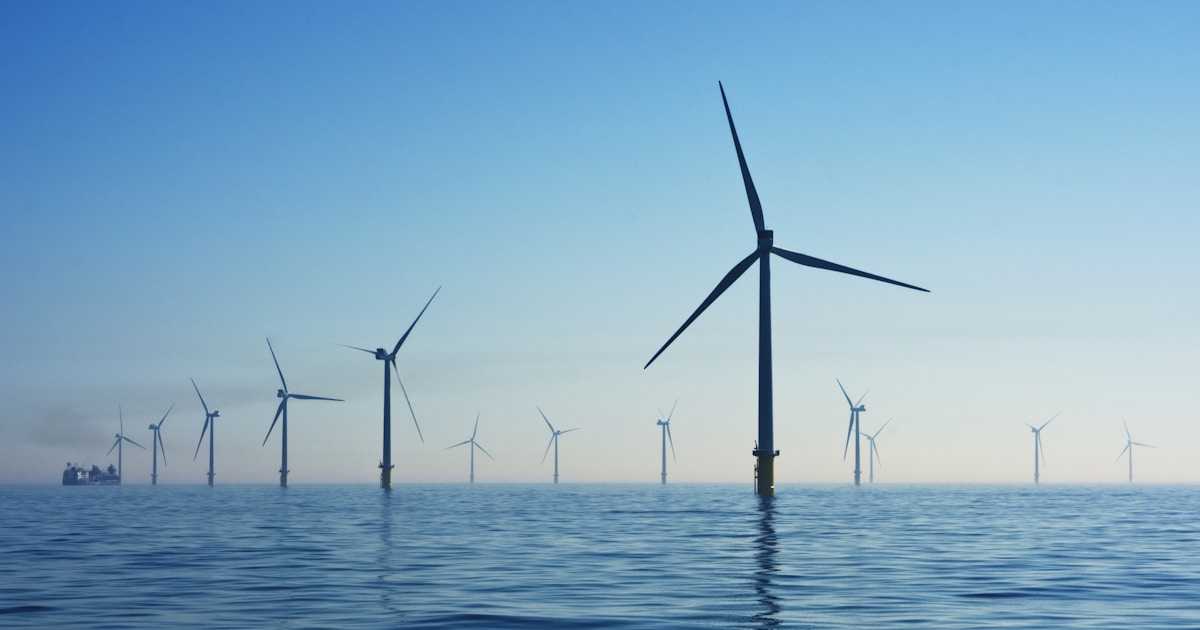
Flender owns Winergy, the brand that supplies gearboxes to most of the world’s wind-turbine OEMs (Siemens Gamesa, Vestas, GE Vernova, Nordex). Owning the gearbox is owning a critical component on a long secular tailwind, regardless of which OEM wins each cycle — a similar logic to picking up the data-center cooling supplier rather than the GPU vendor.
U.S. wind generation reached about 10.3% of utility-scale electricity in 2022, per EIA data, up from less than 1% in 2000. Roughly two decades of compounding share — the kind of demand curve PE underwriters can model with high confidence even if any single OEM’s order book is choppy.
Carlyle’s five-year ride
Carlyle carved Flender out of Siemens in late 2020, with the deal closing in March 2021. The ~5-year hold lands close to the median for European mid- and large-cap PE deals. During Carlyle’s ownership, Flender separated its IT and back-office systems from Siemens, completed its rebrand as a stand-alone industrial, expanded its aftermarket services franchise, and rode the global build-out of wind installations.
The exit is the kind of headline distribution event large PE shops badly need to lift DPI (distributed-to-paid-in) for their 2018-2020 vintage funds — the funds that were investing through the cheap-debt window and now have LPs measuring liquidity in years, not quarters.
Triton’s industrial playbook
Triton has raised over €25 billion in cumulative capital since inception and runs an integrated European mid-market PE-plus-credit platform out of London, with a 50+ person operating team specifically built to push value creation at portfolio companies. The acquisition channels three themes Triton has emphasized in recent strategy materials: energy transition (Winergy), aftermarket services (Flender’s growing parts and modernization business), and complex European industrial carve-outs.
The irony: Triton is buying a company that was itself a Carlyle carve-out, having the same DNA Triton’s underwriting platform is designed for. Whatever operational alpha Carlyle pulled out in five years, Triton thinks there is another lap to run.
Risk factors worth flagging
- Regulatory clearance. Wind-turbine gearboxes touch energy infrastructure across the EU, U.S., China and India. A Q4 2026 target close is realistic but not guaranteed; complex deals with energy-infrastructure exposure can stretch into 2027.
- Wind cycle timing. Onshore wind has been a steadier order book than offshore; offshore project delays in the U.S. and U.K. weighed on some OEMs through 2025-2026. Flender’s gear sales follow OEM build schedules with a lag.
- Financing tightness. Sponsor-to-sponsor deals in 2026 are financing through a mix of private credit, syndicated leveraged loans, and high-yield bonds. Spreads on European leveraged loans widened in the last quarter; a multi-billion LBO financing package will print at a higher all-in cost than the original Carlyle deal in 2021.
What to watch
Triton will report Flender ownership inside Triton Fund 6 once the deal closes. For Carlyle, the exit shows up in distributions to LPs across the funds that originally backed the 2021 carve-out — and is one of several large European exits Carlyle is pursuing as it tries to lift DPI for its mid-decade vintages.
For the broader market, a successful Q4 close stamps another data point on a thesis private-credit and PE shops have been pushing all year: industrial carve-outs with secular tailwinds will keep clearing PE-to-PE, even with IPO and strategic exit windows uneven.
Sources
- Triton Partners press release, “Triton Partners to acquire Flender from Carlyle,” June 3, 2026.
- Bain & Company, Global Private Equity Report 2026.
- U.S. Energy Information Administration, “Electricity generation from wind” (10.3% of U.S. utility-scale electricity in 2022).
- Triton Partners corporate site (London HQ, €25bn+ capital raised, Fund 6 €5.5bn target).
- Flender corporate site (8,000+ employees, 34 countries, 125 years).
- Seeking Alpha M&A wire (reported ~€3B deal value).
Disclosure: It is for informational purposes only and is not investment advice.