
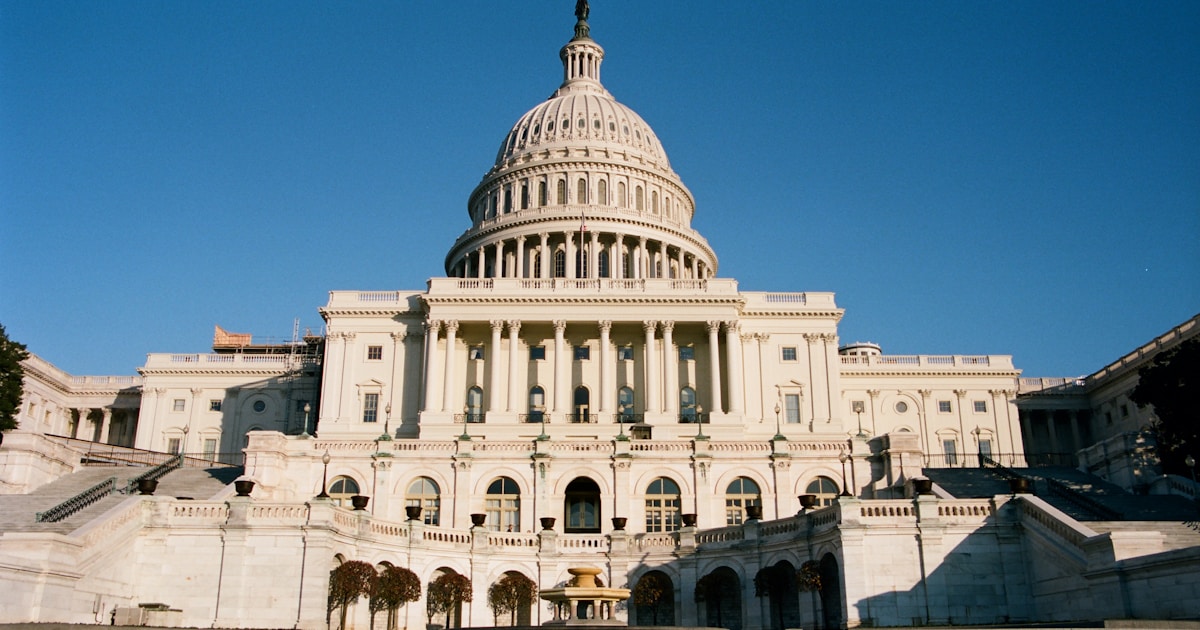
TL;DR. On May 14, 2026, the Senate Banking Committee favorably reported H.R. 3633, the Digital Asset Market Clarity Act of 2025, in what Chairman Tim Scott (R-S.C.) called a "historic bipartisan" markup. The vote moves the most consequential U.S. crypto market-structure bill in years one step closer to the Senate floor, and it lands on a $319 billion stablecoin market that already plays a quiet but enormous role in short-term Treasury demand.
What just happened in the committee
The Banking Committee's May 14 markup advanced H.R. 3633 with bipartisan support, with Chairman Scott describing the bill as legislation that will "establish clear rules of the road for digital assets" and help cement "America as the crypto capital of the world," according to the committee's majority newsroom page. Ranking member Senator Elizabeth Warren delivered opening remarks at the same markup, signaling that even members historically skeptical of digital-asset legislation engaged on the substance after what the committee characterized as "nearly a year of good-faith bipartisan negotiations."
H.R. 3633 originated in the House and passed there in 2025 as part of a broader push to settle the long-running jurisdictional fight between the Securities and Exchange Commission and the Commodity Futures Trading Commission over how digital assets are classified, listed, custodied, and traded. The Senate version that emerged from this markup reflects extended negotiations across both chambers and is paired with a separate stablecoin-specific track that the Senate has been working in parallel.
Why capital markets care: stablecoins are real T-bill buyers
Stablecoins look like a crypto sideshow on a price chart, but they are an increasingly meaningful piece of the short-end funding stack. The category now totals roughly $319 billion, or about 12% of the entire crypto market by capitalization, per CoinGecko data as of May 18, 2026. Tether (USDT) alone is nearly $190 billion, and the major U.S.-domiciled issuers back their tokens overwhelmingly with U.S. Treasury bills and overnight repo — the same instruments that traditional prime money funds buy.
That makes the Clarity Act, and the related stablecoin track, a capital-markets bill in disguise. Clear rules on permissible reserves, redemption, custody, and disclosure determine who can issue dollar-denominated tokens at scale, how those tokens park their float, and how quickly the float can be unwound in a stress scenario — a question that matters whether you trade Treasuries, money-market funds, or repo.
| Stablecoin | Symbol | Market cap (USD) |
|---|---|---|
| Tether | USDT | $189.7B |
| USD Coin | USDC | $76.8B |
| Sky USDS | USDS | $11.2B |
| USD1 | USD1 | $4.5B |
| Ethena USDe | USDe | $4.3B |
| Dai | DAI | $4.0B |
| PayPal USD | PYUSD | $3.5B |
| Global Dollar | USDG | $3.0B |
What the bill actually tries to do
At a structural level, H.R. 3633 attempts to draw a line through digital assets that have been awkwardly suspended between two regulators. Tokens that function as commodities — including ones built on sufficiently decentralized networks — would fall primarily to the CFTC, while assets that look like securities would continue under SEC oversight. The bill creates registration regimes for digital-asset platforms, custody requirements designed to keep customer assets segregated, and disclosure standards intended to mirror, in spirit, what equity issuers and broker-dealers already provide.
Two design choices in the Senate version drove the late round of haggling that the committee referenced. First, the line-drawing between SEC and CFTC jurisdiction — whether maturity-style tests for "mature blockchain systems" would be too lenient or too strict. Second, the treatment of stablecoin economics: whether issuers should be permitted to pass through any yield or rewards to holders, and what reserve composition and audit requirements they have to meet. Banking trade groups have argued that yield-bearing stablecoins effectively replicate uninsured bank deposits without the regulatory perimeter, while crypto-industry groups have pushed for parity with money-market funds.
The bigger capital-markets picture
This isn't just about Coinbase or Tether. Three plumbing-level questions ride on how the legislation finally settles:
- Tokenized Treasuries and money-market funds. Tokenization pilots from BlackRock's BUIDL, Franklin Templeton's FOBXX, and others sit on top of an ambiguous legal layer. A market-structure framework that names which products are securities and how they can be traded on-chain decides whether tokenization scales from a few billion dollars to tens or hundreds of billions.
- T-bill demand. If U.S. stablecoin issuers are required to hold short-dated Treasuries and overnight repo — which is roughly what they do already — then growth in compliant U.S.-domiciled stablecoins becomes incremental, price-insensitive demand at the very front of the curve. That matters at a time when the Treasury is rolling enormous bill issuance into a market that is already absorbing the long end at a 5% handle.
- Custody and settlement competition. A federally-recognized custody framework gives qualified custodians, prime brokers, and clearing houses a clean basis to offer digital-asset services. Expect bank-affiliated and traditional broker-dealer entrants to lean into this, not just crypto-native firms.
The bank-versus-crypto fight that almost broke the markup
The fight that nearly derailed the May 14 markup wasn't the SEC-CFTC line but stablecoin economics. Bank trade groups argue that letting stablecoin issuers pay holders the yield earned on their Treasury reserves — even indirectly through rewards programs — lets a non-bank issue a deposit-like instrument without FDIC insurance, capital rules, or community-reinvestment obligations. Crypto-industry advocates counter that a 1:1 cash-and-Treasury backed token is closer to a money-market fund than a bank deposit, and that money-market funds have always paid yield to holders.
The committee's compromise language reportedly tightens reserve and disclosure standards while leaving narrower forms of yield pass-through and rewards programs on the table. The exact final text is what investors will want to read line-by-line once it's posted publicly, since the difference between "rewards programs allowed" and "yield prohibited" is the difference between a market-neutral compliance bill and a structural shift in where Americans park short-duration savings.
What still has to happen
A favorable committee report is a meaningful waypoint but not a law. From here the bill needs Senate floor time, likely some further amendment, and reconciliation with the House-passed version before it reaches the president's desk. The committee's framing on May 14 emphasized that further work lies ahead and that the bill is expected to be paired with the stablecoin-specific track in any final package. Investors who care about tokenized markets, custody businesses, or short-end Treasury supply should treat the final reconciled text — not this markup — as the binding event.
What to watch next
- Senate Majority Leader scheduling of floor time for H.R. 3633.
- The text of the manager's amendment and any side-by-side reconciling the Senate version with the House version.
- Whether the stablecoin track is folded into the same vehicle or kept on a separate timeline.
- CFTC and SEC rulemaking calendars in the 12–24 months following enactment, where most of the operational rules will actually live.
Sources
- Senate Banking Committee — Majority Newsroom (May 2026 markup of H.R. 3633).
- Senate Banking Committee — main page (Warren opening remarks at Clarity Act markup).
- CoinGecko global crypto market data (total cap, Bitcoin dominance, stablecoin share).
- CoinGecko stablecoin category data (USDT, USDC, USDS, USDe, DAI, PYUSD, USDG market caps).
Disclosure: It is for informational purposes only and is not investment advice.