
Nintendo (OTC: NTDOY;
TYO: 7974) closed the books on its first full year of Nintendo Switch 2 with a set of
numbers that almost no console launch has ever matched. For the fiscal year ended March 31, 2026,
the company reported net sales of
2,313.0 billion yen,
up 98.6% year over year, operating profit of 360.1 billion yen (+27.5%), and profit attributable
to owners of parent of 424.1 billion yen (+52.1%). At Nintendo’s own assumed exchange rate of
150 yen per U.S. dollar, that is roughly $15.4 billion in revenue and $2.8 billion
in net income — a record top line in dollar terms and the second-best operating profit
in the company’s history.
And yet the stock has spent the past two weeks going sideways to lower. The reason
is on page 4 of the same release: management’s forecast for the fiscal year that just started.
Switch 2 by the numbers
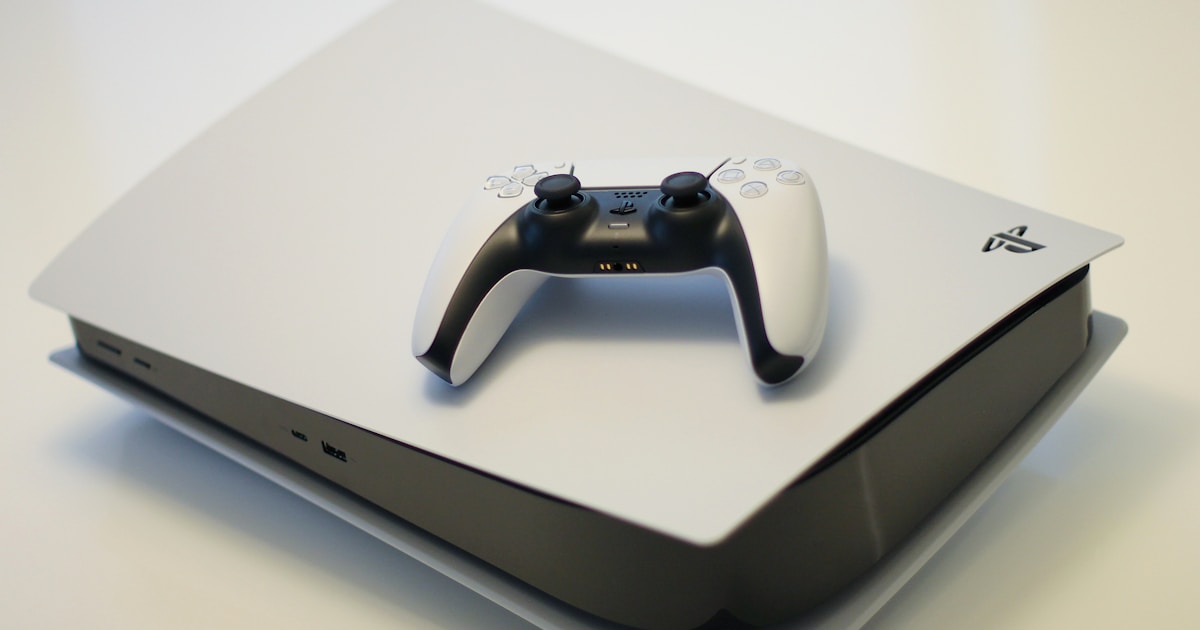
The launch ran for just under ten months of the reporting period — Switch 2 went on sale globally
in June 2025 — and over that window Nintendo sold
19.86 million
hardware units. Software attach was even stronger: 48.71 million Switch 2 titles in the same
window, led by Mario Kart World at 14.70 million units (including bundle copies) and
Donkey Kong Bananza at 4.52 million.
| Metric (FY ended March) | FY26 | FY25 | YoY |
|---|---|---|---|
| Net sales (billion yen) | 2,313.0 | 1,164.9 | +98.6% |
| Operating profit (billion yen) | 360.1 | 282.6 | +27.5% |
| Operating margin | 15.6% | 24.3% | −8.7 pts |
| Profit attributable to parent (billion yen) | 424.1 | 278.8 | +52.1% |
| EPS (yen) | 364.51 | 239.47 | +52.2% |
| Annual dividend (yen/share) | 219 | 139 | +57.6% |
| Return on equity | 14.9% | 10.5% | +4.4 pts |
The other half of the story is the original Switch — now a decade old — which still moved
3.80 million hardware units and a remarkable
136.91 million software units in FY26 thanks to evergreens like
Mario Kart 8 Deluxe and Nintendo Switch Sports, plus Pokémon Legends: Z-A
at 8.85 million units. Because Switch 2 plays Switch 1 software, the older catalog effectively
underwrote the new hardware’s first year.
Two other figures explain why the bottom line scaled so well. Digital net sales reached
407.6 billion yen, up 25.0% year over year, as more of the software mix shifted to
download. And overseas sales were 1,778.1 billion yen — 76.9% of group revenue —
which made the weak yen a meaningful tailwind to reported numbers.
How Switch 2’s launch year stacks up
For perspective, the original Nintendo Switch sold roughly 17.79 million units in
its first thirteen months on the market (March 2017 launch through fiscal-year-end March 2018, per
Nintendo’s historical disclosures). Switch 2 cleared 19.86 million in roughly ten.
On a like-for-like, “first-launch fiscal year” basis the new console is pacing well ahead of its
predecessor, and Nintendo has now telegraphed an upward bias to production for FY27. The chart
below sketches the comparison.
So why is the stock not flying?
Because the FY27 forecast is unusually cautious. Nintendo’s outlook for the year ending
March 31, 2027 calls for net sales of 2,050.0 billion yen, down 11.4% year over year,
operating profit of 370.0 billion yen (only +2.7%), and net profit of 310.0 billion yen
(-26.9%). The decline at the bottom line largely reflects two assumptions baked into
the model: a stronger yen (the company is now using 150 yen per dollar, against an
FY26 average closer to 155) and a working assumption that FY26 included a large one-off gain on sale
of investment securities (32.7 billion yen) that will not repeat. The annual dividend would step
down to 162 yen from FY26’s 219 yen on those numbers.
Conservative forecasting is a Nintendo signature; this is the company that has historically
guided below the Street and then beaten its own outlook in three of the last four years. But the
FY27 sales decline still requires explanation, because Switch 2 should be entering its first
full twelve-month sales year (not a partial one) and the launch lineup ahead includes
Yoshi and the Mysterious Book in May, Star Fox in June, and
Splatoon Raiders in July, with third-party support filling the calendar.
The simplest read: management is assuming a steep drop in the legacy Switch tail (3.80M hardware
units in FY26 has very little further to fall) and is being deliberately careful about software
attach rates for Switch 2 in a year that does not yet contain a system-seller on the order of
Mario Kart World. The FY27 forecast also assumes Switch 2 hardware will not match its
launch-year pace once initial pent-up demand is filled — a normal pattern for consoles, and one
Nintendo’s own internal disclosures (available in the
Financial Results
Explanatory Material) lay out at the unit level.
What investors should watch from here
Three signals will tell investors whether the FY27 guide is real or sandbagged:
- Hardware production cadence. Reports in late May 2026 indicated Nintendo
was preparing to raise
Switch 2 production targets for the year. Any official confirmation when Q1 reports in late
July would be the cleanest tell that management’s sales forecast leaves room. - First-party software cadence. Holiday-window slots not yet announced are
where the real FY27 sales upside lives. A flagship Mario, Zelda, or Pokémon Switch 2 release dated
for fiscal Q3 would force a guide revision. - Yen levels. Because Nintendo records 76.9% of revenue overseas but reports in
yen, the 150 yen-per-dollar assumption is conservative versus prevailing rates. Each 5-yen
weaker move from that assumption is meaningful for the dollar-to-yen translation on the P&L.
Net-net: Nintendo just had the best console launch year in its history. The market is treating
it as fully priced because the FY27 guide reset expectations lower. Whether that guide proves to be
classic Nintendo conservatism — or a more honest acknowledgement that launch math is not the same
as steady-state math — is what the next two quarters will resolve.
Sources
- Nintendo Co., Ltd. — Consolidated Financial Highlights, FY ended March 31, 2026 (May 8, 2026)
- Nintendo IR — Financial Results Explanatory Material
- Nintendo IR — Historical hardware unit data
- Nintendo Investor Relations (English)
Disclosure: It is for informational purposes only and is not investment advice.