
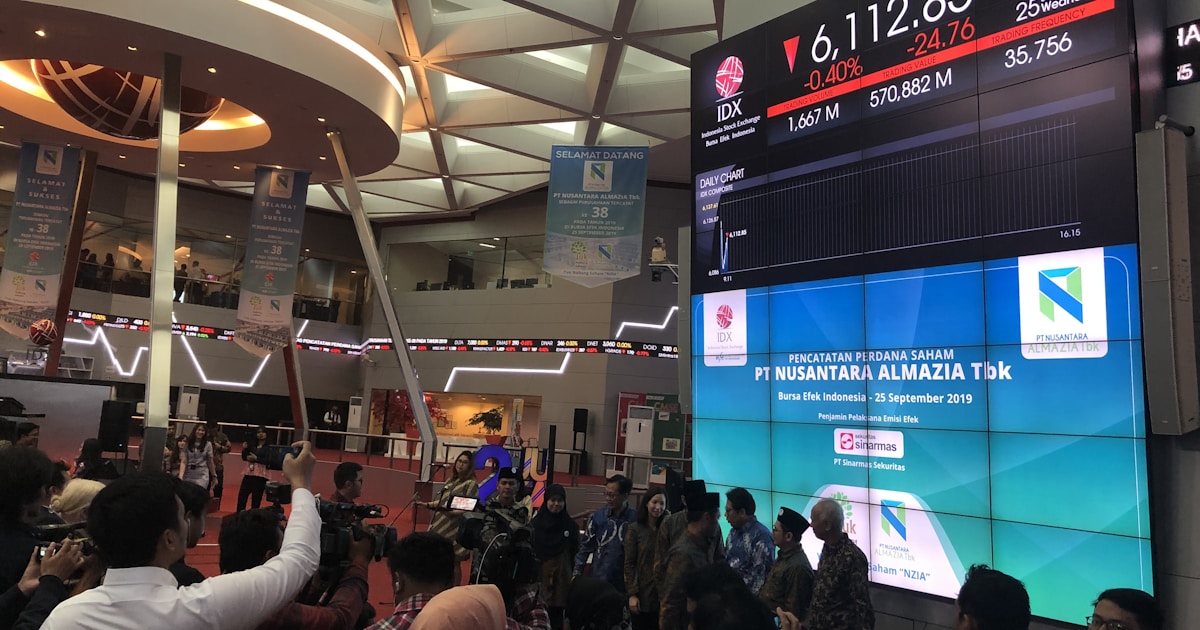
An IPO — initial public offering — is how a private company opens its ownership to public investors for the first time. The process involves selecting investment banks, filing a comprehensive disclosure document with the SEC, and spending two weeks pitching the investment to institutional investors before shares begin trading on an exchange. Understanding each step explains why first-day “pops” happen, why insiders cannot sell immediately, and what the greenshoe option is actually protecting.
Why Companies Go Public
Companies pursue IPOs for three core reasons: to raise new capital (for growth, acquisitions, or paying down debt), to give early investors and employees a liquid market for their shares, and to create a publicly traded currency for future deals. The trade-off is significant — public markets bring quarterly earnings scrutiny, ongoing SEC disclosure requirements, and pressure from shareholders who can sell the moment they disagree with management.
Not every company that goes public needs the money. In secondary offerings within an IPO, existing shareholders (founders, venture capitalists, employees) sell their personal stakes rather than the company issuing new shares. Understanding which dollars go where requires reading the “use of proceeds” section of the S-1 — more on that shortly.
Step 1: Choosing Underwriters
The company interviews multiple investment banks in a competitive pitch known as a bake-off. The winner becomes the bookrunner (or lead underwriter) — the bank responsible for building investor demand and managing the pricing process. Larger IPOs typically have one or two major banks as leads, plus several co-managers who distribute the deal to their own institutional client networks.
In the most common U.S. structure, a firm commitment offering, the banks purchase all shares from the company at the agreed price and then resell them to investors — taking on pricing risk themselves. This gives the company certainty about how much it will raise. In rarer best-efforts structures, banks act as agents and return unsold shares, leaving proceeds uncertain.
Think of the underwriter relationship like hiring a real estate agent: the agent markets your property, advises on pricing, and takes a commission on the sale. IPO underwriters typically earn a gross spread of around 7% of the total proceeds on mid-market U.S. deals.
Step 2: The S-1 Registration Statement
Before any public marketing begins, the company files a Form S-1 registration statement with the SEC. This document is the definitive public record of what investors need to know before buying shares. A well-constructed S-1 includes:
- Business description — what the company does, its competitive moat, and growth strategy
- Risk factors — a comprehensive list of risks, from competition to regulatory exposure and macro conditions
- Audited financial statements — at least two years of financials reviewed by an independent auditor
- Use of proceeds — exactly what the company plans to do with the money raised
- Management backgrounds — biographies and compensation of key executives
- Capitalization table — who owns what before and after the offering
The SEC reviews the filing and issues a comment letter with questions and concerns. The company responds with amendments (called S-1/A filings). This back-and-forth typically takes four to eight weeks before the SEC declares the registration “effective” — meaning shares can legally be sold to the public.
Under the JOBS Act of 2012, companies classified as emerging growth companies (EGCs) — those with annual revenues below a threshold set by the SEC — may file their S-1 confidentially. The public doesn’t see the filing until 15 days before the roadshow begins. This allows companies to test investor appetite without committing publicly to a deal, reducing the reputational risk if they decide to postpone.
Step 3: The Roadshow
Once the SEC declares the S-1 effective, management launches a roadshow — typically a two-week series of presentations to institutional investors: mutual funds, pension funds, hedge funds, and sovereign wealth funds. The CEO and CFO present the investment thesis, walk through the financials, and field questions.
The roadshow is as much intelligence-gathering as it is selling. Investment banks track which investors show up, what concerns they raise, and at what price levels their enthusiasm starts to fade. This intelligence feeds directly into the pricing decision. Post-pandemic, roadshows increasingly happen virtually, which allows companies to cover far more investors in the same two-week window without the constant travel.
One useful analogy: the roadshow is the “open house” phase of the real estate sale — you’re not yet accepting offers, but you’re watching the room for signals about how to price.
Step 4: Bookbuilding and Pricing Night
During and after the roadshow, institutional investors submit indications of interest (IOIs) — non-binding signals of how many shares they want at various price points. The bookrunner collects these into a “book” and maps demand at each price level.
The preliminary S-1 prospectus always shows a price range (for example, $18 to $21 per share). Based on the strength of the book:
- If demand clusters above $21, the range is revised upward
- If the book is thin, the range comes down — or the deal is postponed entirely
On pricing night — the evening before trading begins — the final offer price is set and shares are allocated to investors. Institutional buyers who submitted strong IOIs at the final price typically receive their allocations. Retail investors access IPO shares through their brokers, usually in smaller quantities and often at a disadvantage to large institutions.
According to the bookbuilding process, the final price is set “at the discretion of the bookrunner in consultation with the issuer” — a reminder that the issuing company has real influence over where shares are priced, and the tension between pricing too high (bad first-day performance) and too low (leaving money on the table) is a genuine strategic decision.
Step 5: First-Day Trading and the IPO Pop
When the stock opens for trading, the underwriters no longer control the price. Supply meets open-market demand, and the gap between the offer price and the first-day closing price is the IPO pop — a direct measure of how much value the company left on the table by pricing below what the market would bear.
Three well-known examples show the full range of outcomes:
- Airbnb (December 2020): Priced at $68 and approximately doubled on its first trading day. Early investors captured gains the company could theoretically have priced for itself by pushing the offer higher.
- Reddit (March 2024): Priced at $34 and closed at $50.44 — a 48.4% pop — signaling that institutional investors received shares at a significant discount to the market clearing price.
- Facebook (May 2012): Priced at $38 and closed at $38.23 — effectively flat. The books had been pushed to the very edge of demand. Underwriters had to buy shares in the open market to prevent a below-offer close, and the stock fell significantly in the weeks that followed.
A large pop is often celebrated as a “successful IPO,” but academics and CFOs point out that a 50% first-day pop means the company raised only $50 for every $100 it could have raised at the right price. The ideal IPO, from the issuer’s perspective, pops just modestly — enough to reward early buyers without dramatically underpricing the deal.
How the Greenshoe Works
Nearly every major U.S. IPO includes a greenshoe option — formally called the over-allotment option. The name comes from Green Shoe Manufacturing Company (now Stride Rite), the first issuer to include this structure in a U.S. offering.
The greenshoe allows underwriters to sell up to 15% more shares than the base offering size. Here is the exact mechanic:
- The banks sell 1.15× the base offering, borrowing the extra 15% from the issuer, and immediately hold a short position on those additional shares.
- If the stock rises above the offer price: Banks exercise the greenshoe option, buying the extra shares from the issuer at the offer price to cover their short. They profit on the spread.
- If the stock falls below the offer price: Banks do not exercise the option. Instead, they buy shares in the open market at the lower price, which supports the stock price while covering their short position.
In both scenarios, the underwriters are protected — and in both scenarios, the stock price is supported. Stabilization buying (scenario 3) typically runs for up to 30 days after the IPO. The greenshoe is essentially a built-in price floor with no out-of-pocket cost to the underwriters: their short position is covered either by exercising the option or by buying cheap open-market shares.
The Lock-Up Period
Company insiders — executives, employees with equity, and pre-IPO investors — are typically barred from selling shares for 90 to 180 days after the IPO. These restrictions are contractual, not legally mandated, and are agreed to with the underwriters at the time of pricing.
The purpose is straightforward: if insiders could sell the day after the IPO, a sudden flood of shares could push prices sharply lower. When the lock-up expires, watch for increased trading volume as restricted holders gain the right — though not the obligation — to sell. Stocks with large insider overhangs sometimes sell off in the weeks approaching lock-up expiration as investors anticipate supply.
When IPOs Go Wrong
Several recurring failure modes explain why IPOs underperform:
- Overpricing: Banks price too aggressively; the stock falls on day one and erodes confidence in the company’s credibility.
- Valuation mismatch: Private-market multiples built on optimistic projections don’t hold up to public-market scrutiny from investors who can short the stock.
- Bad timing: A deal launched into a rate spike, recession scare, or sector rotation faces structural selling pressure regardless of company quality.
- Governance concerns: Dual-class share structures that entrench founders, or large insider secondary sales as part of the IPO, can deter long-term institutional buyers who want aligned management.
Research by Professor Jay Ritter at the University of Florida — the leading academic database on IPO returns — shows that on average, IPOs underperform the broader market over a three- to five-year horizon, even after a strong first-day pop. The IPO pop rewards early allocatees; long-term investors buying in secondary trading often capture less.
| Company | IPO Date | Offer Price | 1st-Day Close | Day 1 Return |
|---|---|---|---|---|
| Facebook (FB) | May 18, 2012 | $38.00 | $38.23 | +0.6% (flat) |
| Airbnb (ABNB) | Dec 10, 2020 | $68.00 | ~$144 | ~+112% |
| Reddit (RDDT) | Mar 21, 2024 | $34.00 | $50.44 | +48.4% |
Related Concepts to Explore Next
- Direct listings vs. traditional IPOs — Spotify and Coinbase bypassed the roadshow and the underwriter’s book entirely, letting the open market set the price from day one.
- SPACs (Special Purpose Acquisition Companies) — blank-check shells that raise capital via IPO, then merge with a private target to take it public without a traditional roadshow.
- Post-IPO lock-up expiration strategies — how to monitor insider ownership schedules and anticipate supply pressure.
- Long-run IPO performance — academic research consistently shows that IPOs underperform the market over three to five years on average, despite strong first-day pops.
Sources
- Wikipedia: Initial public offering
- Wikipedia: Greenshoe (over-allotment option)
- Wikipedia: Lock-up period
- Wikipedia: Bookbuilding
- Wikipedia: Reddit (IPO details)
- Wikipedia: Meta Platforms (Facebook IPO details)
- Wikipedia: Airbnb (IPO details)
- Wikipedia: Arm Holdings (2023 IPO)
- Jay Ritter, University of Florida: IPO Data (long-run performance research)
Disclosure: It is for informational purposes only and is not investment advice.