
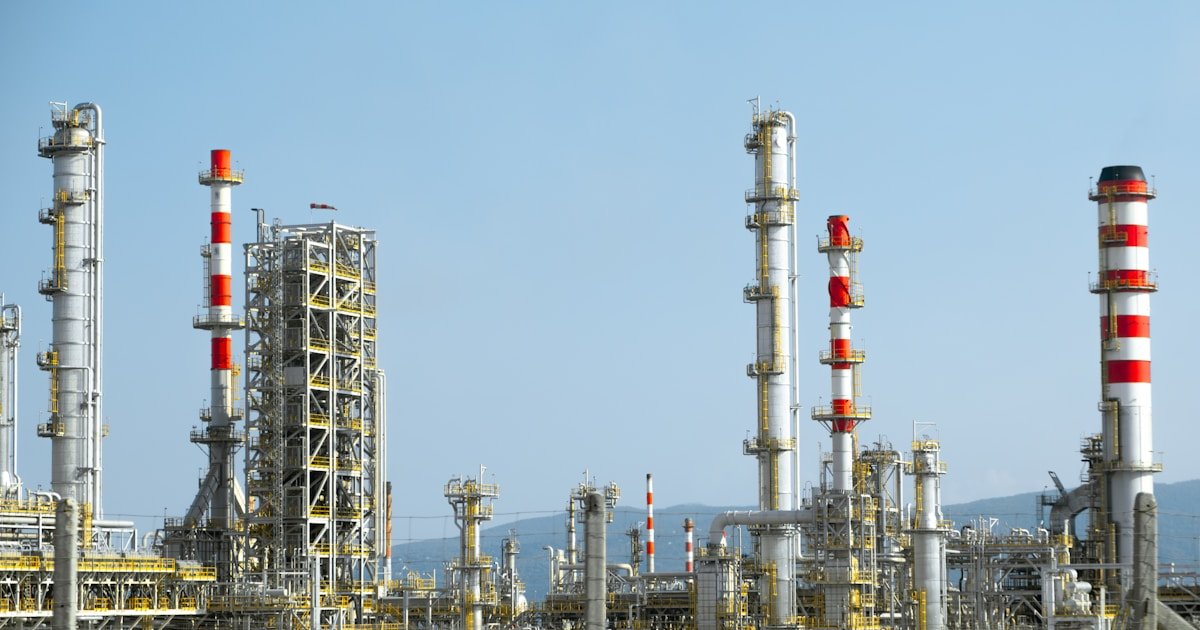
Africa’s largest refinery just tapped the deepest well of institutional capital ever pointed at a single Nigerian corporate asset. Dangote Petroleum Refinery and Petrochemicals FZE (DPRP) has completed a US$2.5 billion private placement led by Africa Finance Corporation (AFC), priced with a 3.7x subscription level — a rare demand signal on the continent. The placement, announced August 13, sets up an October initial public offering on the Nigerian Exchange (NGX) that advisers say will be Africa’s largest ever.
The IPO already has a US$1 billion underwriting programme in place, per Reuters via Zawya. Chairman Aliko Dangote has framed the sequence — placement, then IPO — as a “strategic step to deepen shareholder base” while cutting Africa’s dependence on imported refined products. For capital-markets watchers, the deeper story is different: an African corporate is executing a two-stage funding stack that would be routine in New York or London but has almost no precedent in sub-Saharan Africa.
The deal at a glance
| Detail | Value |
|---|---|
| Issuer | Dangote Petroleum Refinery and Petrochemicals FZE (DPRP) |
| Private placement size | US$2.5 billion |
| Placement subscription | 3.7x oversubscribed |
| Placement announced | August 13, 2026 |
| Lead investor | Africa Finance Corporation (AFC) |
| Investor mix | International & African institutions, sovereign-related vehicles, DFIs, strategic partners |
| IPO target month | October 2026 |
| IPO underwriting programme | US$1 billion (advisers announced Aug 18) |
| Listing venue | Nigerian Exchange (NGX); foreign listing ruled out for now |
| Current refinery capacity | 650,000 barrels per day |
| Planned expansion by 2028 | 1.4 million barrels per day |
Why a private placement first
The order matters. Instead of trying to price an IPO cold into a domestic market where a $2 billion deal would be a decade’s worth of Nigerian equity issuance, DPRP is anchoring the transaction with a fully-committed strategic base first. The AFC-led vehicle brought international and African institutional investors, sovereign-related investment vehicles, development finance institutions, and long-standing strategic partners, per AFC’s release. Names were not disclosed, but the roster description reads as classic project-finance-turned-equity: the same investors who write $100–500 million tickets into African infrastructure debt now taking permanent capital ahead of a listing.
The 3.7x oversubscription is the key data point. It signals two things to the IPO desk: (1) the anchor demand exists at the placement price, so the roadshow starts from a valuation floor rather than a discovery process, and (2) the retail tranche can be priced with a smaller discount because the strategic book is not the swing factor. That is precisely the sequencing that large US and European IPOs use routinely — cornerstone investors first, book-building second — and it is rarely available to Nigerian issuers.
What the money is for: 650k → 1.4 million barrels per day
The AFC release is explicit on use of proceeds: the placement capital will “complement internal cash flows and external debt financing” for DPRP’s expansion agenda. Practically, that means growing nameplate capacity from 650,000 barrels per day today to 1.4 million barrels per day by 2028 — a 2.15x lift that would make the plant one of the largest single refineries on the planet, alongside Reliance’s Jamnagar complex in India.
The refinery came online in 2023 and reached commercial-scale product runs through 2025. It sits inside the Lekki Free Zone outside Lagos and was designed from day one as a fuel-export platform for West Africa, not just a domestic supplier. AFC’s president Samaila Zubairu framed the placement as “conviction in DPRP as a consequential industrial asset” — investor-relations phrasing that matches the capex profile of a facility large enough to reshape regional refined-product trade flows.
AFC’s capital-recycling model
Africa Finance Corporation is an unusual multilateral: it operates as a commercial lender-investor while carrying an A3 investment-grade rating from Moody’s, reaffirmed on August 14 per AFC’s own release. Its Dangote exposure has moved in stages that fit textbook development-finance mechanics:
- Foundational US$300 million senior term loan to Dangote Industries — since fully repaid.
- Co-Coordinating Bank on a US$3 billion syndicated loan.
- Lead of a US$2.5 billion private placement announced August 13, ahead of the IPO.
That progression — senior debt to syndicated debt to arranged equity — is the “catalytic capital” cycle DFIs describe in principle and rarely execute in practice on a single deal. It is the mechanism through which AFC can claim, per Zubairu, to be “providing early-stage capital before recycling funding” into the next generation of African infrastructure equity.
The IPO: retail-first, on NGX, with JSE optionality
The company has repeatedly said the October listing will be domestic and retail-focused, not a dual New York or London deal. That reflects both Nigerian regulatory preference and a pragmatic reading of where a nationalistic infrastructure story will be best received. Per Reuters on August 5, Dangote has signaled “strong intent” to add a Johannesburg Stock Exchange (JSE) listing after the Nigerian debut — a plausible next-year move that would open the deeper South African pension-fund bid.
The US$1 billion underwriting programme announced August 18 is not the deal size — it is the safety net. Underwriters commit to buy shares that retail and institutional investors do not, guaranteeing the issuer a floor amount of proceeds. For a domestic Nigerian retail tranche, that backstop is essential: it turns an execution-risk unknown into a hard-committed minimum, which is one reason IPO teams routinely arrange underwriting well before the pricing date. The actual gross proceeds could come in anywhere from that $1 billion floor to a multiple of it, depending on the retail bid.
The risk investors are actually pricing
The IPO’s underwriting math is straightforward; the operating story is not. The refinery has consistently faced crude-supply frictions inside Nigeria, where domestic crude allocation rules and middleman markups have added up to ~US$4 per barrel to feedstock costs versus a spot-benchmark refinery. Nigeria has been signaling changes to crude allocation and pricing rules to support domestic refiners, but those changes have moved in fits and starts.
For a 650,000 bpd plant, a persistent $4/bbl markup on feedstock is roughly US$949 million in annual gross-margin drag if run at full utilization. That number will be the single most-scrutinized line item in the IPO prospectus. Buyers can look through it if the reform trajectory is credible; they cannot look through it if the market thinks Nigerian crude allocation stays broken through the expansion window.
Why this matters beyond Lagos
Africa has produced a handful of listings above US$1 billion this century — MTN Nigeria, Airtel Africa, Vivo Energy — but nothing that combined the size, strategic-investor anchoring, and multi-tranche capital-stack sequencing that DPRP is attempting. If the October print clears, it becomes a template: DFI-anchored placement, syndicated debt in front of it, underwritten IPO behind it. The playbook is standard in developed markets; it has been the missing link for African corporate equity issuance.
It will also be a real test of whether Nigerian domestic capital markets can absorb an equity deal of that scale without an anchor US or European co-listing to soak up demand. The AFC-led placement effectively front-loads the “smart money”; the retail IPO is the volume test. Either outcome — clean absorption or partial fill against the US$1 billion backstop — will set the reference case for the next generation of African infrastructure issuers.
Sources
- Africa Finance Corporation press release — US$2.5 billion private placement (Aug 13, 2026)
- Africa Finance Corporation — Moody’s A3 rating affirmation (Aug 14, 2026)
- Reuters via Zawya — US$1 billion IPO underwriting programme (Aug 18, 2026)
- Reuters — Dangote signals JSE listing after Nigerian IPO (Aug 5, 2026)
- ECMSource — How an IPO actually works: S-1, roadshow, greenshoe, lock-up
Disclosure: This article is for informational purposes only and is not investment advice.