
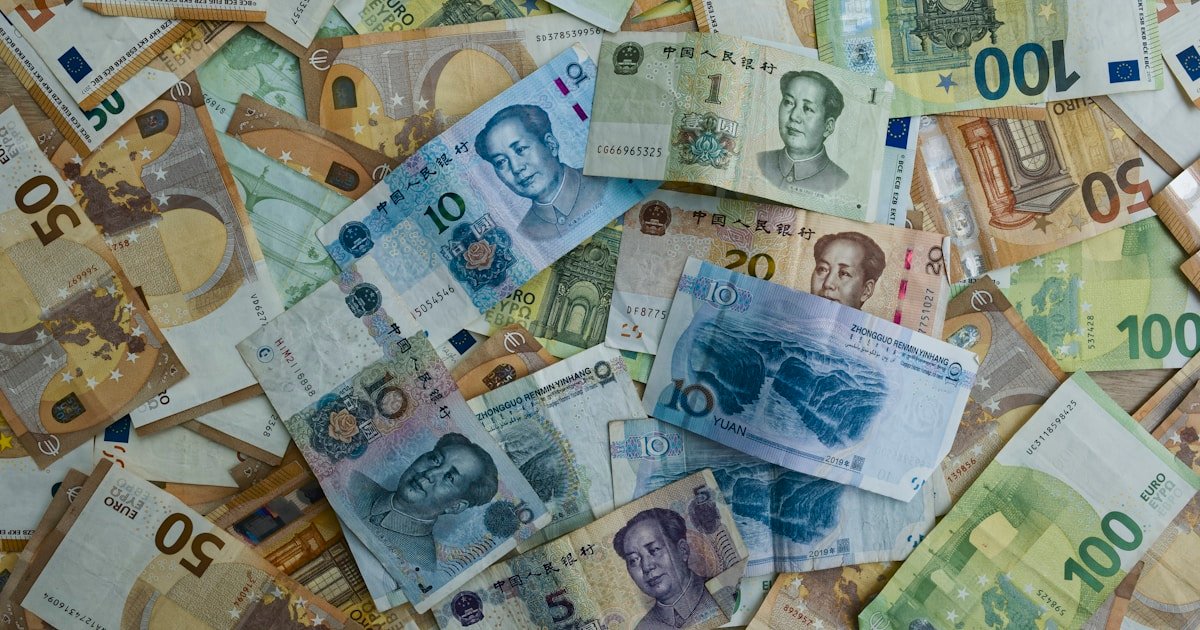
TL;DR: A “foreign bond” is a bond sold inside a
country by an issuer from outside that country, and denominated in
the local currency. Wall Street gave the biggest of these markets nicknames
you’ll see in every league table: Yankee (USD, sold in
the U.S.), Samurai (JPY, sold in Japan),
Kangaroo (AUD, sold in Australia), Panda
(onshore CNY, sold in mainland China), and Dim Sum (offshore
CNY, sold mostly in Hong Kong). Each has its own regulator, disclosure rules,
and typical issuer roster — and each exists because it lets a borrower
tap a new pool of investors in that pool’s home currency.
The core idea: foreign bond vs. Eurobond
Cross-currency bonds come in two flavors, and mixing them up is the
number-one mistake new fixed-income analysts make:
- Foreign bond. Issued inside the target country,
denominated in that country’s local currency, and regulated by
that country’s securities authority. A French company selling
dollar-denominated bonds registered with the U.S. Securities and Exchange
Commission is issuing a
Securities Act of 1933–governed Yankee bond. - Eurobond. Issued outside the country whose
currency it’s denominated in, typically through the international
capital markets and cleared via Euroclear or Clearstream. A Eurodollar bond
is a USD bond sold to investors outside the U.S.; a Euroyen bond is
a yen bond sold outside Japan.
Nicknames like Yankee, Samurai and Kangaroo describe the
foreign-bond case: the borrower crosses the border and issues in
the local currency under local rules. Nicknames like Dim Sum describe the
Eurobond case: an offshore yuan bond issued outside mainland
China.
The Big Five: nicknames every fixed-income desk uses
Yankee bonds — U.S. dollars, sold in the United States
A Yankee bond is a USD-denominated bond issued in the U.S. by a
non-American entity — typically a foreign bank, sovereign, or
multinational corporation. To sell to the broad U.S. investor base, the
issuer must file a registration statement with the SEC and comply with the
disclosure regime of the Securities Act of 1933. Many deals are structured
in tranches so investors can pick their preferred maturity and rating slice.
For the issuer, a Yankee gives access to the deepest, most liquid
corporate-bond market on earth; for U.S. buyers, it’s dollar-denominated
credit exposure without direct FX risk.
There’s also a “reverse Yankee”: a U.S. company issuing outside the
U.S. in a foreign currency (typically euros). In the first seven months of
2015, according to public league-table data compiled from
public issuance
records, U.S. issuers sold roughly €45 billion of reverse Yankees to
take advantage of ECB-driven low European yields.
Samurai bonds — Japanese yen, sold in Tokyo
A Samurai is a yen-denominated bond issued in the Tokyo market by a
non-Japanese entity, under Japanese regulation. The market opened with the
Asian Development
Bank’s inaugural ¥6 billion, 7-year issue in November 1970.
Australia became the first sovereign issuer in 1972; U.S. retailer Sears
launched the first American corporate Samurai in 1979 with a ¥20
billion deal. A 1984 reform loosened the minimum rating from double-A to
single-A, and most eligibility criteria were removed in 1996 — turning
what began as a tightly gated market into an open one.
Modern Samurai issuance is dominated by sovereigns, supranationals, and
large global banks that want yen funding without doing a full Eurobond
program. The trade-off: procedural complexity and a specialized investor
base that skews toward Japanese banks, insurers, and pension funds.
Kangaroo bonds — Australian dollars, sold in Sydney
A Kangaroo bond is an AUD bond issued in Australia by a non-Australian
entity. The typical issuer is what Australians call an “SSA” — a
sovereign, supranational, or agency such as the World Bank, the European
Investment Bank, or a foreign development bank. According to
industry references, SSA-issued Kangaroos make up roughly 13% of the
Bloomberg AusBond Composite Index, the benchmark used by most Australian
fixed-income managers.
Corporate Kangaroos have historically been rarer, which is what made
Alphabet’s A$5.5 billion August 2026
Kangaroo — the largest Australian-dollar corporate bond on record
— such a milestone. Big U.S. tech had been quietly opening the AUD
market for large corporate paper, and Alphabet’s size and rating
suddenly made local super funds and insurers reconsider how much
non-Australian corporate credit they wanted.
Panda bonds — onshore renminbi, sold in mainland China
A Panda bond is a renminbi-denominated bond issued inside
mainland China by a non-Chinese entity. The
first two Pandas were
sold on the same day in October 2005, both by supranationals: the
International Finance Corporation and the Asian Development Bank, totalling
¥2.13 billion across 10-year maturities at yields near 3.4%. Initially
proceeds had to stay in China; that restriction was lifted in May 2010,
allowing issuers to move funds offshore.
The sovereign roster has since broadened: Poland became the first
European sovereign issuer in 2016, the Philippines the first ASEAN member
in 2018, and Indonesia has publicly discussed a ¥7 billion Panda for
2026. Because the market sits inside China’s onshore bond ecosystem,
Panda issuance is a bellwether for renminbi internationalization
progress.
Dim Sum bonds — offshore renminbi, mostly Hong Kong
Dim Sum bonds are yuan-denominated bonds issued outside mainland
China, mostly in Hong Kong. They’re technically Eurobonds — the
currency is foreign to the market where they’re sold — not foreign
bonds. The market opened with China Development Bank’s inaugural
issuance in
July 2007. A 2010
deregulation opened the market beyond Chinese and Hong Kong banks; McDonald’s
became the first non-financial corporate issuer in September that year.
Total issuance jumped from about ¥35.7 billion in 2010 to ¥131
billion in 2011 — nearly a fourfold increase in a single year.
Panda vs. Dim Sum is the classic capital-markets distinction: same
currency (CNY), completely different regulatory home. Panda = onshore;
Dim Sum = offshore.
The rest of the zoo
Beyond the Big Five, most currencies with a functioning cross-border
market have a nickname:
| Nickname | Currency | Market | Regulator / framework | First landmark |
|---|---|---|---|---|
| Yankee | USD | United States | SEC-registered under Securities Act of 1933 | Well-established since 1970s |
| Samurai | JPY | Japan | Japanese law (FIEA); shelf registration since 1988 | ADB ¥6bn, Nov 1970 |
| Kangaroo | AUD | Australia | Australian corporations law; ASIC oversight | Alphabet A$5.5bn, Aug 2026 (corp record) |
| Panda | CNY (onshore) | Mainland China (interbank / exchange) | NAFMII / PBoC framework | IFC & ADB, Oct 2005 (¥2.13bn total) |
| Dim Sum | CNY (offshore) | Hong Kong (also London) | Hong Kong securities rules (Eurobond format) | China Development Bank, Jul 2007 |
| Bulldog | GBP | United Kingdom | FCA / UK Listing Authority | Long-running but small vs. Eurobond volumes |
| Maple | CAD | Canada | Canadian provincial securities regulators | Boomed post-2005 after foreign-property rule reform |
| Matador | EUR (historically ESP) | Spain | CNMV; largely superseded by euro market | Peseta era, then absorbed into euro issuance |
| Matilda | AUD (longer-dated) | Australia | Same as Kangaroo, longer maturity convention | Informal term, less commonly used today |
Samurai,
Panda and
Dim Sum pages;
Corporate Finance Institute; and ECMSource’s
Aug 19, 2026 Alphabet Kangaroo report.
Why global issuers bother
A treasurer at a large multinational has to answer three questions before
running a foreign-bond deal:
- Cost. After swapping the proceeds back to the funding
currency they actually need, is the all-in coupon lower than issuing at
home? This is the classic “cross-currency basis” trade — sometimes AUD
or JPY funding, once swapped, prints cheaper than the issuer’s home
market. - Diversification. Doing every deal in one currency and
one investor base concentrates rollover risk. Adding Japanese pension
funds, Australian super funds, or European insurers spreads that risk and
often creates more stable demand at the margin. - Signaling and reach. A landmark issue in a new market
opens future doors — the first deal is expensive to structure, but the
tenth is a routine reopening. That’s why so many first-time issuers are
sovereigns or supranationals: they’re paving the runway.
Rough sense of scale
Foreign-bond markets are dwarfed by the U.S. corporate market they often
draw comparisons to. According to
SIFMA’s
2025 Capital Markets Fact Book, U.S. corporate bond issuance rose 12.5%
year-on-year to $2.2 trillion in 2025. The entire Dim Sum market was
roughly ¥131 billion in its 2011 breakout year — useful for
diversification, but a rounding error compared to the U.S. corporate
tape.
Dim sum bond, citing offshore CNY issuance totals in the period following
the July 2010 deregulation.
Common misconceptions
- “Foreign bond = foreign currency.” No. From the U.S.
investor’s point of view, a Yankee bond is a plain dollar bond. The FX
risk sits with the foreign issuer, who now owes coupons and
principal in a currency it doesn’t print. That’s why almost every
sizeable foreign-bond deal is paired with a cross-currency swap. - “Panda and Dim Sum are the same thing.” Both are
renminbi. The difference is jurisdictional: Panda is onshore (mainland
China, PBoC framework), Dim Sum is offshore (mostly Hong Kong, Eurobond
format). They price differently, they clear differently, and they attract
different investors. - “144A bonds are Yankees.” Rule 144A private placements
sold in the U.S. to qualified institutional buyers are a
cousin, not a Yankee: they skip SEC registration and lean on the
exemption instead. Many foreign issuers use 144A + Reg S structures
precisely to avoid full SEC disclosure. A “true” Yankee is
publicly registered. - “Kangaroos are always small deals.” They used to be
mostly SSAs raising a few hundred million. Alphabet’s
A$5.5 billion August 2026 deal is a
reminder that the corporate side of the market has changed shape.
What to learn next
- Cross-currency basis swaps — the mechanic that
turns a Yankee or Kangaroo deal into cheap funding in the issuer’s home
currency. - Rule 144A and Reg S — the two exemptions that
carry most non-U.S. issuers into U.S. investor hands without the full
Yankee compliance burden. - Investment-grade vs. high-yield spreads — foreign
bonds price off local government curves plus a spread; if you don’t
know how the spread part works, the pricing looks arbitrary.
Sources
- Wikipedia —
Yankee bond (SEC registration under Securities Act of 1933, reverse
Yankee volumes). - Wikipedia —
Samurai bond (1970 ADB inaugural, 1972 Australia sovereign, 1979 Sears,
1984 rating change, 1996 deregulation). - Wikipedia —
Panda bond (2005 IFC/ADB inaugural, 2010 repatriation reform, 2016
Poland, 2018 Philippines, 2026 Indonesia). - Wikipedia —
Dim sum bond (2007 China Development Bank, McDonald’s 2010,
issuance totals 2010 vs 2011).
Corporate Finance Institute — Kangaroo bond (SSA share of Bloomberg
AusBond Composite Index).- SIFMA
2025 Capital Markets Fact Book (U.S. corporate bond issuance $2.2
trillion in 2025). - Securities Act of
1933 (registration framework governing Yankee bonds). - ECMSource, Alphabet’s A$5.5B
Kangaroo Bond Smashes Aussie Corp Record (Aug 19, 2026).
Disclosure: This article is for informational purposes only and is
not investment advice.