
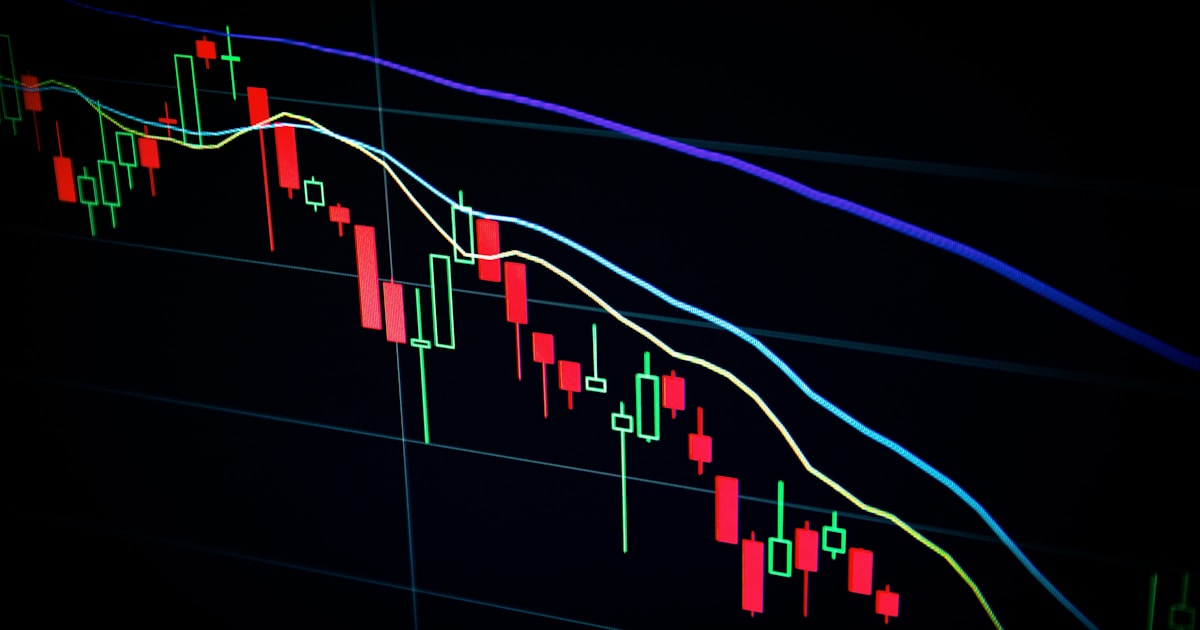
When the United States raised tariffs on Chinese imports to 145% in early 2026 — and China responded with 125% duties on American goods — it wasn’t just a trade policy dispute. It was a capital markets event of the first order. The escalation, far exceeding the 25% peak levies of the 2018–2019 trade war, has sent tremors through equity markets, debt markets, and dealmaking pipelines simultaneously.
Understanding where those tremors are landing — and where they haven’t yet — is essential for grasping how global capital markets are positioning for what could be a prolonged standoff between the world’s two largest economies.
The IPO Market: A Chilling Effect on Listings
The first casualty of tariff shock has been the primary market. Companies planning initial public offerings depend on predictable forward earnings to set valuation ranges, and that predictability has evaporated for businesses with meaningful exposure to US-China supply chains.
In the first quarter of 2026, global IPO proceeds fell roughly 30% compared to the same period in 2025, as several mid-size industrial and consumer goods companies quietly shelved listing plans amid escalating tariff uncertainty. Investment bankers report that the pipeline of deals expected to price in the second quarter is being aggressively re-evaluated.
“You simply cannot model forward revenue when your input costs could swing 40% depending on which tariff exemption survives the next 90 days,” said one senior equity capital markets banker at a major Wall Street firm. “Boards are choosing to wait rather than price a deal into uncertainty.”
The exception, tellingly, has been companies with fully domesticated supply chains — and those based in beneficiary economies like India, Vietnam, and Mexico, which are attracting renewed IPO interest as manufacturers announce supply chain relocations.
M&A Activity: Deals on Ice
The mergers and acquisitions market has been hit from multiple angles. Cross-border deals involving Chinese assets or significant China-exposed revenue streams have stalled almost entirely. Buyers are demanding steeper valuation discounts to compensate for supply chain risk — discounts that sellers, who priced their businesses before the tariff shock, are reluctant to accept.
Even domestic US M&A has softened. Private equity firms, which drove much of the buyout activity in late 2025, are recalibrating deal models to stress-test portfolio companies against a sustained high-tariff environment. Higher-for-longer borrowing costs, combined with compressed EBITDA multiples in tariff-exposed sectors, are making leveraged buyouts harder to underwrite.
Strategic M&A in tariff-insulated sectors — healthcare, financial services, domestic infrastructure — remains relatively healthy. Goldman Sachs reported a record Q1 2026 in part because its advisory teams were busy with exactly this kind of defensive repositioning activity.
Corporate Bond Markets: Spreads Widen, Issuance Surges
The credit markets are telling a nuanced story. Investment-grade spreads have widened by approximately 40 to 60 basis points since January, reflecting investor concerns about margin compression in tariff-exposed industries. High-yield spreads have moved more dramatically — some estimates put the widening at 120 to 150 basis points for companies with significant China manufacturing or revenue dependency.
Yet paradoxically, corporate bond issuance has been robust. Companies that can access the market are doing so aggressively, front-loading debt issuance while their credit ratings and spreads are still manageable — and before second-quarter earnings reports potentially reveal the full tariff impact on margins.
January and February 2026 saw near-record US investment-grade corporate bond issuance, with blue-chip borrowers including technology, healthcare, and utility companies raising capital at still-attractive absolute rates. The strategy is essentially a race to the debt window before the tariff effects fully show up in income statements.
The Treasury Market: The ‘Sell America’ Trade
Perhaps the most consequential capital markets dynamic has been playing out in the US Treasury market. China holds an estimated $760 billion in US government securities — a figure that has been declining steadily as Beijing diversifies its reserve holdings. The tariff war has accelerated that trend.
The result is an unusual dynamic: even as US equity markets have seen volatility spikes typically associated with a flight to Treasury safety, yields have periodically risen rather than fallen. The 10-year Treasury yield has been volatile in a wide band, reflecting the tension between traditional safe-haven buying and foreign official selling.
Analysts at several major fixed-income houses have labeled this the “sell America” trade — a phenomenon where both US equities and US government bonds face simultaneous selling pressure, as foreign holders of dollar assets reassess concentration risk. It echoes dynamics seen during the 2011 debt ceiling crisis and more recently during the 2022 UK gilt crisis, but with far greater global scale.
Currency Markets and Capital Flow Reallocation
The dollar has had a paradoxical run. Conventionally, the greenback strengthens during global risk-off episodes — the so-called “dollar smile.” But when the United States itself is the source of the shock, that dynamic breaks down. The dollar index has seen unusual weakness for a risk-off environment, falling against the euro and Japanese yen even as emerging market currencies face pressure.
The offshore Chinese yuan (CNH) has weakened toward multi-year lows, reflecting both capital outflow pressure and deliberate reserve management by the People’s Bank of China. A significantly weaker yuan partially offsets the tariff burden on Chinese exporters, but also raises the risk of retaliatory currency designations from Washington — adding another layer of uncertainty for capital markets participants.
Meanwhile, sovereign wealth funds and large institutional allocators across the Middle East, Southeast Asia, and Europe are quietly reducing US equity overweights and building positions in European equities, Japanese government bonds, and emerging market debt — assets offering diversification away from the US-China crossfire.
Private Equity: The Exit Crunch
For the private equity industry, the tariff war has complicated an already challenging exit environment. PE firms that backed manufacturing, logistics, and consumer goods companies with China-linked supply chains are finding that public market valuations have compressed significantly — making IPO exits less attractive and strategic sale processes more drawn out.
In venture capital, cross-border US-China investment — already constrained by the CFIUS review process and export control regimes — has effectively frozen. Chinese tech firms contemplating US listings have shelved those plans indefinitely, and US venture funds with China exposure are marking down portfolio values.
The Historical Parallel — and Why This Time Is Different
The 2018–2019 US-China trade war at peak tariffs of 25% caused a roughly 20% drawdown in US equities before a “Phase One” deal provided relief. At 145%, the current tariff levels are nearly six times that peak, though they apply to a narrower range of goods. The critical question for capital markets participants is whether economic damage accumulates slowly enough for a negotiated solution to emerge before a more severe credit or equity event forces a resolution.
Goldman Sachs and JPMorgan have both revised US GDP growth forecasts downward by 1.5 to 2 percentage points for 2026, citing tariff drag. If those revisions prove accurate, credit conditions could tighten meaningfully in the second half of the year — creating a feedback loop where capital markets stress becomes a driver of, rather than just a reactor to, economic deterioration.
Three Catalysts Markets Are Watching
Capital markets participants are closely monitoring three potential triggers. First, any resumption of formal US-China trade negotiations — even preliminary talks — would likely trigger a significant rally across equities, credit, and risk assets. Second, the Federal Reserve’s response: if tariff-driven inflation forces the Fed to hold rates higher for longer, it complicates the math for both equity valuations and the highly leveraged corners of credit markets. Third, second-quarter corporate earnings in July, which will be the first full data set showing the tariff impact on revenues and margins for multinational companies.
Until those catalysts clarify, expect continued volatility across asset classes, elevated credit spreads, and a hesitant primary market. Capital markets have navigated trade wars before — but rarely one escalating at this speed and to this scale.
Disclosure: It is for informational purposes only and is not investment advice.