On October 28, 2026, Newport Beach, California-based Chipotle Mexican Grill, Inc. (NYSE: CMG) reported third-quarter 2026 financial results, posting a 9.6% year-over-year revenue increase to $3.3 billion alongside a 2.1% rise in comparable restaurant sales. The report marked Chipotle’s third consecutive quarter of positive comparable transaction growth (0.8%), demonstrating consumer demand stability and operational execution even as restaurant-level operating margins contracted to 23.3% under wage and corporate expense pressures.
Key Takeaways
- Traffic Turnaround Sustained: Comparable restaurant sales climbed 2.1% year-over-year in Q3 2026, driven by a 0.8% increase in customer transactions and a 1.3% increase in average check size.
- Restaurant Margins Compressed: Restaurant-level operating margin settled at 23.3% versus 24.5% in Q3 2025, as higher employee wages, incentive bonuses, and insurance offset lower food and packaging costs (29.5% of revenue).
- Chipotlane Rollout Scales Fleet: Chipotle opened 84 company-owned locations in the quarter—with 53 featuring a drive-thru Chipotlane—along with 5 international partner locations, lifting total systemwide restaurants to 4,287.
- Robust Liquid Reserves: The balance sheet held $634.2 million in cash and cash equivalents and $268.4 million in short-term investments as of September 30, 2026, with zero funded long-term debt aside from operating leases.
Turnaround Momentum: Three Consecutive Quarters of Traffic Growth
Chipotle’s third-quarter performance provided critical confirmation that customer traffic momentum has stabilized following late-2025 volatility. Total revenue reached $3.293 billion (reported as $3.3 billion), up 9.6% compared to $3.003 billion in the third quarter of 2025, according to Chipotle’s Form 8-K Exhibit 99.1 filed with the Securities and Exchange Commission.
The central operational metric scrutinized by market participants was comparable restaurant sales. Following a contraction of 2.5% in the fourth quarter of 2025—prompted by consumer dining caution and social media debate regarding burrito portion sizes—Chipotle has now posted three consecutive quarters of positive transaction growth: +0.5% in Q1 2026, +2.2% in Q2 2026, and +2.1% in Q3 2026.
Crucially, the 2.1% comp growth in Q3 was balanced between ticket and volume. Average check size increased 1.3%, while transaction counts rose 0.8%. In an industry where many competitors have relied exclusively on menu price increases to mask falling foot traffic, Chipotle’s positive transaction growth reflects genuine demand recovery. Digital ordering channels also continued to expand, accounting for 38.8% of total food and beverage revenue during the quarter, up from 36.7% in Q3 2025.
Cost Structure Breakdown: Food Relief vs. Labor Headwinds
While top-line sales expanded, Chipotle experienced cost pressures that compressed operating profitability. Operating margin contracted to 13.7% from 15.9% in Q3 2025, with operating income declining from $477.17 million to $451.96 million. On a restaurant-level basis, operating margin finished at 23.3%, down 120 basis points from 24.5% a year prior.
Examining the expense lines reveals divergent trends across commodity and personnel expenses:
- Food, Beverage, and Packaging: Decreased 50 basis points to 29.5% of total revenue ($972.36 million), compared to 30.0% ($902.45 million) in Q3 2025. Management noted that menu pricing adjustments, tariff relief, and favorable limited-time offer mix helped lower relative costs, partially offset by wholesale inflation in beef and freight alongside higher protein usage.
- Labor Costs: Increased 50 basis points to 25.7% of total revenue ($847.51 million), compared to 25.2% ($756.67 million) in Q3 2025. The deleveraging was driven by wage inflation across restaurant crew members, performance-based incentive compensation, increased insurance expenses, and staffing added to execute promotional campaigns and speed-of-service initiatives.
- General and Administrative (G&A): Rose to $185.23 million (5.6% of revenue) from $146.74 million (4.9%) in Q3 2025, driven by stock-based compensation, corporate bonuses, and outside professional services supporting strategic expansion. Adjusted G&A stood at $183.75 million.
As a result of higher operating and administrative overhead, GAAP net income fell 11.0% to $339.87 million, or $0.27 per diluted share, compared to $382.10 million, or $0.29 per diluted share, in Q3 2025. On an adjusted basis, net income was $344.58 million, or $0.27 per adjusted diluted share. Readers tracking earnings calculations can explore our guide on EPS, diluted EPS, and non-GAAP adjustments to understand how corporate adjustments bridge GAAP and adjusted profitability.
| Financial & Operating Metric | Q3 2026 | Q3 2025 | Year-over-Year Change |
|---|---|---|---|
| Total Revenue | $3,293.2M | $3,003.4M | +9.6% |
| Comparable Restaurant Sales | +2.1% | +0.3% | +180 bps |
| Operating Income | $451.96M | $477.17M | -5.3% |
| Restaurant-Level Margin | 23.3% | 24.5% | -120 bps |
| Food & Packaging Cost (% Rev) | 29.5% | 30.0% | -50 bps |
| Labor Costs (% Rev) | 25.7% | 25.2% | +50 bps |
| Diluted EPS (GAAP) | $0.27 | $0.29 | -6.9% |
| Company-Owned Restaurants | 4,267 | 3,916 | +351 units |
Chipotlane Unit Economics and Fleet Expansion
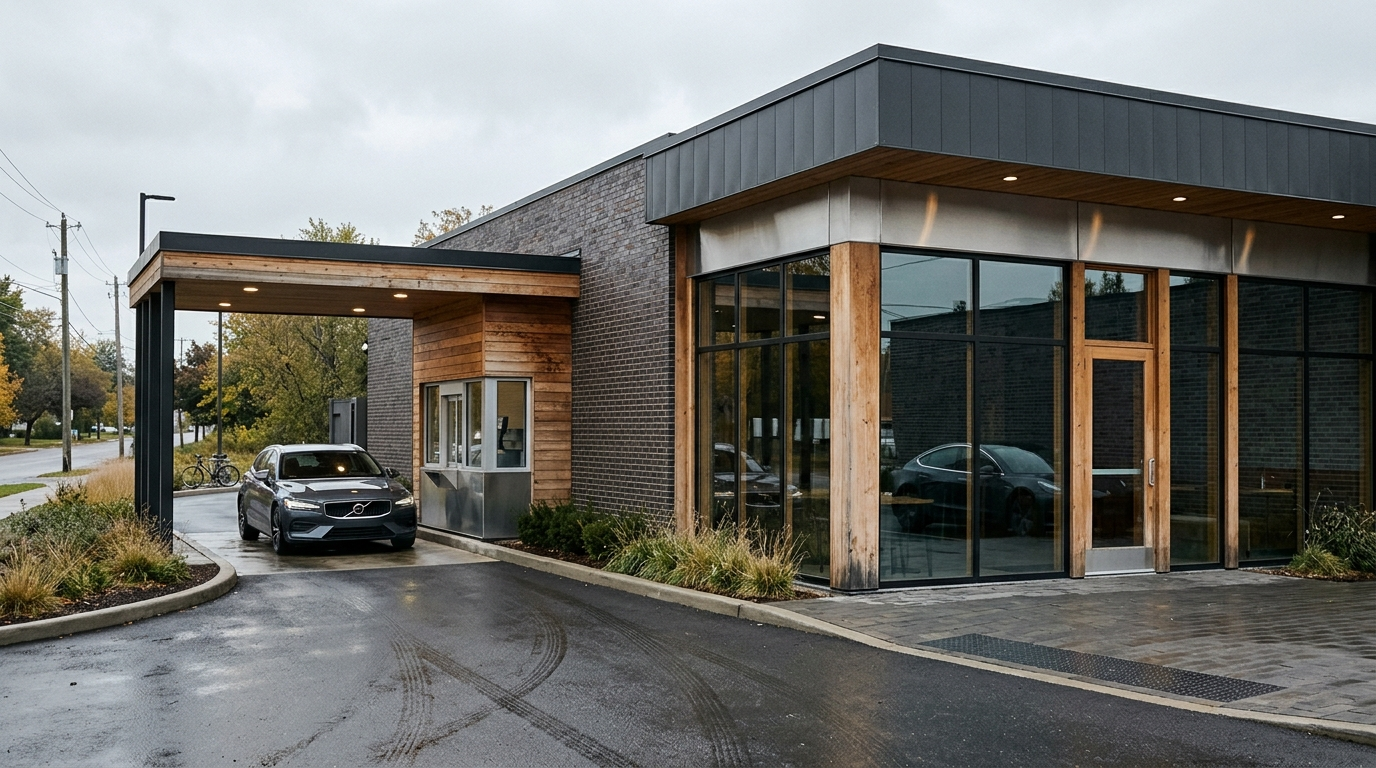
New unit development remains the primary growth driver powering Chipotle’s top line. During Q3 2026, the company opened 84 company-owned restaurants—53 of which included a Chipotlane drive-thru format (63.1% of quarterly openings)—and 5 international partner-operated restaurants. At quarter-end, the company-owned restaurant footprint expanded to 4,267 locations, up from 3,916 units at the end of Q3 2025. International partner-operated units reached 20 locations, bringing the total systemwide count to 4,287 restaurants.
Chipotlanes represent the cornerstone of the company’s long-term real estate strategy. By facilitating order-ahead digital pickup without requiring dining room entry, Chipotlanes generate higher average unit volumes and superior cash-on-cash returns compared to traditional inline formats. Trailing twelve-month average restaurant sales stood at $3.106 million across the company-owned base, maintaining steady volume alongside network expansion.
Under Chief Executive Officer Scott Boatwright, Chipotle has also accelerated back-of-house technology deployments. The High-Efficiency Equipment Package (HEEP)—which includes automated dual-sided plancha grills and automated prep tools—has scaled across more than 1,700 locations. These installations have helped streamline peak throughput, enabling restaurant teams to process orders more rapidly during high-volume lunch and dinner dayparts.
Balance Sheet Liquidity and Share Repurchase Capital Allocation
According to Chipotle’s Form 10-Q for the period ended September 30, 2026, the company maintains significant liquid flexibility. Current liquid assets totaled $902.56 million, consisting of $634.21 million in cash and cash equivalents and $268.35 million in short-term investments, alongside $100.37 million in long-term investments. The company carries no long-term funded debt instruments or credit line borrowings, though it reports $5.277 billion in long-term operating lease liabilities and $321.56 million in current operating lease liabilities under standard lease accounting rules.
During the third quarter, Chipotle deployed $110.0 million into share repurchases, retiring shares at an average price of $34.05 per share. As of September 30, 2026, the company held $1.6 billion in remaining share repurchase authorizations from its Board of Directors. Investors evaluating corporate capital allocation and balance-sheet liquidity can cross-reference our operational analysis of Costco’s cash-generative retail model, as well as our fundamental tutorial on how to read an earnings report.
2026 Outlook and 2027 Development Pipeline
Looking ahead, Chipotle management reaffirmed its full-year 2026 operational targets while introducing initial pipeline estimates for 2027:
- Full-Year 2026 Guidance: Comparable restaurant sales growth is anticipated in the low single digit range. Management expects to open between 350 and 370 new restaurants during 2026, including 10 to 15 international partner-operated units. Approximately 80% of new company-owned openings are planned to feature a Chipotlane drive-thru. The full-year effective tax rate is projected between 24% and 26% before discrete items.
- Preliminary 2027 Targets: Management anticipates opening 340 to 360 new company-owned locations across the United States and Canada, alongside 15 to 25 company-owned and partner-operated locations in international markets.
- Menu Catalysts: In the near term, Chipotle is slated to reintroduce its limited-time Mesquite-Smoked Brisket menu offering in November 2026, which leadership expects to provide fourth-quarter traffic support.
With three consecutive quarters of positive transaction growth in the books, Chipotle has demonstrated that its core consumer proposition remains intact. Navigating ongoing restaurant wage inflation and sustaining high throughput at scale will determine whether unit margins stabilize as the chain pushes toward its long-term objective of 7,000 North American restaurants.
Sources
- Chipotle Mexican Grill, Inc. Form 8-K Exhibit 99.1 (Q3 2026 Earnings Release) — SEC EDGAR, October 28, 2026.
- Chipotle Mexican Grill, Inc. Form 10-Q (Quarter Ended September 30, 2026) — SEC EDGAR, October 29, 2026.
Disclosure: This article is for informational purposes only and is not investment advice.