
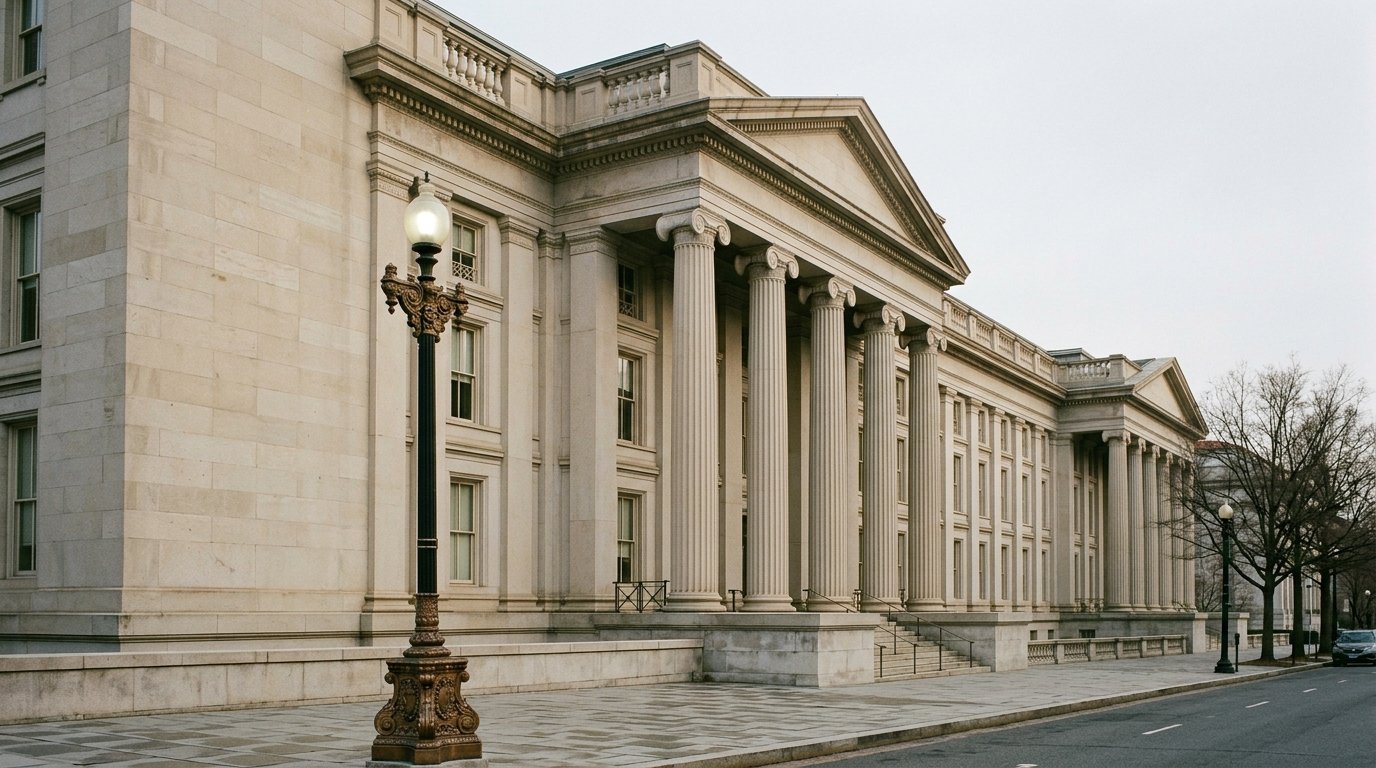
The Treasury General Account (TGA) is the primary operating account of the United States federal government, held directly at the Federal Reserve Bank of New York. Every dollar the government collects in taxes or raises through debt issuance flows into this account, and every federal payment flows out of it. Because the TGA sits directly on the Federal Reserve’s balance sheet as a central bank liability, fluctuations in the Treasury’s cash balance directly expand or contract the supply of commercial bank reserves in the financial system.
For investors, macro analysts, and capital markets participants, tracking the TGA is essential for understanding short-term funding conditions, repo rates, and overall market liquidity. If you are new to market plumbing, our learning guide provides a foundational roadmap to central bank mechanics.
Key Takeaways
- The Government’s Checking Account: The TGA is the federal government’s official deposit account at the Federal Reserve, managed on a modified cash basis as reported in the Daily Treasury Statement.
- Central Bank Liability Dynamics: Because total Federal Reserve assets must balance total liabilities, an increase in the TGA mechanically reduces commercial bank reserve balances dollar-for-dollar, all else being equal.
- Liquidity Injections vs. Drains: Tax deadlines and Treasury debt issuance drain cash reserves from the commercial banking sector into the TGA, while government disbursements inject reserves back into the private financial system.
- Not Quantitative Easing: When the Treasury spends down cash from the TGA, it does not create new central bank assets; it merely transfers existing balances back into commercial bank reserve accounts.
What Is the Treasury General Account (TGA)?
The United States Department of the Treasury does not store its operating cash in commercial bank accounts. Instead, under the Federal Reserve Act, the Federal Reserve Banks act as fiscal agents of the United States. According to the Federal Reserve’s weekly balance sheet release, the central bank maintains official deposit accounts, as the Fed’s statistical notes confirm: Also includes certain deposit accounts other than the U.S. Treasury, General Account, for services provided by the Reserve Banks as fiscal agents of the United States.
The Federal Reserve Bank of New York works to promote sound and well-functioning financial systems and markets through its provision of industry and payment services, serving as the specific Reserve Bank where the Treasury General Account is legally established. The Fiscal Service of the U.S. Department of the Treasury monitors these inflows and outflows daily. As the Treasury officially notes, The Daily Treasury Statement summarizes the US Treasury’s cash and debt operations for the Federal Government on a modified cash basis. Deposits are reported as received and withdrawals are reported as processed.
The Central Bank Balance Sheet Identity
To understand why the TGA matters for stock and bond markets, one must look at the liability side of the Federal Reserve’s balance sheet. The Federal Reserve’s assets consist primarily of U.S. Treasury securities, mortgage-backed securities, and loans extended through central bank lending facilities. On the liability side, the Fed owes balances to various market participants:
Total Fed Assets = Currency in Circulation + Bank Reserves + Treasury General Account + Overnight Reverse Repo + Other Deposits
When the Federal Reserve is neither expanding nor contracting its total balance sheet through asset purchases or quantitative tightening, total Fed assets remain static. Therefore, the sum of Fed liabilities must also remain constant. If the Treasury collects taxes or sells new debt, money moves from private bank accounts into the TGA. On the Fed’s ledger, the Treasury General Account increases, and commercial bank reserve balances decrease by the exact same dollar amount.
Step-by-Step Worked Example: The Double-Entry Plumbing
To see how central bank accounting works in practice, consider an illustrative example where corporations and individuals pay $100 billion in quarterly estimated taxes to the federal government.
Step 1: Tax Payment from Private Accounts
When taxpayers remit $100 billion, their commercial bank accounts are debited. On the balance sheet of commercial banks, customer deposit liabilities fall by $100 billion. Simultaneously, the commercial banks settle this payment across the Federal Reserve’s Fedwire funds service.
Step 2: Federal Reserve Settlement
The Federal Reserve debits the commercial banks’ master reserve accounts by $100 billion and credits the U.S. Treasury General Account by $100 billion. The commercial banking system now holds $100 billion fewer reserve dollars at the central bank. Total private purchasing power and high-powered money inside the commercial banking network have contracted, even though the central bank took no monetary policy action.
| Transaction Phase | Commercial Banking Sector | Federal Reserve Liabilities | System Liquidity Effect |
|---|---|---|---|
| Tax Remittance or Debt Sale | Customer deposits drop -$100B; reserves drop -$100B | Reserves drop -$100B; TGA increases +$100B | Contractionary (Liquidity Drained) |
| Treasury Expenditure / Outflow | Recipient deposits rise +$100B; reserves rise +$100B | TGA decreases -$100B; Reserves rise +$100B | Expansionary (Liquidity Injected) |
Step 3: What Happens During Treasury Auctions?
A similar dynamic unfolds when the Treasury conducts debt auctions. As explained in our guide on how Treasury auctions work, primary dealers and institutional buyers pay for freshly auctioned Treasury bills, notes, and bonds. If primary dealers purchase $50 billion of newly issued Treasury bills and the Treasury parks those proceeds in the TGA without immediate spending, $50 billion of reserve cash is temporarily locked inside the government’s account.
Common Misconceptions About the TGA
Misconception 1: Spending Down the TGA Is Quantitative Easing
When the Treasury spends accumulated cash, market commentators often proclaim that the government is “running stealth QE.” This is legally and mechanically incorrect. Quantitative easing occurs when the Federal Reserve purchases securities on the open market, creating brand-new central bank reserves out of thin air and growing both its asset and liability ledgers. TGA spending involves no newly created money; it is simply the expenditure of funds previously collected through taxes or borrowing, re-entering commercial circulation.
Misconception 2: The Federal Reserve Can Directly Overdraft the TGA
Under the Federal Reserve Act, the Federal Reserve is prohibited from directly lending to the Treasury or allowing prolonged uncollateralized overdrafts in the TGA. The federal government must ensure its operating account maintains a positive cash balance by collecting taxes or selling debt to the public through TreasuryDirect and competitive auctions.
Misconception 3: The TGA Operates in Isolation
The TGA is not the only liability that absorbs liquidity. As detailed in our breakdown of repo and reverse repo plumbing, the Federal Reserve’s Overnight Reverse Repo Facility (ON RRP) also competes for liquidity. When money market funds withdraw cash from the ON RRP to purchase Treasury bills, the TGA rises while the ON RRP declines, leaving commercial bank reserves relatively unaffected. The net drain on commercial bank reserves occurs when non-bank investors and banks purchase Treasuries using commercial deposit balances.
What to Watch: Practical Tracking for Investors
Investors do not need proprietary institutional terminals to monitor the TGA. The U.S. Department of the Treasury publishes the Daily Treasury Statement every federal business day at 4:00 PM Eastern Time. Table I of the report discloses the exact opening and closing operating cash balance of the Treasury General Account.
Key seasonal dates to monitor include mid-April and mid-September corporate tax filing deadlines, quarterly refunding announcements, and periods surrounding federal debt ceiling debates. When the TGA refills rapidly, short-term funding rates in secured financing markets often face upward pressure; when the TGA is drawn down rapidly, systemic bank cash expands.
Sources & Further Reading
- U.S. Department of the Treasury: Daily Treasury Statement (DTS) — Official daily accounting of the Federal Government’s operating cash balance and debt operations on a modified cash basis.
- Federal Reserve Board: Factors Affecting Reserve Balances (H.4.1) — Statistical release detailing Federal Reserve assets, liabilities, reserve balances, and the U.S. Treasury, General Account.
- Federal Reserve Bank of New York: FedPoints and Fiscal Agency Services — Overview of Federal Reserve banking services, payment operations, and fiscal agent responsibilities for the U.S. government.
- ECMSource: How Treasury Auctions Work: Bid-to-Cover, Direct, and Indirect Bidders — Primer on primary market Treasury debt issuance and auction mechanics.
- ECMSource: Repo and Reverse Repo Explained: Short-Term Funding Plumbing — Explainer on central bank repo facilities, money market funds, and collateralized lending.
Disclosure: This article is for informational purposes only and is not investment advice.