
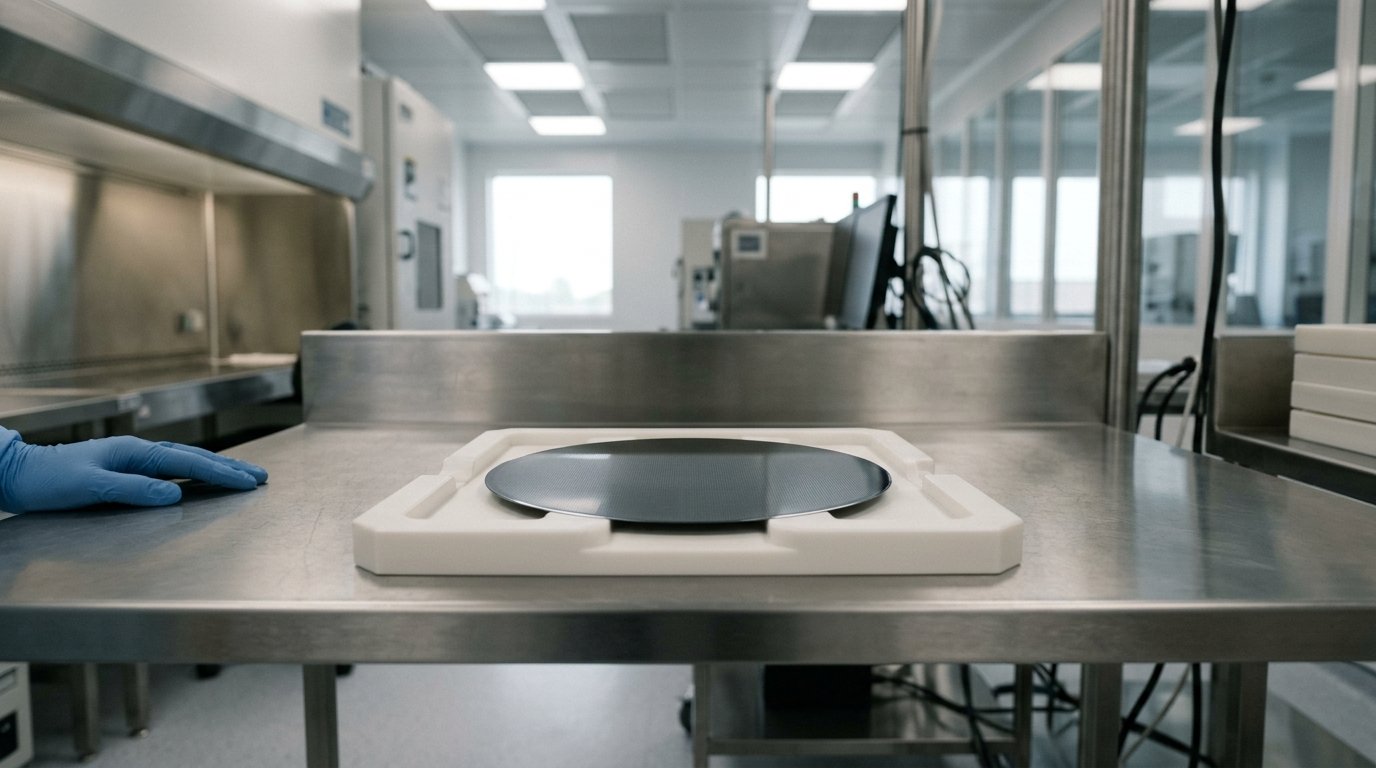
Shares of Intel Corporation (NASDAQ: INTC) and South Korean memory titan SK Hynix (KRX: 000660 / OTC: SKHY) climbed more than 3% in pre-market trading on Wednesday, September 16, 2026. The rally followed a Reuters report indicating the companies are discussing a landmark partnership to manufacture advanced memory silicon wafers on United States soil for the first time.
As of 8:30 AM EDT on Wednesday, September 16, 2026, Intel shares traded up 3.2% in pre-market activity, while SK Hynix gained 3.0%. The move energized the broader semiconductor complex ahead of the Federal Reserve’s interest rate decision, lifting memory peer Micron Technology (NASDAQ: MU) by 1.4% and Samsung Electronics by 1.1%.
Key Takeaways
- Active Negotiations: SK Hynix officially confirmed Wednesday that it is “exploring various options to strengthen its global competitiveness,” following reports of high-level discussions with Intel regarding domestic U.S. wafer fabrication.
- Dual Transaction Structures: Talks center on two distinct avenues: SK Hynix leasing cleanroom capacity at Intel’s multibillion-dollar New Albany, Ohio fabrication mega-site, or creating an equity joint venture alongside major cloud hyperscalers.
- Domestic Supply Chain Shift: Micron is currently the only memory manufacturer fabricating silicon wafers within the United States; a deal would break foreign wafer dependence for next-generation High Bandwidth Memory (HBM).
- Regulatory Hurdle in Seoul: Any transfer or offshore deployment of advanced memory manufacturing technology requires rigorous scrutiny and national security clearance from South Korea’s Ministry of Trade, Industry and Energy.
The Catalyst: SK Hynix Confirms Strategic Review
The catalyst erupted after reporting revealed that Intel and SK Hynix have engaged in preliminary negotiations to establish memory wafer fabrication lines in the United States. In response to the market reaction, SK Hynix issued an official corporate statement on Wednesday morning addressing the speculation directly.
“SK Hynix is exploring various options to strengthen its global competitiveness, but no specific plans or arrangements have been finalized at this time,” the company stated, adding that “no decisions have been made regarding the two scenarios mentioned in the article.”
While the statement maintained standard corporate caution, investors seized on the confirmation that discussions are underway rather than an outright denial. For Intel, which has aggressively invested in its contract foundry business and advanced packaging footprint, attracting the world’s preeminent High Bandwidth Memory supplier would represent a monumental commercial validation. Intel previously bolstered its foundry division by naming former SK Hynix chief executive Seok-Hee Lee to lead its packaging operations, as detailed in our earlier report on Intel Foundry leadership expansion.
Two Potential Deal Blueprints: Ohio Lease vs. Cloud Consortium
According to sources cited in the discussions, two primary operational models are being weighed by executives:
- Cleanroom Facility Lease in Ohio: Intel has poured tens of billions of dollars into its New Albany, Ohio campus, designed as a modular mega-fab hub. Under this arrangement, SK Hynix would lease a dedicated shell or portion of Intel’s cleanroom space, installing its proprietary lithography tools and chemical vapor deposition machinery to process memory wafers directly within Intel’s facility. This would slash SK Hynix’s capital lead time by an estimated two to three years compared to constructing a greenfield fab.
- Hyperscaler Equity Joint Venture: A second proposal envisions a co-investment structure involving Intel, SK Hynix, and major cloud service providers (hyperscalers such as Microsoft, Google, or Amazon). In this structure, the cloud giants would provide upfront capital commitments and guaranteed off-take contracts for advanced DRAM and HBM wafers, de-risking the enormous initial fixed costs for both chipmakers.
This dual approach reflects the intensifying capital requirements of the artificial intelligence hardware boom. Last summer, SK Hynix signaled its rising global ambitions by launching a record $29B Nasdaq ADR listing, illustrating how Asian semiconductor leaders are seeking direct access to U.S. institutional capital pools.
Why Onshoring Memory Wafers Reshapes the Chip Industry
While the CHIPS and Science Act succeeded in attracting leading-edge logic fabrication commitments to Arizona and Texas, advanced memory silicon has remained an acute vulnerability. High Bandwidth Memory is the indispensable component paired with graphics processing units from Nvidia and AMD. Every H200, B200, and next-generation architecture requires dense stacks of DRAM dies connected via silicon through-vias (TSVs).
Currently, Micron is the only top-tier player fabricating memory silicon wafers domestically. While SK Hynix committed $3.87 billion toward an advanced packaging and R&D facility in West Lafayette, Indiana, that plant relies on raw processed wafers shipped from its foundries in Icheon and Cheongju, South Korea. If geopolitical friction or natural disasters disrupt trans-Pacific shipping, packaging lines cannot function.
Manufacturing memory wafers in Ohio alongside Intel’s advanced packaging infrastructure would establish an end-to-end onshore supply loop. For Intel Foundry, hosting SK Hynix would boost capacity utilization at its Ohio facility, which has faced questions regarding capital efficiency and anchor-customer commitments.
Key Risks and Strategic Hurdles
Despite investor optimism, market participants must weigh substantial regulatory and operational obstacles before any agreement reaches financial closing:
- Seoul Technology Export Scrutiny: The South Korean government classifies advanced memory manufacturing techniques as “National Core Technologies.” South Korea’s Ministry of Trade, Industry and Energy must approve the offshore deployment of any sub-10nm DRAM production lines to prevent IP leakage.
- Capital Expenditure Burden: Equipping a memory wafer fab cleanroom demands billions of dollars in extreme ultraviolet (EUV) lithography tools from suppliers like ASML. Both companies face tight capital expenditure budgets amid ongoing macro volatility.
- Execution and Yield Timelines: Modern semiconductor fabrication facilities typically require 24 to 36 months between facility handover and commercial yield optimization. Commercial volume shipments would likely not materialize before late 2028.
Frequently Asked Questions
Why did Intel and SK Hynix shares surge today?
Both stocks jumped over 3% in pre-market trading on September 16, 2026, after news broke that the companies are discussing a manufacturing agreement to produce memory silicon wafers at Intel’s Ohio facility. SK Hynix confirmed it is evaluating strategic alternatives to enhance competitiveness.
Does SK Hynix already manufacture chips in the U.S.?
No. SK Hynix is developing an advanced packaging and R&D center in Indiana, but it does not fabricate raw memory silicon wafers in the United States. All wafer production currently takes place in South Korea and China.
What should investors watch next?
Investors should track whether Intel or SK Hynix files a formal Form 8-K or regulatory disclosure detailing a non-binding memorandum of understanding (MoU), along with official statements from South Korea’s trade ministry regarding export approval for advanced memory tools.
Disclosure: This article is for informational purposes only and is not investment advice.