
The last time anyone seriously floated the Chinese yuan as a safe-haven currency, it was usually met with polite skepticism — the kind you’d give a toddler who announces they’re going to fly. The yuan was managed, opaque, capital-controlled. It wasn’t the kind of thing institutional money piled into when the world caught fire. The dollar was the world’s panic room. End of story.
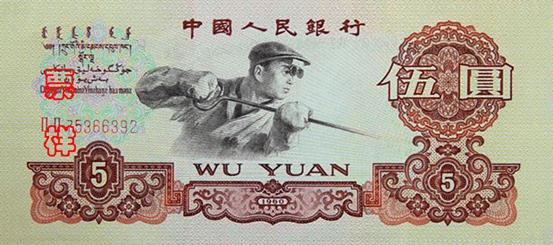
That story is getting more complicated. This week, UBS published a note arguing that the yuan is “already showing signs of safe-haven characteristics” — a phrase that would have read like satire five years ago. Today, with the Strait of Hormuz partially disrupted, oil prices at their highest level since 2022, and India quietly resuming Iranian crude imports, it reads like a market call worth taking seriously.
Here’s the thing: safe-haven status isn’t just a badge you earn. It’s something markets collectively decide — and they decide it by actually buying the asset when things get scary. The yuan has been climbing quietly against a basket of currencies since the Iran conflict escalated. That’s not marketing. That’s price action.
Why Now?
Three threads are converging in 2026 that didn’t exist in the same configuration before.
First, the petrodollar system is fraying faster than most Washington economists want to admit. Russia has been pricing oil exports in rubles and yuan since 2022 sanctions kicked in. Saudi Arabia has been in on-again, off-again talks about yuan-denominated oil sales. And now India — the world’s third-largest oil importer — has resumed buying Iranian crude after a seven-year hiatus, almost certainly not in dollars. When the world’s biggest commodity changes hands without touching the greenback, that matters.
Second, the Iran conflict has exposed the limits of dollar weaponization. U.S. sanctions work by controlling dollar-clearing infrastructure — SWIFT access, correspondent banking, the whole architecture. But if enough energy trade migrates to yuan settlement, that lever loses some of its pull. China’s CIPS (Cross-Border Interbank Payment System) isn’t SWIFT, but it’s real, it’s growing, and it’s specifically designed to route around dollar dependency. Volume on CIPS has roughly doubled over the past three years.
Third — and this one is subtler — the yuan’s capital controls, long seen as a liability, are starting to look like a feature to some investors. The yen’s safe-haven reputation was built partly on its carry-trade dynamics and the reliability of Japanese monetary conservatism. The yuan’s managed float means Beijing can, and does, intervene to prevent sharp moves. In a world where everything is volatile, a currency that doesn’t move dramatically can look… stable. That’s not the same as truly free-floating safety, but it’s not nothing either.
What the Data Actually Shows
To be fair, the yuan’s share of global reserve holdings is still tiny — around 2.5% according to the latest IMF COFER data. The dollar commands roughly 58%. The gap is enormous.
But reserve currency shifts don’t happen overnight, and they don’t start with portfolio managers in London. They start at the margins of global trade — commodity invoicing, bilateral swap lines, central bank diversification in emerging markets. That’s precisely where the yuan has been gaining ground. In 2015, the yuan accounted for about 2% of SWIFT messaging. By early 2026 it’s closer to 4.5%. Still small. But the direction of travel is unmistakable.
Goldman Sachs, in a separate note this week, argued that India’s economy can weather the Iran conflict’s energy shock partly because of its ability to source oil in non-dollar currencies. That’s not an accident. It’s a structural hedge. And other large emerging-market importers — Brazil, South Africa, Indonesia — are watching closely.
The Bull Case for the Yuan
If you squint and take UBS’s argument seriously, here’s what a bull case looks like: China becomes the dominant clearing house for energy trade in a fragmented world. The yuan gets embedded in commodity pricing across Asia and Africa. Central banks in countries that are nervous about dollar weaponization quietly diversify. Over a decade, yuan reserves go from 2.5% to 8–10% of the global total.
That would make the yuan the second-largest reserve currency in the world. That’s not displacing the dollar. But it would be a historic shift.
For investors, that scenario implies certain trades. Emerging-market central banks buying yuan assets means demand for Chinese government bonds — which currently yield more than U.S. Treasuries on a currency-hedged basis for some investors. It also means Chinese financial infrastructure companies, payment networks, and banks facilitating this trade could see significant volume growth.
The Bear Case Is Still Real
Don’t drink the whole glass yet. The yuan’s safe-haven credentials face serious structural obstacles.
Capital controls remain a genuine barrier. If you’re a European pension fund and you need to sell yuan assets in a crisis, you cannot simply do so freely. That constraint alone keeps the yuan out of the top tier of reserve assets for most Western institutions.
There’s also the Taiwan factor. Any escalation in the Taiwan Strait would be immediately catastrophic for yuan assets — the currency would crater, not act as a haven. The geopolitical risk embedded in the yuan is asymmetric in a way the dollar’s risk is not.
And then there’s the simple fact that China’s financial markets, while large, still lack the depth and liquidity of the U.S. Treasury market. You can park $500 billion in Treasuries overnight. You cannot do the same in Chinese government bonds without moving the market.
What It Means for Markets Right Now
The yuan-as-safe-haven thesis isn’t really a trade for most individual investors. It’s a macro signal. What it tells you is that dollar dominance, while intact, is facing the most sustained structural challenge in a generation — and that challenge is being accelerated by the exact kind of geopolitical fracturing that’s unfolding in the Middle East right now.
The practical read for equity investors: dollar strength may be less reliable as a crisis hedge than it has historically been. Currency diversification arguments for international portfolios just got stronger. And any asset class sensitive to a softer dollar — commodities, international equities, gold — has a slightly more durable tailwind than the conventional wisdom allows.
Safe haven status is earned slowly and lost fast. The yuan has a long way to go. But UBS isn’t wrong to raise the flag. The world is reorganizing around energy, and energy is increasingly being priced in something other than dollars. That’s worth watching, even if the shift takes a decade to fully materialize.
Disclosure: This article is for informational purposes only and is not investment advice.