
Uber Technologies (NYSE: UBER) told employees on September 2, 2026 that it is eliminating approximately 3,300 jobs — about 10% of its global corporate workforce — and imposing a stricter in-office attendance rule. CEO Dara Khosrowshahi framed the move as a deliberate reallocation of capital and headcount toward the company’s autonomous-vehicle strategy rather than an AI-driven cull.
The stock, which had traded in a narrow range through late August, closed the session at $76.81, up about 2.05% on the news as investors welcomed the promise of margin expansion. Uber’s market capitalization is now roughly $156.8 billion.
What Uber announced
The restructuring has three moving parts:
- Workforce reduction: ~3,300 corporate roles, concentrated in support functions the company says have been duplicated across regions. Frontline mobility and delivery operations are not directly affected.
- Return-to-office tightening: Corporate staff will be required to be in one of Uber’s designated hubs for a larger share of the workweek. Uber joins a growing list of tech employers pulling back on the pandemic-era hybrid arrangement.
- Capital reallocation: The company plans to redirect the estimated savings into its autonomous-vehicle partnerships and adjacent bets, alongside continued investment in Uber One and advertising.
Sell-side analysts polled by Yahoo Finance peg the annualized cost savings at roughly $580 million, or about 1% of consensus 2026 revenue — meaningful, but not transformative on its own.
The autonomous-vehicle bet, quantified
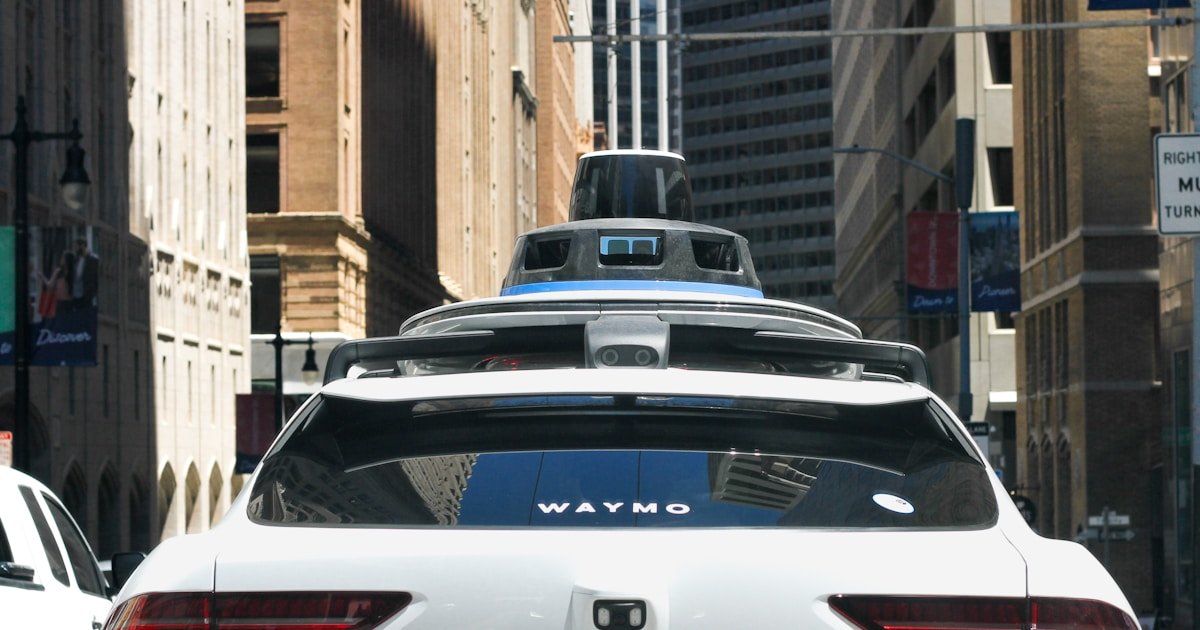
Uber’s AV thesis is that a platform with hundreds of millions of monthly users is the natural distribution layer for robotaxi supply that others (Waymo, Wayve, WeRide, Nuro, and a growing list of Chinese entrants) will produce. Rather than build the stack itself — a strategy Uber abandoned when it sold ATG to Aurora in 2020 — the company is aggregating third-party AV supply onto its network.
The economic prize is real. Ridesharing’s largest cost line is the human driver take-rate. Reducing or eliminating that line item, even on a modest share of trips, changes the unit economics of the mobility segment in ways a headcount cut cannot on its own.
Uber financial snapshot
| Metric | Value | Source |
|---|---|---|
| Price (Sep 2, 2026 close) | $76.81 | Yahoo Finance |
| Day change | +2.05% | Yahoo Finance |
| Market cap | $156.8 B | Yahoo Finance |
| 52-week range | $65.41 – $101.99 | Yahoo Finance |
| Forward P/E | 17.2x | Yahoo Finance |
| YTD total return | -6.0% | Yahoo Finance |
| 2026E revenue (consensus) | $57.96 B | Yahoo Finance (51 analysts) |
| 2027E revenue (consensus) | $66.82 B | Yahoo Finance (49 analysts) |
| 2026E EPS (consensus) | $3.29 | Yahoo Finance |
| 2027E EPS (consensus) | $4.63 | Yahoo Finance |
How the stock has traded into the announcement
Uber ran to $80.35 on August 25 before drifting back to the mid-$70s ahead of today’s news. The 2% pop on the layoff headline recovers only part of the recent slide and leaves the stock roughly 25% below its 52-week high of $101.99.
Where investors are focused
1. Margin trajectory versus reinvestment
Uber has spent the last three years telling the market a story about durable free-cash-flow growth. Q2 FY26 came in at $14.19B of revenue and $2.39B of net income — a 16.87% net margin. Consensus embeds another leg of margin expansion into 2027, driving EPS from an expected $3.29 this year to $4.63 next year. Today’s action is consistent with that story, but only if the freed-up capital compounds inside the AV push rather than getting absorbed by ongoing operating costs.
2. Analyst revisions
Buy-side revisions were already tilted bullish before the announcement. Yahoo Finance shows 18 upward revisions to the 2026 full-year EPS estimate over the last 30 days against 3 downward revisions. The layoff news should reinforce that skew heading into the next round of price-target updates.
3. The return-to-office signal
Return-to-office announcements have become a stealth cost-discipline lever across large tech. Amazon, Google, Meta, and Salesforce have all tightened attendance rules over the past 18 months, often coincident with layoffs. Executives rarely spell out the mechanism, but attrition after RTO tightening tends to disproportionately affect higher-cost, more mobile senior individual contributors — the same population whose base salaries dominate the corporate P&L.
Risks and things to watch
- Execution risk on AV partnerships. Waymo has expanded to multiple US metros but remains supply-constrained. Uber’s ability to actually route material trip volume through partner robotaxis in 2027 will be the key operational milestone to track.
- Regulatory posture. AV rules vary sharply across California, Texas, and Arizona and are evolving in Europe. A single high-profile incident can freeze permitting for quarters.
- Insider dynamics. Watch the September Form 4 filings from named executive officers on EDGAR. Insider buying after a restructuring headline is a more credible signal than the press release itself.
- Competitive pressure. Lyft continues to price aggressively in the US, and DoorDash has been leaning into rides in select markets. Uber’s ability to hold take-rate through a labor cost transition matters as much as the transition itself.
Bottom line
A 10% corporate headcount cut with a clearly stated capital-reallocation purpose is a cleaner story than a defensive layoff. The 2% pop, in a stock that’s still 25% off its highs and trading at roughly 17x forward earnings, suggests the market is willing to give management the benefit of the doubt — but wants to see AV volume, not just a smaller org chart, in coming quarters.
Disclosure: This article is for informational purposes only and is not investment advice.
Sources
- Yahoo Finance — UBER quote page (price, market cap, forward P/E, 52-week range, YTD)
- Yahoo Finance — UBER analyst estimates (revenue, EPS, revisions)
- Yahoo Finance — UBER historical daily prices
- Yahoo Finance news feed — Uber restructuring announcement (Sep 2, 2026)
- Reuters — Uber sells self-driving unit to Aurora (2020 background)
- SEC EDGAR — Uber Technologies Form 4 insider filings