
Fox Corporation’s $22 billion bid for streaming-platform pioneer Roku, announced before the open on Monday, June 15, 2026, has produced one of the widest merger-arbitrage spreads on the US tape this year. The deal headlined at $160 per Roku share in a cash-and-stock structure, but ROKU finished Thursday, June 18 at $138.07, leaving a 15.9% gap to the announced price. Fox shares (FOXA) sank as much as 16.8% on announcement day to $49.00, the worst single-day performance in the S&P 500 that session, before clawing back to $52.23 by Thursday’s close. The price action says investors believe the strategic logic, doubt the execution, and want to be paid extra to hold the risk.
What Fox Is Buying
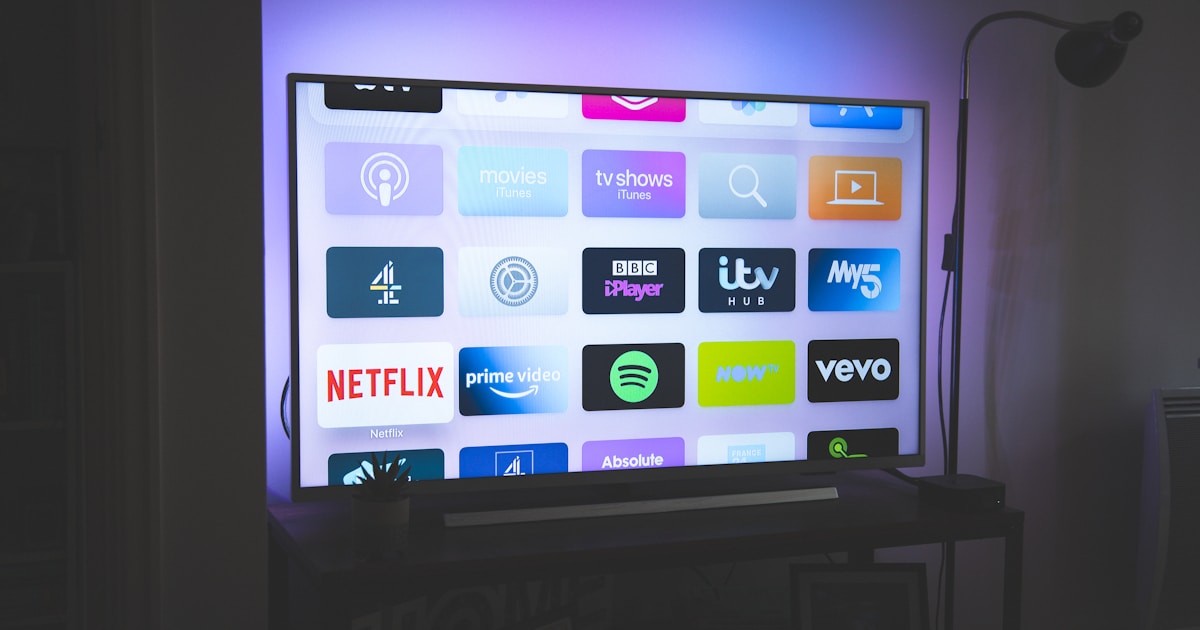
Roku is the largest independent connected-TV (CTV) operating-system company in the United States. Its Roku Channel is a top-five free ad-supported streaming destination, and its platform — the OS that ships on Roku-branded sticks and on TCL, Hisense, and Onn-branded smart TVs — sits between consumers and every streaming app they open. According to trailing-twelve-month figures, Roku generated $4.97 billion in revenue (+16.8% YoY), $201.5 million in net income, and $1.33 in diluted EPS. The stock’s 103x trailing P/E reflects investors paying up for ad-platform growth rather than current earnings.
Fox, after spinning off its entertainment assets to Disney in 2019, kept Fox News, the Fox broadcast network, Fox Sports, and Tubi — its free ad-supported streaming service. With Tubi, Fox already owns one side of the CTV ad equation: inventory. With Roku, it would own the other side: distribution, the home-screen real estate where a third of US TV viewers start their day. The combined entity, according to deal reporting, would become the third-largest player in US television by viewership.
The Deal Terms at a Glance
| Term | Value |
|---|---|
| Announcement date | Monday, June 15, 2026 |
| Offer price per Roku share | $160 |
| Total enterprise value | ~$22B (cash, stock, assumed debt) |
| Roku close, Friday Jun 12 (pre-deal) | ~$112 (approx., per Yahoo Finance) |
| Implied premium to undisturbed price | ~43% |
| Roku close, Thursday Jun 18 | $138.07 |
| Spread to offer | $21.93 (15.9% of price) |
| Fox stock reaction day 1 | -16.8% to $49.00 (worst S&P 500) |
| Underbidder (reported) | Netflix |
Why the Spread Is So Wide
Merger-arb spreads usually compress to low single-digit percentages once an announced deal looks like a near-certain close. A 15.9% gap five trading days in is unusual and points to four overlapping concerns.
1. Financing risk on the cash leg. Fox’s market cap stood at $21.93 billion as of June 18, almost identical to Roku’s enterprise value. Funding a deal of this size against its own balance sheet requires either a substantial new bond raise, an equity component large enough to dilute existing Fox holders meaningfully, or both. The 16.8% drop in FOXA on announcement day is the equity market pricing in that dilution — Fox shareholders are effectively paying part of the premium.
2. Antitrust scrutiny. Fox already owns Tubi, the largest US free ad-supported streaming app by hours watched. Adding the Roku OS and Roku Channel concentrates a meaningful share of the connected-TV ad-impressions pipeline under one corporate parent. Any combination that crosses content, distribution, and ad-tech in the same vertical now invites a long DOJ or FTC second request, and CTV market definition in 2026 is exactly the kind of question the agencies have signaled they want to litigate.
3. The stock-component reset. When part of the consideration is paid in Fox stock and Fox stock has fallen 16.8%, the headline $160 number is already worth less to a Roku holder than it was on Friday. Until the exchange ratio and any collar are publicly disclosed, arbs have to discount the stock leg for further FOXA downside.
4. Strategic-fit skepticism. Cathie Wood’s ARK funds dumped ROKU shares on June 18, signaling that one of the company’s largest long-time bulls would rather take cash near $138 than wait nine to twelve months for a $160 close that may not happen. That kind of seller behavior keeps the spread wide.
What the Spread Implies About Closing Odds
A simple merger-arb back-of-the-envelope: if the deal closes at $160 and the downside (deal break) takes ROKU back to its undisturbed price of roughly $112, then today’s $138.07 price implies the following:
P(close) × $160 + (1 − P(close)) × $112 = $138.07
Solving: 48 × P(close) + 112 = 138.07, so P(close) ≈ 54%. In other words, the market is pricing roughly a coin flip on this deal making it across the finish line at the headline price — an aggressive discount for an announced strategic transaction with a willing seller. That is well below the historical 80%-plus close rate for friendly US M&A deals over $5 billion, and it tells you arbs are weighting one or more of the four risks above heavily.
Why Fox Wanted It Bad Enough to Outbid Netflix
Reports indicate Netflix was the underbidder for Roku, which is itself a striking data point. Netflix is the dominant subscription streaming service globally with roughly 300 million paid memberships and has no need for additional content; what it lacks is its own ad-supported distribution layer outside its own app. Owning Roku’s OS would have given Netflix a way to insert ads, gather first-party CTV ad data, and reduce its dependence on Roku and Amazon Fire TV for new-user acquisition.
For Fox, the strategic logic is even sharper. Fox’s linear-TV cash flows from sports rights and Fox News are durable but slowly eroding as cord-cutting continues. Bundling those properties — live sports especially — with a leading CTV operating system gives Fox direct-to-consumer distribution it does not currently have at scale. Tubi plus the Roku Channel becomes one of the largest AVOD properties in the country, and Fox controls the ad inventory at both the publisher and the platform level.
What Analysts and Holders Are Saying
The sell-side has split. According to Benzinga’s aggregated analyst data, Roku now carries a consensus 12-month price target of $143.88, which sits below the $160 offer — consistent with the market pricing a meaningful probability of a break. Fox carries a 12-month target of $71.40 from 17 analysts, implying 36.7% upside if the deal closes and Fox’s earnings power expands as outlined.
One opinion piece carried the headline “It’s Time To Dump Roku”, reflecting one side of the debate: shareholders who see $160 as the ceiling and $112 as the floor and prefer to lock in the bird in the hand. The other side — including Fox’s own bidding team — argues that combined Fox + Roku is worth more than the sum of the parts because the joint property captures both sides of a CTV ad transaction.
What to Watch Next
- Definitive merger agreement (8-K). Watch for the SEC filing that spells out the cash/stock split, the exchange ratio for the stock leg, and any collar protecting Roku holders against further FOXA decline.
- FTC/DOJ Hart-Scott-Rodino filing. A second request would add 6–12 months to the timeline and push the close into 2027.
- Fox financing announcement. A jumbo bond deal would relieve dilution fears for FOXA but raise interest expense and leverage.
- Topping bid. If Netflix re-emerges with a higher number or a competing platform (Amazon, Google, Comcast) enters, the spread compresses fast.
- Cathie Wood / large-holder filings. 13D/13G updates over the next two weeks will show whether other large ROKU holders are selling into the spread or holding for the close.
Sources
- stockanalysis.com — Roku (ROKU) stock overview and financials
- stockanalysis.com — Fox Corporation (FOXA) stock overview
- Benzinga — ROKU quote, analyst ratings, ARK Invest selling activity
- CNBC Markets — deal coverage for Fox-Roku acquisition
Disclosure: It is for informational purposes only and is not investment advice.