
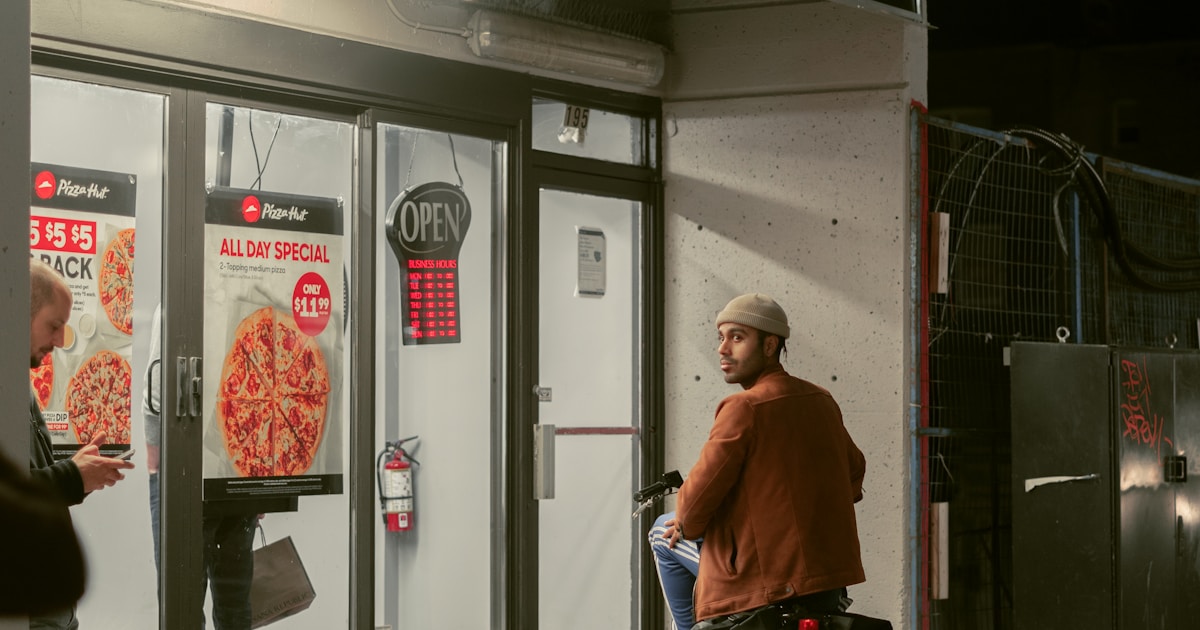
Yum! Brands (NYSE: YUM) said on Monday, June 16, 2026, that it
has reached a definitive agreement to sell its Pizza Hut business
for approximately $2.7 billion, ending a 49-year ownership run
that began when PepsiCo acquired the chain in 1977 and continued after the 1997
Tricon Global spin that became Yum.
The deal splits Pizza Hut along a clean geographic line. LongRange
Capital, a Stamford, Connecticut private equity firm, will buy Pizza Hut’s
operations outside mainland China for roughly $1.5 billion. Yum China Holdings
(NYSE: YUMC), which already operates Pizza Hut in mainland China under a
master-franchise deal from the 2016 spin, will take full ownership of those
domestic restaurants for the balance of the price.
YUM stock rose modestly in early trading. Yum China shares were largely
unchanged. The transaction needs antitrust clearance in both the United States
and China and is expected to close in 2027.
The deal in one table
| Component | Buyer | Price | What changes hands |
|---|---|---|---|
| Pizza Hut ex-mainland China | LongRange Capital (PE) | ~$1.5B | Brand, U.S. franchise system, international rights |
| Pizza Hut mainland China | Yum China (YUMC) | ~$1.2B | Full equity stake; converts master franchise to ownership |
| Total | — | ~$2.7B | Closing expected 2027 subject to regulatory approval |
Why Yum is selling now
Pizza Hut has been the slowest-growing brand in Yum’s portfolio for years.
The chain that once was American pizza lost its U.S. crown to
Domino’s back in 2018 and never reclaimed it. The shift to
delivery and digital ordering rewarded Domino’s and Papa John’s,
both built for off-premise from the start; Pizza Hut’s red-roof dine-in
footprint became an albatross.
The numbers tell the story. Pizza Hut closed roughly 130
locations in 2025 and Yum had already telegraphed another ~250 store closures
in early 2026 before the sale was announced. Same-store sales had run
flat-to-negative for several consecutive quarters even as KFC and Taco Bell
posted mid-single-digit comps.
For CEO David Gibbs, the math became inescapable: Pizza Hut has shrunk to a
mid-single-digit share of Yum’s operating profit while consuming a
disproportionate amount of management attention. A clean sale converts the
chain into capital that can be redeployed to higher-return uses.
How Yum’s brand mix looks after the sale
Once Pizza Hut leaves the portfolio, Yum effectively becomes a two-brand
operator: KFC as the global chicken franchise and Taco
Bell as the fast-growing North American value play. Habit Burger,
acquired in 2020, remains a small fourth brand at fewer than 400 units.
What LongRange Capital is getting — and the risk
LongRange Capital is a relatively young firm specializing in carve-outs of
underperforming corporate divisions. Buying Pizza Hut ex-China gets it the
brand, the U.S. company-operated stores, and a global franchise system spanning
roughly 100 countries. The hard part is fixing what Yum could not.
The playbook is familiar: refranchise remaining company stores, accelerate
digital and delivery investment, cull underperforming units, and modernize the
menu. Private equity buyers tend to be more willing than public-company
managers to absorb a few years of unit closures in exchange for a smaller,
higher-margin system — the same approach Apollo and Roark Capital have used in other restaurant
buyouts.
The risk is execution. Domino’s, Papa John’s and an army of regional
operators have eaten Pizza Hut’s share for a decade, and the macro backdrop
— sticky food inflation, fragile lower-income consumer — is unforgiving
for a turnaround that depends on traffic growth.
Why Yum China matters
For Yum China, the deal is more straightforward. The Hong
Kong- and New York-listed operator has run Pizza Hut in mainland China as a
licensee since the 2016 spin-off. Pizza Hut China is, somewhat counterintuitively,
the brand’s most successful business globally — described by
multiple industry sources as China’s largest foreign
casual-dining chain.
Buying the mainland China rights outright eliminates the master-franchise
royalty Yum China has been paying U.S. headquarters, lets management invest
without a parallel decision-maker in Louisville, and removes a chronic source
of governance friction. At roughly $1.2 billion, the price implies a
modest multiple on the segment’s roughly $400 million-plus of EBITDA.
What it means for YUM stock
For Yum shareholders, the immediate question is what happens to the
proceeds. Three possibilities, in roughly the order Wall Street is pricing
them in:
- Buybacks. Yum has historically returned the bulk of
free cash flow to shareholders through repurchases. A $2.7 billion
haul, even after taxes, would be enough to retire roughly 4–5% of the
float at current prices. - Debt paydown. The company carried roughly
$12 billion of long-term debt at the end of 2025. Some portion of the
proceeds will almost certainly go to deleveraging. - Technology and AI reinvestment. Yum has been investing
in Byte by Yum!, its proprietary tech stack, and AI-driven labor and
forecasting tools. Reports tied to the sale flag this as a stated use of
capital.
The deal also tidies up the equity story. Yum becomes a higher-growth,
higher-multiple business with two world-class brands rather than a
four-brand portfolio dragged down by one. Whether the multiple actually
re-rates depends on what KFC and Taco Bell do next; investors will not pay
up for a cleaner pie chart alone.
What to watch
- Regulatory close. The bigger question mark is China.
Yum China’s acquisition of mainland Pizza Hut rights from a U.S. parent
needs sign-off from both U.S. and Chinese antitrust authorities —
routine in normal times, less so given the current cross-border tensions
in deal flow. - Pizza Hut franchisee reaction. Large multi-unit
franchisees in the U.S. have weathered a decade of underinvestment. Their
willingness to fund LongRange’s remodel programs is the swing factor in
whether the turnaround works. - Yum’s first capital-return announcement post-close.
An accelerated share repurchase program would be the cleanest signal that
management views the proceeds as excess capital. - Domino’s and Papa John’s response. Both will fight to
prevent Pizza Hut from regaining momentum during the ownership transition.
Watch promotional activity in the second half of 2026.
Bottom line
The Pizza Hut sale is the most decisive portfolio move Yum has made since
the 2016 Yum China spin. It is a tacit admission that the brand needed a
different owner to be fixed, and a bet that a more focused KFC-plus-Taco-Bell
Yum can grow faster than the sum of its four pre-deal parts. LongRange
Capital gets a turnaround project with a globally recognized brand. Yum
China gets full ownership of one of its strongest businesses. Whether
shareholders ultimately benefit depends on what Yum does with the cash and
how quickly the remaining two brands can carry the growth narrative.
Sources
- CBS News — Yum Brands sells struggling Pizza Hut in $2.7 billion deal (June 16, 2026)
- Yahoo Finance — LongRange Capital to acquire Pizza Hut, excluding mainland China, from Yum Brands
- Pizza Hut — corporate history, worldwide unit count, 2025 closures
- Yum! Brands — brand portfolio, 2024 revenue and operating income, Yum China spin history
- Yum China Holdings — investor relations
Disclosure: It is for informational purposes only and is not investment advice.