
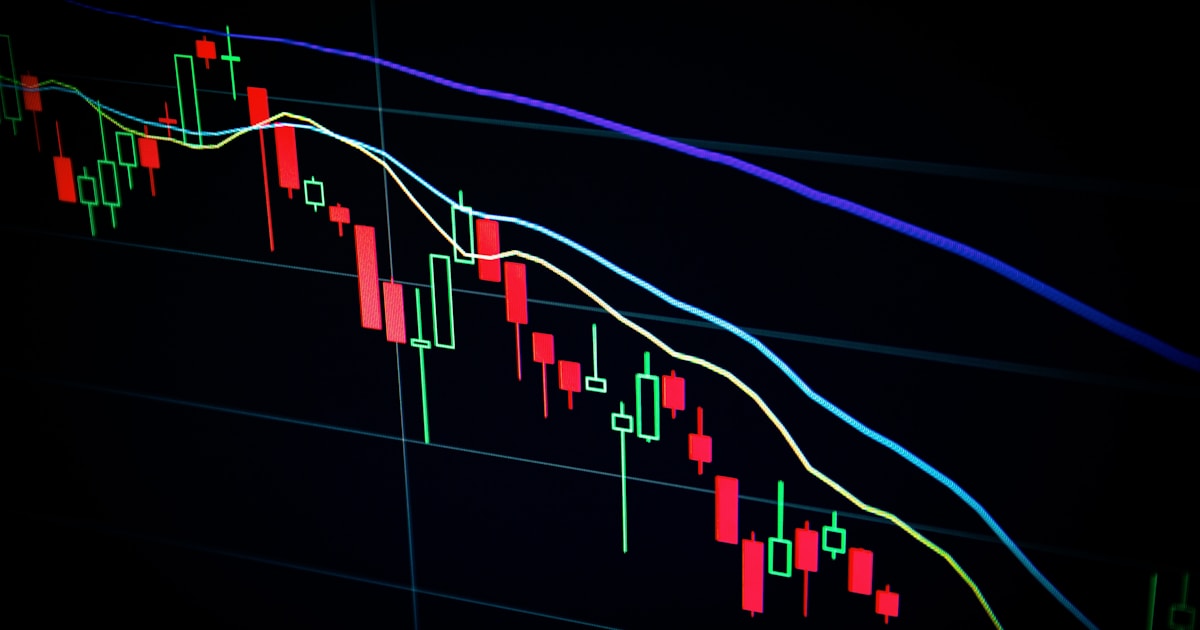
Alphabet (NASDAQ: GOOGL) announced a roughly $80 billion equity capital raise—the largest stock sale on record—to fund a rapidly accelerating artificial-intelligence capital expenditure cycle. The package, disclosed Monday, spans four components: $15 billion of new common stock, $15 billion of convertible preferred securities, a $10 billion strategic investment from Berkshire Hathaway, and a $40 billion at-the-market (ATM) issuance program. Alphabet shares fell 3.9% on the news, the worst single-session decline in two months, according to Yahoo Finance.
For a company that generated about $174 billion in operating cash flow over the trailing twelve months ended March 31 and that just raised more than $85 billion in debt over the past year, tapping equity markets at this scale is a regime change. The signal is unmistakable: even Alphabet’s enormous internal cash engine can no longer keep up with the cost of building AI infrastructure.
Anatomy of the deal
| Component | Size (USD) | Form | Counterparty / Mechanism |
|---|---|---|---|
| Common stock | $15B | Marketed offering | Public investors via underwriters |
| Convertible preferred | $15B | Convertible to common | Institutional buyers |
| Strategic investment | $10B | Negotiated private placement | Berkshire Hathaway |
| At-the-market program | $40B (capacity) | Drip-fed open-market sales | Public market over time |
| Total | ~$80B | Mixed | — |
The structure is deliberately layered. The marketed common-stock tranche provides certainty of proceeds; the convertible preferred lowers the upfront dilution by deferring conversion until a higher reference price; the Berkshire block-trade signals validation from a famously price-sensitive long-term holder; and the ATM gives Alphabet optionality to issue more stock opportunistically if its share price rises. Together, the four pieces let Alphabet raise more cash than any company ever has via public equity without overwhelming the order book in a single transaction.
Why Alphabet is reaching for equity now
For two decades the Google-then-Alphabet playbook was unambiguous: harvest the world’s most profitable advertising franchise, return capital to shareholders via buybacks, and let internal cash flow fund anything operational. Equity issuance was anathema. The company has spent more than half a trillion dollars on share repurchases since 2015. The current move is the inversion of that playbook.
The reason is AI capex. Alphabet’s 2026 capital-expenditure guidance is expected to roughly double from 2025 levels, driven by the cost of building out TPU and Nvidia GPU clusters, custom training silicon, and the data-center power and cooling to run them. Even with $174B of operating cash flow, the company has been raising debt at a record pace—more than $85 billion across the past year alone—to plug the gap between cash generation and reinvestment needs. Issuing equity tells investors the next leg of AI buildout is too large, too fast, and too uncertain in payoff timing to fund entirely with internal cash and balance-sheet leverage.
Berkshire’s role: validation, not endorsement
Warren Buffett and Greg Abel’s $10 billion stake is the most strategically interesting tranche. Berkshire historically owned Apple as its single megacap tech bet; adding Alphabet at this scale suggests Berkshire views the AI capex cycle as a multi-year secular trade rather than a bubble, and that it views Alphabet’s combination of search dominance, cloud growth, and YouTube monetization as undervalued relative to its forward earning power. Berkshire’s involvement also reduces the float that lands in the public market, dampening near-term dilution pressure. Note that Berkshire receiving a negotiated block at favorable terms is different from Berkshire endorsing the equity raise as the right capital-allocation choice—the structure simply gives Berkshire a price-sensitive way in.
Why the stock fell anyway
A 3.9% decline on the news was the market’s verdict on three things at once. First, dilution: layering $30 billion of immediate common-and-convertible issuance plus a $40 billion ATM program meaningfully raises the share count over time, mechanically lowering per-share earnings. Second, signaling: a company with $174B of operating cash flow choosing to raise equity is telling the market that capex needs have outrun the cash engine—a message growth investors generally do not want to hear from a perceived cash cow. Third, return-on-invested-capital concerns: every incremental dollar of AI capex needs to clear a higher hurdle as the spend base grows, and the payback period for AI infrastructure remains a debated question across the hyperscaler complex.
Context: the largest stock sale on record
The $80 billion headline figure exceeds Petrobras’s $70 billion 2010 offering—long considered the high-water mark for global equity issuance—and is larger than the reported $75 billion target for SpaceX’s anticipated IPO. In capital-markets terms, this is the moment AI capex stopped being a balance-sheet story and became a public-equity story. The closest analogue is the telecom buildout of the late 1990s, when carriers tapped public markets for tens of billions to lay fiber. That cycle ended with severe overcapacity and a brutal credit cycle. Whether the AI buildout follows the same arc—or whether the unit economics of compute differ from undersea fiber—is the trillion-dollar question for the rest of the decade.
What to watch next
Three things will determine whether this raise looks visionary or premature in twelve months. First, the pace of ATM issuance: if Alphabet drips $40B into the market quickly, dilution pressure mounts; if the program stays modestly used, the optionality alone justifies the structure. Second, capex disclosures on the next two earnings calls: investors want unit-level visibility on how the new capital translates into TPU/GPU capacity, customer commitments, and Google Cloud revenue. Third, whether other hyperscalers follow. If Microsoft, Meta, or Amazon respond with their own equity raises, the AI buildout enters a new financing regime; if they do not, Alphabet’s move stands as a strategic outlier rather than a sector-wide signal.
Sources
- Yahoo Finance: Alphabet’s $80 billion stock sale shows how expensive AI is getting (June 2026)
- Alphabet Investor Relations
- SEC EDGAR: Alphabet Inc. filings (CIK 0001652044)
- Berkshire Hathaway press releases
- Reuters: Petrobras 2010 share offering (historical reference)
Disclosure: It is for informational purposes only and is not investment advice.