
TL;DR: The Three-Sentence Version
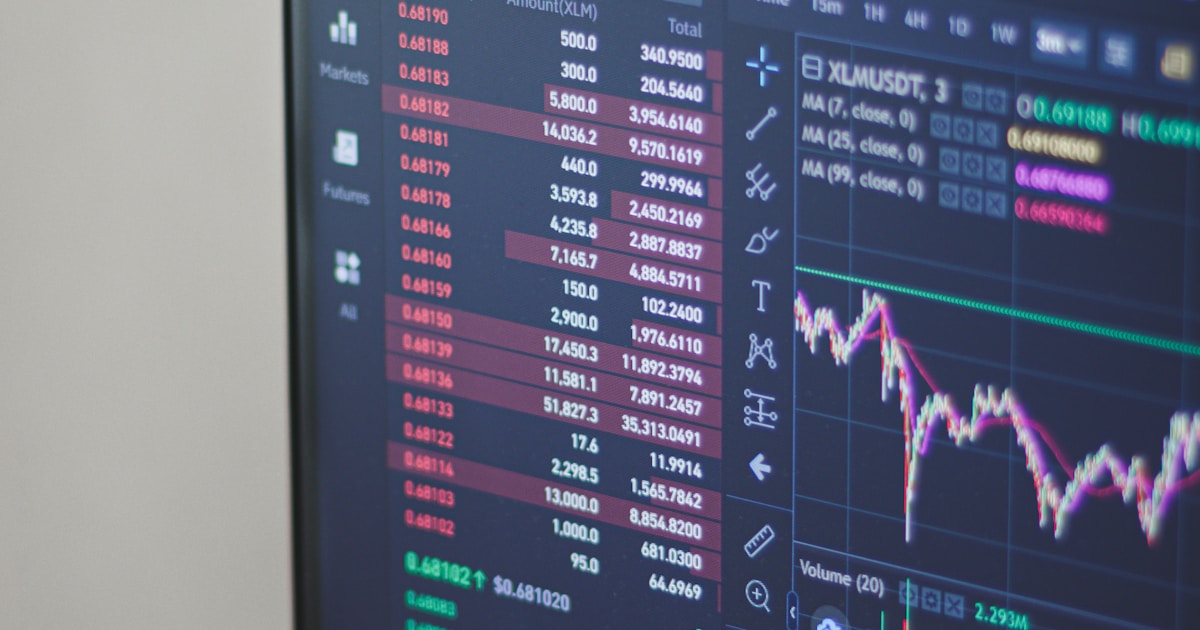
Every stock trade you execute — even in a “commission-free” brokerage account — passes through a market maker, a firm that quotes simultaneous buy and sell prices and stands ready to trade immediately. Market makers earn their profit from the bid-ask spread: the small gap between the price they will buy from you (the bid) and the higher price they will sell to you (the ask). That gap is not just a firm’s revenue — it is a real transaction cost you pay on every single trade, and it varies by orders of magnitude depending on how liquid a security is.
The Bid-Ask Spread: The Invisible Transaction Cost
When you pull up a stock quote, you will see two prices side by side. The bid is the highest price a buyer is willing to pay at that moment — and the price at which a market maker will buy shares from you if you place a market sell order. The ask (also called the offer) is the lowest price at which a seller will part with shares — and the price at which a market maker will sell shares to you if you place a market buy order.
The spread is the arithmetic difference. According to market microstructure literature, the standard formula for expressing it as a percentage is: [Wikipedia, Bid-Ask Spread]
Spread% = (Ask − Bid) ÷ Midpoint × 100
where the midpoint — the average of the bid and the ask — represents the theoretical fair price at that instant.
Why the Spread Feels Invisible
In the era of commission-free trading, many investors believe they are trading for free. They are not. The spread is a transaction cost that is embedded directly in the price you receive. On a liquid large-cap stock like Apple or Microsoft, the spread may be just $0.01 (under 0.005% of the price) — effectively negligible for a buy-and-hold investor. But on a thinly traded small-cap biotech, the spread might be $0.50 on a $10 stock — a 5% round-trip cost before the stock moves a single cent. Multiply that by frequent trading and the math becomes devastating.
Who Are Market Makers?
A market maker is, as defined in market structure research, “a firm or individual that quotes both a buy and a sell price for a financial instrument and stands ready to trade at those quoted prices.” [Wikipedia, Market Maker] The critical distinction from an ordinary investor: market makers are always on. They do not choose to quote only when conditions favor them. Their continuous presence on both sides of the market is precisely what makes a liquid market possible.
In U.S. equity markets, market makers operate at two levels. Designated Market Makers (DMMs) are assigned to specific stocks on the NYSE and have explicit obligations to maintain fair and orderly markets in those securities. Wholesale market makers operate off-exchange, receiving orders routed from brokerages and executing them against their own inventory. Three wholesalers — Citadel Securities, Virtu Financial, and G1 Execution Services — handle over 80% of all U.S. retail equity order flow. [Wikipedia, Payment for Order Flow]
How Market Makers Set Their Spread
The spread is not set arbitrarily. Academic market microstructure research identifies three cost components embedded in every spread: [Wikipedia, Market Maker]
- Order-processing costs: Technology infrastructure, exchange connectivity, regulatory compliance, and operations.
- Inventory risk: Holding a position between buy and sell orders exposes the market maker to price moves. If a market maker buys 10,000 shares at $100.00 and the stock drops to $99.50 before finding a seller, the firm absorbs that $5,000 loss.
- Adverse selection: This is the deepest driver of spreads. Some market participants — quantitative hedge funds, algorithmic traders, well-informed institutions — know things the market maker does not. If a market maker consistently sells to buyers who have an informational edge, it will steadily lose money. The spread must be wide enough to offset this risk across thousands of trades.
This is why spreads widen dramatically before earnings releases, during macroeconomic data surprises, and in periods of broad market volatility. When the market maker’s adverse-selection risk climbs, so does the price of providing liquidity.
The NBBO and Best Execution
In the U.S., Regulation NMS — adopted by the SEC in 2005 — requires brokers to execute customer orders at the National Best Bid and Offer (NBBO): the best available quote consolidated across all registered exchanges. [Wikipedia, Regulation NMS] If the same stock trades at $100.03 ask on one exchange and $100.05 ask on another, your broker must route your buy order to the cheaper venue first. [Wikipedia, NBBO]
Reg NMS also includes the Sub-Penny Rule: securities priced above $1.00 may not be quoted in increments smaller than one cent. This prevents a practice called sub-penny fronting, where a firm could jump ahead of a standing public order by pricing in at, say, $100.0499 instead of $100.05. The minimum tick is your protection against the most granular form of order-queue manipulation.
U.S. Market-Making by the Numbers
| Metric | Figure |
|---|---|
| Top 3 wholesalers’ share of U.S. retail equity order flow (2021) | >80% |
| Robinhood PFOF revenue (2021) | $1.4 billion |
| PFOF as % of Robinhood’s net revenue (2021) | 77% |
| Total PFOF paid to all U.S. brokers (2020) | $2.5 billion |
| Total PFOF to top 12 U.S. brokerages (2021) | $3.8 billion |
| EU PFOF ban effective date | March 28, 2024 |
| Dark pool / ATS share of U.S. equity volume (Jan 2025) | 51.8% |
Payment for Order Flow: The Hidden Economics
Most U.S. retail brokerages now offer zero-commission trading. The business model that makes this possible is payment for order flow (PFOF): wholesale market makers pay brokers to receive their customers’ orders. [Wikipedia, PFOF]
The logic works as follows. A retail order is generally uninformed — a buy order from someone rebalancing their 401(k) is not a signal of inside information. That predictability makes retail flow valuable to a market maker, who can earn the spread reliably without facing a better-informed counterparty. The market maker earns the spread on the trade, then shares a portion of that profit with the broker that routed the order to them. In 2021, Robinhood earned $1.4 billion in PFOF revenue — 77% of its total net revenue. The top 12 U.S. brokerages collectively received $3.8 billion in PFOF that year. [Wikipedia, PFOF]
The controversy: PFOF creates a structural conflict of interest. The broker’s routing decision can be influenced by which market maker pays the most, rather than which offers the best execution quality for the customer. The European Union banned PFOF as of March 28, 2024. The UK’s Financial Conduct Authority effectively prohibits it, as do Canada and Australia. In the United States, PFOF remains legal under SEC Rule 606(a), subject to disclosure requirements. [Wikipedia, PFOF]
Dark Pools: More Than Half the Market Is Invisible
Dark pools — formally called alternative trading systems (ATS) — are private trading venues where large orders execute away from public view. Unlike the NYSE or Nasdaq, a dark pool does not display its order book before trades occur. You cannot see what orders are pending; you only learn what traded after the fact. [Wikipedia, Dark Pool]
Dark pools were designed for institutional investors who need to execute large block orders without telegraphing their intentions. If a pension fund places a 5-million-share sell order on a public exchange, high-frequency algorithms will detect the order flow and adjust prices before the institution can complete its trade — a phenomenon called market impact. Dark pools allow large orders to find natural counterparties without moving the market against themselves.
In 2012, dark pools handled roughly 40% of U.S. equity volume. By January 2025, that share had crossed 50% for the third consecutive month, reaching 51.8% — meaning the majority of U.S. stock trades now execute in venues invisible to the public market. [Wikipedia, Dark Pool]
Why Every Investor Should Care About Liquidity
Liquidity is not just an abstraction for institutional traders. It affects every position you hold.
- The spread is a floor on round-trip cost. Even with zero commissions, you lose the spread the moment you enter any position. On a stock with a 2% spread, you need a 2% price move just to break even — before accounting for any other costs.
- Spreads widen exactly when you want to sell. In a market crisis — the March 2020 COVID selloff, the August 2015 flash crash, the 2008 financial crisis — bid-ask spreads in many securities ballooned as market makers reduced inventory risk. Selling in a panic often means accepting dramatically worse prices than the last recorded trade suggests.
- Liquidity is a hidden factor in expected returns. Academic research in market microstructure consistently finds that less-liquid assets must offer higher expected returns to compensate investors for the higher cost of trading in and out. This liquidity premium partly explains why small-cap stocks have historically shown higher returns than large-caps — but only before transaction costs, which erode much of that premium for active traders.
- ETF liquidity is layered. A bond ETF may trade tightly on the surface (a $0.01 spread on the ETF shares), but the underlying bonds it holds might trade by appointment only — spreads of $1–$5 per $100 face value. In a stress event, the ETF can trade at a significant discount to its net asset value as market makers widen their spreads to account for the cost of hedging with illiquid underlying securities.
What to Learn Next
Understanding market makers connects directly to several other foundational concepts. Short selling relies on borrowing securities — a supply that market makers help manage through their inventory. Options pricing features some of the widest bid-ask spreads in public markets, making understanding the Greeks especially important for execution cost management. If you trade ETFs, the creation/redemption mechanism that keeps an ETF’s market price anchored to its net asset value is essentially an institutional arbitrage process performed by — you guessed it — authorized participants who are often the same wholesale market makers discussed here.
Sources
- Wikipedia: Market Maker
- Wikipedia: Bid-Ask Spread
- Wikipedia: National Best Bid and Offer (NBBO)
- Wikipedia: Regulation NMS (SEC, 2005)
- Wikipedia: Payment for Order Flow
- Wikipedia: Dark Pool
Disclosure: It is for informational purposes only and is not investment advice.