
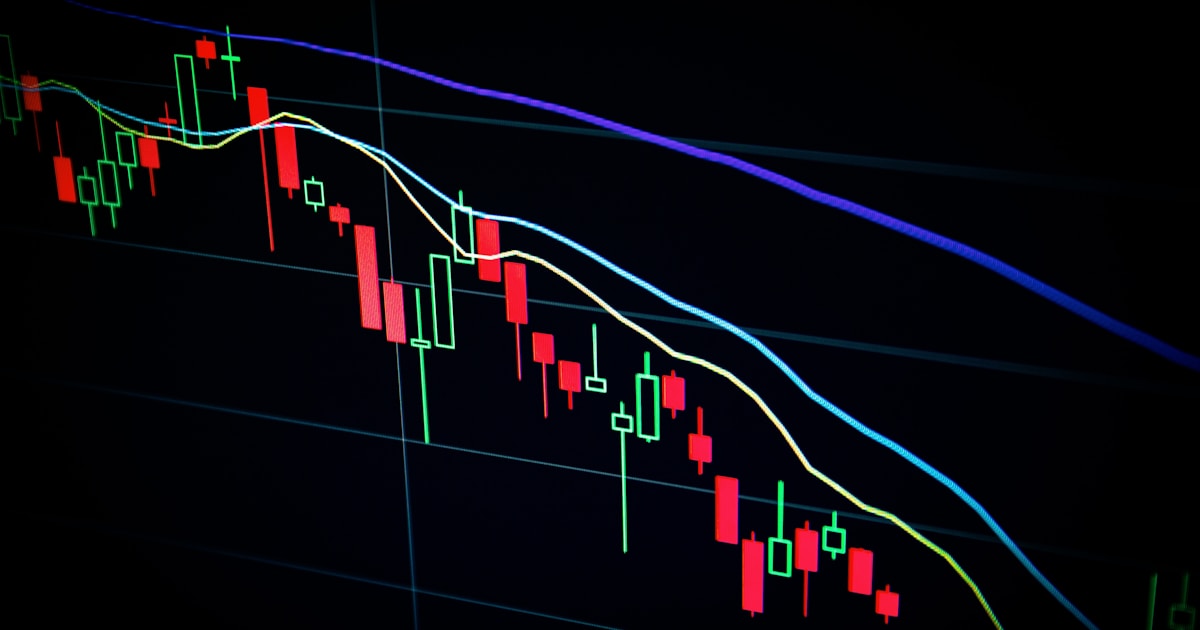
On Tuesday, April 8, 2026, the Dow Jones Industrial Average surged more than 1,200 points in a single session. The catalyst: a U.S.-Iran ceasefire that allowed the first commercial vessels to pass through the Strait of Hormuz since the conflict began. Oil prices tumbled. Treasury yields fell sharply. Travel stocks climbed more than 7%. And on trading desks across Wall Street, a single four-letter acronym was whispered with knowing satisfaction: TACO.
It stands for Trump Always Chickens Out — and it has become the most talked-about trading thesis of 2026.
What Is the TACO Trade?
The TACO framework is shorthand for a pattern that veteran traders say has repeated itself across nearly every major confrontation during the Trump administration: a dramatic escalation, severe market dislocation, and then — just as investors fear the worst — an abrupt reversal or deal that sends risk assets sharply higher.
The thesis holds that when Trump threatens maximum economic or military pressure, the optimal trade is not to panic-sell, but to quietly accumulate risk assets on the dip, anticipating the inevitable de-escalation.
“Many on Wall Street saw this coming,” CNBC noted Tuesday, as the Iran ceasefire materialized ahead of Trump’s self-imposed deadline for Iran to open the Strait of Hormuz. “Trump’s brinkmanship is starting to lose its grip on the market.”
That may be the most consequential sentence on Wall Street this year.
The Pattern Behind the Acronym
The TACO trade didn’t emerge from thin air. It is the product of accumulated experience with a specific political playbook:
- Tariff threats vs. trade partners: Through 2025 and into 2026, Trump repeatedly threatened sweeping tariffs on allies and rivals alike — moves that initially cratered equity markets — before walking back or delaying the most punishing measures as markets and trading partners objected.
- The Iran confrontation: When U.S.-Iran tensions escalated into open conflict and Iran moved to disrupt the Strait of Hormuz, Trump set a hard deadline for Iran to stand down or face overwhelming force. Markets sold off sharply. Then, within days of the deadline, a ceasefire was brokered. The Dow surged 1,200 points on the news.
- Repeated cycle: The same arc — escalation, market fear, reversal, relief rally — has played out enough times that Wall Street has given it a name.
The concept isn’t without precedent in financial history. Traders have long recognized that geopolitical brinkmanship often ends in negotiated settlements rather than full-scale escalation. What’s different in 2026 is that the pattern has been concentrated, fast-moving, and orchestrated by a single, predictable actor — making it particularly tradeable.
How Traders Are Playing It
The practical implementation of the TACO trade varies across asset classes, but several patterns have emerged:
Buying the VIX Spike
The CBOE Volatility Index — the so-called “fear gauge” — spikes whenever Trump makes a major threat. TACO traders have learned to view these spikes as entry points rather than warnings. When the VIX climbs above 30 on Iran or tariff headlines, systematic buyers step in, anticipating that the reversal will compress volatility and send equity prices back up.
Sector Rotation on Escalation
Defense contractors and cybersecurity names tend to get bid up on conflict escalation. Energy stocks follow oil prices higher on Hormuz disruption fears. The TACO trade involves shorting these outperformers on escalation and rotating back into beaten-down cyclicals — airlines, cruise operators, consumer discretionary — in anticipation of the ceasefire pop. On Tuesday, travel stocks gained more than 7% as the ceasefire news broke, rewarding those who had positioned ahead of it.
The Bond Market Signal
U.S. Treasury yields fell sharply after the Iran ceasefire was announced, as markets simultaneously priced in lower inflation risk (from falling oil) and revived expectations for Federal Reserve rate cuts later in 2026. The TACO framework has a fixed-income dimension too: buying Treasuries during peak geopolitical fear (when yields spike on inflation worries) and preparing to sell them once the resolution drives yields back down.
The Goldman Dimension: A Structural Shift
One of the most significant data points supporting a broader market re-rating came Tuesday from Goldman Sachs, which flipped its stance on European equities from underweight to a more constructive posture. The bank cited the ceasefire as reducing the tail risk that had been suppressing European markets — particularly energy-intensive German and French industrial stocks.
This is notable because it suggests major institutional players are now factoring the TACO pattern into their strategic asset allocation, not just short-term tactical trades. When Goldman changes a regional equity view in response to a ceasefire, it signals that the brinkmanship-to-resolution cycle has become a structural input in multi-billion-dollar portfolio decisions.
The Risk That TACO Fails
No trading framework survives forever, and the TACO trade carries a fatal embedded risk: what happens if Trump doesn’t chicken out?
Critics of the TACO thesis note that every successful application of the strategy increases the incentive to buy dips more aggressively — which, in turn, reduces the political cost of brinkmanship and potentially emboldens further escalation. Markets that price in a certain reversal may be wrong exactly when the stakes are highest.
“The worst case scenario is still not priced in,” PNC’s Yung-Yu Ma warned on CNBC Tuesday — even as the market was surging on ceasefire news. “Investors may be underestimating how fragile this ceasefire is.”
Indeed, Reuters reported that while the first ships passed the Strait of Hormuz after the ceasefire, “traffic remains low amid confusion” — suggesting that the market’s relief rally may have gotten ahead of the underlying geopolitical reality.
Iran retains its asymmetric capabilities, including cyber warfare assets. The ceasefire’s durability remains uncertain. And Trump’s negotiating style, by its very nature, means that any given confrontation could either end in a deal or escalate further. The TACO trade is a probabilistic bet, not a guaranteed outcome.
What the TACO Trade Says About Markets in 2026
Beyond the mechanics of the trade itself, the widespread adoption of the TACO framework reveals something profound about the current market environment: volatility has become a feature, not a bug.
When traders name a strategy after the predictable behavior of a sitting president, it signals that geopolitical uncertainty has been normalized and, to a degree, financialized. The VIX spikes. Smart money buys. The reversal comes. Retail investors who panic-sold get left behind. The cycle repeats.
As Bob Pisani at CNBC observed recently: “Recent chaos shows investors are better off avoiding market timing.” In a TACO world, that means neither chasing the panic sell-off nor the euphoric reversal — but understanding the rhythm well enough to stay positioned through the noise.
The Dow’s 1,200-point single-day gain on April 8 may be remembered as TACO’s most dramatic validation yet. Whether it’s also the beginning of the end of its effectiveness is a question only the next crisis will answer.
Disclosure: This article was produced with AI assistance and reviewed before publication. It is for informational purposes only and is not investment advice.