
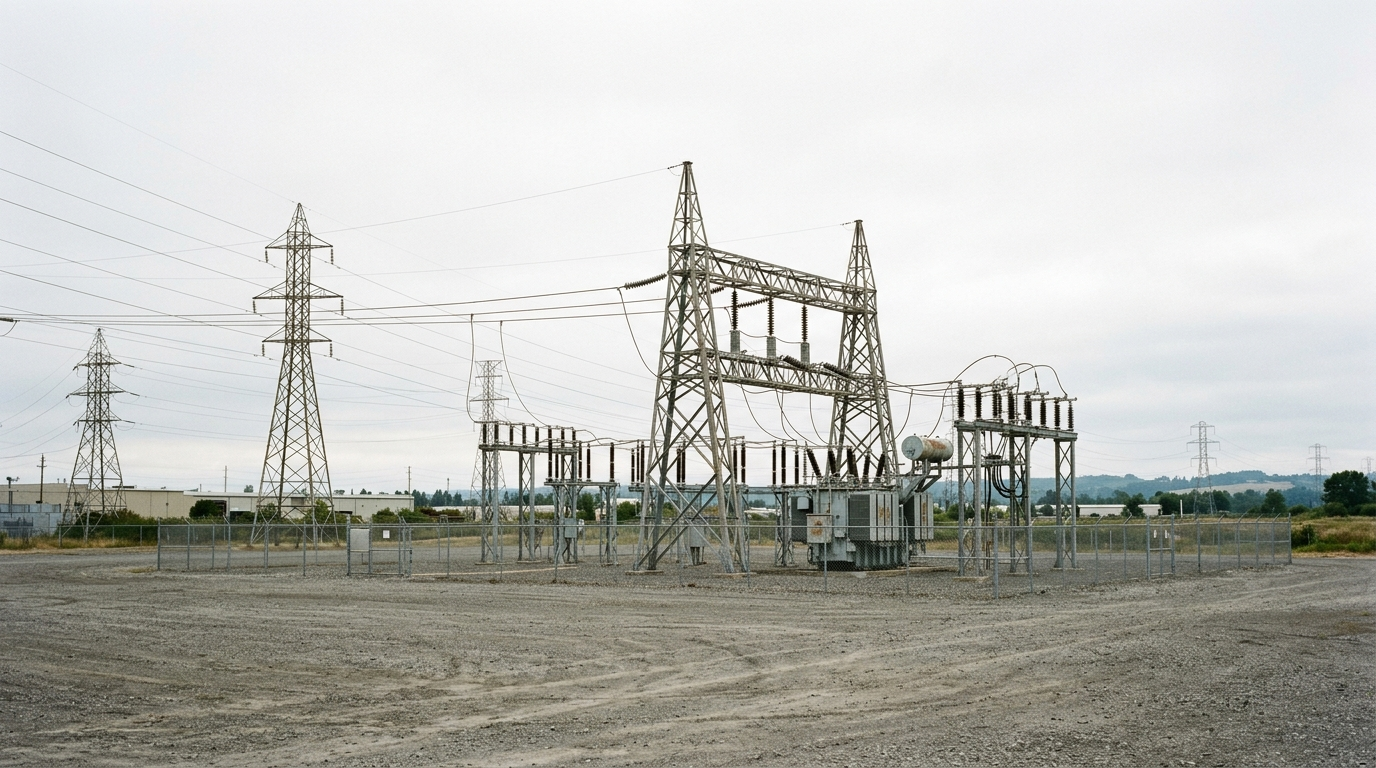
On Thursday afternoon, September 17, 2026, the U.S. Senate halted fast-track passage of the Ratepayer Protection Act (H.R. 9340), abruptly complicating the legal framework governing who pays for artificial intelligence (AI) data center energy infrastructure. The bill cleared the House on September 16 with a 417–3 bipartisan majority. However, an objection by Senator Martin Heinrich (D-N.M.) blocked unanimous consent, setting up a clash between advisory state standards and mandatory federal cost allocations. As of the close of regular U.S. trading on Thursday, September 17 at 4:00 PM EDT, shares of independent power producers and utility operators traded mixed as markets weighed shifting grid cost burdens against hyperscaler capital expenditure budgets.
Key Takeaways
- Senate Blockade: Fast-track passage of the Ratepayer Protection Act (H.R. 9340) was halted on September 17 by Senator Martin Heinrich, who is demanding binding federal mandates under his GRID Savings Act.
- Policy Dispute: While H.R. 9340 directs state public utility commissions (PUCs) to consider ring-fencing large-load data center costs (≥100 MW), critics contend voluntary state guidance allows utilities to socialize network upgrades across residential utility bills.
- Power Producer Exposure: Independent power producers (IPPs)—including Constellation Energy (NASDAQ: CEG), Vistra Corp (NYSE: VST), and Talen Energy (NASDAQ: TLN)—face growing regulatory scrutiny around behind-the-meter co-location and bilateral contracts.
- Hyperscaler Capex Risk: Tech hyperscalers—Microsoft (NASDAQ: MSFT), Amazon (NASDAQ: AMZN), Alphabet (NASDAQ: GOOGL), and Meta Platforms (NASDAQ: META)—face potential cost inflation if federal rules mandate 100% upfront funding for regional transmission expansions.
The Legislative Divide: H.R. 9340 vs. The GRID Savings Act
Introduced by Representative Gabe Evans (R-CO) and passed 417–3 in the House, the Ratepayer Protection Act targets “large-load customers” requiring 100 megawatts or more of capacity. The legislation directs state utility commissions to conduct proceedings ensuring data center operators cover the incremental costs of new generation and distribution infrastructure.
However, Senator Heinrich objected to fast-tracking the bill, arguing that voluntary state-level standards create a toothless regulatory patchwork. Heinrich is pushing his own measure, the GRID Savings Act, introduced in August 2026, which directs the Federal Energy Regulatory Commission (FERC) to establish binding nationwide rules requiring large loads to escrow 100% of upfront transmission upgrade expenses.
| Policy Provision | Ratepayer Protection Act (H.R. 9340) | GRID Savings Act (Senate Proposal) |
|---|---|---|
| Sponsor & Status | Rep. Gabe Evans; Passed House 417–3 (Sep 16) | Sen. Martin Heinrich; In Senate Committee |
| Regulatory Scope | Advisory standard for State PUCs | Binding federal FERC rules |
| Threshold | Peak demand ≥100 MW | Aggregate load ≥50 MW |
| Cost Mandate | States evaluate incremental cost assignment | 100% upfront capex escrow for interconnections |
Surging Power Demand and Grid Bottlenecks
According to the Electric Power Research Institute (EPRI), U.S. data center electricity consumption will expand from roughly 200 terawatt-hours (TWh) in 2023 to more than 400 TWh by 2030, rising from 4% to upwards of 9% of total national generation. In regions like PJM Interconnection and ERCOT, data centers represent over half of new interconnection requests.
The core financial question is whether hyperscalers must finance dedicated transmission expansions through upfront capital contributions, or whether utilities can fold these projects into their regulated rate bases.
As illustrated above, demand approaching 68 gigawatts by 2030 requires an estimated $110 billion in grid equipment and transmission lines. If federal rules require hyperscalers to pre-fund these upgrades, tech firms will bear that capital burden directly on their balance sheets.
Impact on Independent Power Producers: Nuclear and Co-Location
The political debate over cost allocation carries direct valuation implications for merchant power producers. Constellation Energy (NASDAQ: CEG) and Vistra Corp (NYSE: VST) have seen substantial multiple expansion by securing long-term power purchase agreements with hyperscalers seeking carbon-free baseload energy.
However, behind-the-meter co-location models face legal scrutiny. Talen Energy (NASDAQ: TLN) drew pushback from regional utilities when it agreed to supply Amazon Web Services from the Susquehanna nuclear station, with opponents arguing that bypassing grid transmission shifts shared network costs onto residential ratepayers.
Hyperscalers are exploring alternatives to navigate these bottlenecks. Earlier this week, Generac secured an $8 billion backup power agreement with Amazon, highlighting growing demand for on-site generation. Simultaneously, regional grid operators are tightening rules; earlier this month, Texas grid authorities halted new data center connections amid 474 gigawatts of speculative queue requests.
Hyperscaler Capex and Regulated Utility Outlook
For Microsoft, Amazon, Alphabet, and Meta Platforms, collective 2026 capex is projected to exceed $200 billion. Mandating 100% upfront funding for substation and transmission builds increases cash burn and lengthens project deployment cycles.
For regulated utilities such as Dominion Energy (NYSE: D), Southern Company (NYSE: SO), and American Electric Power (NASDAQ: AEP), the policy debate tests rate-base expansion against consumer affordability. While new transmission construction expands the capital base on which utilities earn authorized returns, commissions may limit cost recovery if public backlash against residential rate increases intensifies.
Investors seeking a broader framework for utility capital expenditure and regulated returns can review the ECMSource market fundamentals guide.
Catalysts to Watch Next
With floor time limited before the November midterm elections, investors should track three critical milestones:
- Senate Negotiations: Whether Senate leadership attempts a compromise reconciling H.R. 9340 with the GRID Savings Act before the congressional recess.
- FERC Rulemaking: Administrative proceedings at FERC regarding large-load interconnection tariffs and co-located generator rules.
- Q3 2026 Corporate Earnings: Commentary from hyperscaler and utility management teams in October regarding power contract terms and reserve capacity commitments.
Related reading
- Generac Surges 25% on $8B Amazon AI Data Center Power Deal
- Texas Halts Data-Center Power on 474 GW ‘Ghost Demand’
Sources
- Congress.gov: H.R. 9340 – Ratepayer Protection Act Text and House Roll Call
- U.S. Senator Martin Heinrich: Official Press Statement on the GRID Savings Act
- Electric Power Research Institute (EPRI): Analyzing AI and Data Center Energy Consumption
- The Hill: Senate Blocks House-Passed Bill on Data Center Electricity Costs
- CBS News: Ratepayer Protection Act Stalls in Senate Following Bipartisan House Approval
Disclosure: This article is for informational purposes only and is not investment advice.