
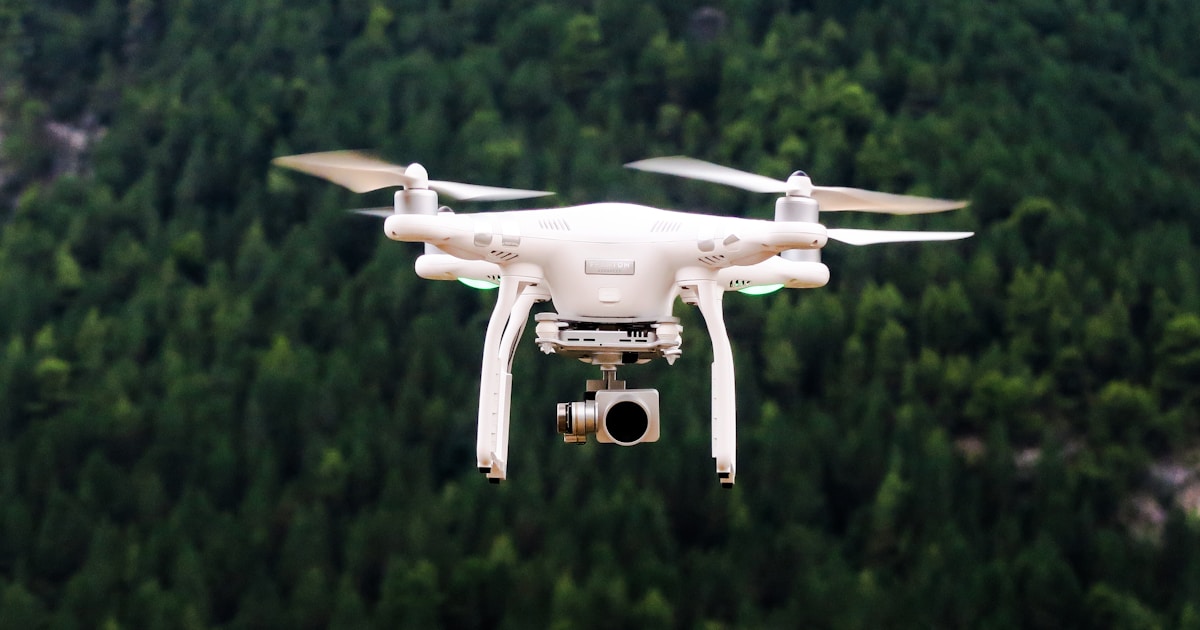
For years, defense analysts debated whether autonomous drones would transform battlefield warfare or remain a niche complement to legacy platforms. The U.S.-Iran conflict of early 2026 answered that question decisively. In the weeks of kinetic operations over the Persian Gulf and Iranian territory, drone systems — from loitering munitions to high-altitude surveillance assets — proved essential in ways that have permanently altered Pentagon procurement thinking.
With the ceasefire now in place, markets are recalibrating. Energy stocks are pulling back as oil supply fears ease, but the defense sector is drawing fresh attention from institutional investors. Wall Street analysts note that a ceasefire doesn’t cut the budgetary imperative — if anything, it accelerates the rearmament cycle as the Pentagon restocks depleted inventories and rushes multi-year autonomous systems contracts through Congress.
The Spending Backdrop: A $923 Billion Budget and a Drone Mandate
The fiscal year 2026 defense authorization bill passed earlier this year locked in approximately $923 billion in total defense spending, the largest in U.S. history. But raw dollar figures only tell part of the story. The Iran conflict injected urgency into programs that had been moving at bureaucratic pace.
Central to that acceleration is the Pentagon’s “Replicator” initiative, first unveiled in 2023 and dramatically expanded following the Iran war. The program aims to deploy thousands of low-cost, attritable autonomous systems — drones that can be lost in combat without catastrophic consequence — within 18 to 24 months. Replicator has evolved from a proof-of-concept into a full acquisition priority, with multi-billion-dollar contract awards expected through 2027.
The Defense Advanced Research Projects Agency (DARPA) has simultaneously fast-tracked its Collaborative Combat Aircraft (CCA) program, which pairs autonomous wingmen drones with piloted fighter jets. Contracts under that program could exceed $10 billion over the next five years, according to defense budget analysts at the Congressional Budget Office.
AeroVironment (AVAV): The Switchblade Specialist
Among publicly traded pure-play drone companies, AeroVironment is the most directly tied to the conflict’s operational demands. The company manufactures the Switchblade 300 and Switchblade 600 loitering munitions — precision strike drones that a soldier can carry in a backpack and launch within minutes. Reports from the conflict theater noted Switchblade variants being used extensively in anti-armor and counter-battery roles.
AeroVironment also produces the Puma and Raven small unmanned aircraft systems, which are used for front-line reconnaissance. The company reported fiscal year 2025 revenue of roughly $680 million, with backlog growth accelerating throughout the year. Analysts at Baird and Stifel have raised price targets on AVAV following conflict-driven demand signals, citing a pipeline of international sales alongside domestic contracts.
The stock is not cheap — it trades at a significant premium to legacy defense peers — but the product-market fit in the current procurement cycle is difficult to dispute.
Kratos Defense (KTOS): Jet-Powered Drone Disruption
Kratos Defense has long been positioned as the disruptive alternative to legacy defense, building high-performance unmanned jet aircraft at a fraction of the cost of traditional platforms. Its XQ-58A Valkyrie and UTAP-22 Mako unmanned combat air vehicles are designed for the exact CCA mission profile the Air Force is accelerating.
Kratos management has described its approach as “affordable mass” — providing combat-capable jets at unit costs that allow attrition without mission-ending loss. The company’s fiscal 2025 revenues were approximately $1.1 billion, with its unmanned systems division growing at double-digit rates. Investors have responded accordingly: Kratos shares outperformed the S&P 500 significantly during the Iran conflict period.
Risk: Kratos has historically struggled with margin expansion, and competition for CCA contracts is intensifying from Boeing and General Atomics. Contract wins matter here more than revenue run-rates.
Palantir (PLTR): The AI Layer on Top of Drone Data
Drones generate enormous streams of sensor, video, and targeting data. The operational problem isn’t collection — it’s fusion and decision speed. Palantir Technologies has positioned its AIP (Artificial Intelligence Platform) and Gotham products as the intelligence layer that converts drone sensor feeds into actionable command decisions.
The company has secured significant Department of Defense contracts, including work under the Maven Smart System — the Army’s AI-driven intelligence platform — and multiple classified programs. Palantir’s revenue from U.S. government work grew 45% year-over-year in fiscal 2025. It is increasingly difficult to evaluate large drone operations without referencing the AI infrastructure those systems depend on.
Palantir trades at a substantial valuation premium relative to government IT peers, which reflects both growth expectations and the speculative enthusiasm the stock has attracted from retail investors. Institutional holders have taken note of the geopolitical tailwind, though the commercial business is equally important to long-term cash flow.
The Legacy Contractors: Northrop and L3Harris
Not every beneficiary of the drone boom is a scrappy pure-play. Northrop Grumman manufactures the RQ-4 Global Hawk, the MQ-4C Triton, and is a key subcontractor on numerous classified unmanned programs. Its Autonomous Systems division is among the most technically capable in the industry, and the company’s scale allows it to handle the integration complexity that smaller firms cannot.
L3Harris Technologies, meanwhile, is a critical supplier of the sensors, electro-optical systems, and communications equipment that every drone platform depends on. The company’s intelligence, surveillance, and reconnaissance (ISR) segment has been growing steadily, and its position in the supply chain insulates it from single-program risk. When analysts talk about “picks and shovels” exposure to the drone boom, L3Harris is frequently the answer.
Does the Ceasefire Kill the Rally?
A reasonable investor question: does the U.S.-Iran ceasefire remove the urgency that was driving drone procurement optimism? Historical precedent suggests otherwise. After both Gulf Wars, defense procurement accelerated into the post-conflict period as the Pentagon restocked consumables, replaced lost assets, and drew lessons that justified new platform investments. The F-117 Nighthawk program gained funding momentum after its Gulf War debut; the Predator program surged following 9/11 after proving its value in the Balkans.
The pattern appears to be repeating. Roth Capital downgraded several energy stocks after the ceasefire announcement — but defense names were notably not in that downgrade basket. Analysts at Morgan Stanley have flagged defense and aerospace as one of the sectors they expect to surprise to the upside during Q1 2026 earnings season.
There is also the bipartisan political reality. Drone modernization enjoys unusually broad congressional support, spanning both chambers and both parties. The argument that unmanned systems reduce American casualties has proven politically durable in a way that other defense line items have not.
Risks Worth Watching
The drone investment thesis is not without meaningful risks. Pentagon budgets are subject to continuing resolution uncertainty, and any move toward fiscal austerity — whether driven by deficit concerns or political gridlock — could slow contract awards. The U.S. federal deficit crossed $1 trillion through just the first five months of FY2026, which has raised questions in the bond market about the sustainability of defense spending at current levels.
Execution risk is also real. Several drone programs have run over budget and behind schedule, including early Replicator sub-contracts. Companies that win awards but struggle with delivery timelines face both financial penalties and reputational damage in a procurement environment that has grown less patient with delays.
Finally, international competition is intensifying. China’s drone manufacturers — led by state-backed firms — are producing capable systems at lower costs, and the technology gap is narrower than it was a decade ago. That dynamic creates risk for export-oriented U.S. firms but simultaneously reinforces the case for domestic procurement investment.
The Bigger Picture
The Iran conflict functioned as an accelerant on trends that were already well underway. The drone defense sector was growing before the war; it is now growing faster. Pentagon procurement cycles, notoriously slow in peacetime, have a documented history of accelerating when conflict validates new capabilities. That validation has occurred.
Whether this translates into durable stock outperformance depends on execution, contract timing, and the broader market environment for growth-oriented defense names. But for investors seeking exposure to the geopolitical realities of 2026, the drone and autonomous systems corner of the defense sector has become impossible to ignore.
Disclosure: This article was produced with AI assistance and reviewed before publication. It is for informational purposes only and is not investment advice.