
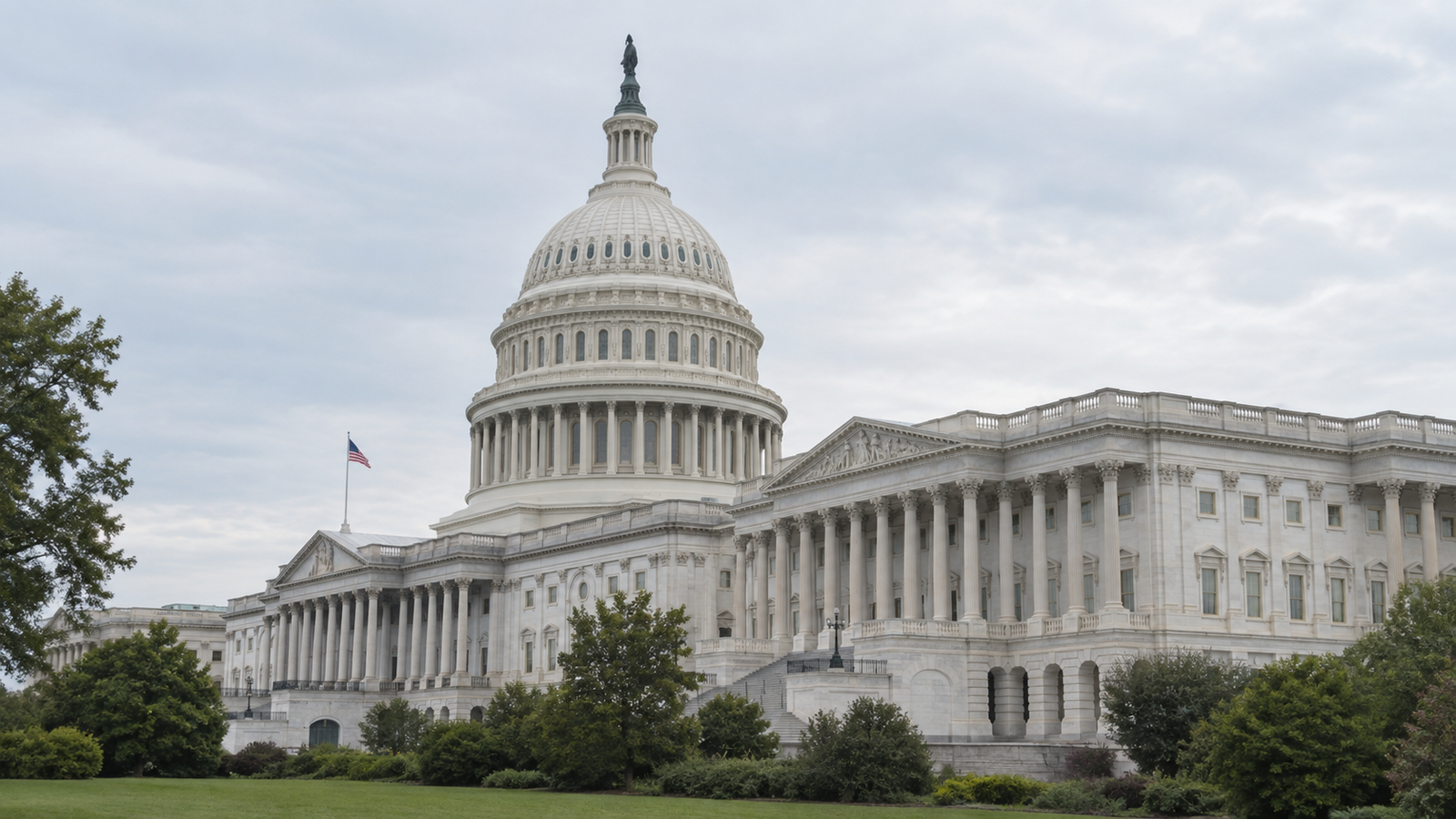
WASHINGTON — On Monday, September 14, 2026, U.S. Senate sponsors released the finalized compromise text of the Digital Asset Market Clarity Act, setting the stage for a high-stakes cloture vote scheduled for Tuesday morning, September 15. The legislation represents the most ambitious effort yet to establish a statutory federal framework for digital assets, dividing oversight between the Commodity Futures Trading Commission (CFTC) and the Securities and Exchange Commission (SEC). For equity investors, the 60-vote procedural hurdle is a pivotal catalyst across public crypto operators, brokerages, and corporate treasury holders.
Key Takeaways
- The Cloture Gate: The Senate will vote on Tuesday, September 15, on a cloture motion requiring 60 votes to overcome a filibuster and open formal floor debate on the Digital Asset Market Clarity Act.
- 126 Bipartisan Amendments: The compromise text unveiled Monday incorporates 126 negotiated provisions, including mandatory blind-trust divestment rules for federal officials and explicit jurisdictional boundaries between the CFTC and SEC.
- Asymmetric Equity Impact: While Coinbase (NASDAQ: COIN) and Robinhood (NASDAQ: HOOD) face direct operational shifts around exchange registration and token listings, corporate treasury proxies like MicroStrategy (NASDAQ: MSTR) trade primarily on liquidity and underlying Bitcoin beta.
- Market Odds: Betting and prediction markets assign roughly a 45% probability to clearing Tuesday’s cloture threshold, reflecting persistent skepticism over election-year Senate floor time.
What Happened: The Final Compromise Text Arrives
Following months of closed-door committee negotiations, Senate leaders on September 14 released the final compromise draft of the Clarity Act. The bill seeks to resolve the multi-year regulatory impasse that has left digital asset firms operating under enforcement-driven administrative actions rather than statutory codification.
Under the compromise language, the legislation explicitly grants the CFTC exclusive spot-market regulatory jurisdiction over digital commodities, providing digital asset exchanges with a formal federal registration pathway. Concurrently, the SEC retains oversight of digital assets distributed through investment contracts, while codifying safe-harbor transition periods for decentralized protocols that achieve sufficient operational decentralization.
To win over moderate Democratic votes, the sponsors added stringent new ethics rules. Federally elected officials, executive branch policymakers, and federal judges would be prohibited from directly owning digital assets, requiring them to divest or transfer holdings into qualified blind trusts within 90 days of enactment. As trading opened on Monday, September 14, crypto equities showed measured positioning, consolidating gains following a previous crypto equity rally that had priced in early legislative progress.
The Cloture Math: Why 60 Votes Matter
Under Senate Rule XXII, proceeding to final debate requires a three-fifths supermajority of all sworn senators — typically 60 votes. This cloture threshold has historically derailed bipartisan regulatory compromises in financial services.
The Senate arithmetic is extraordinarily tight. With 49 Republican sponsors and aligned members committed, the legislation requires at least 11 Democratic votes to proceed. Floor whips estimate that approximately 8 moderate Democrats currently lean in favor following the inclusion of the ethics package, leaving roughly 5 to 7 uncommitted swing senators holding the balance.
How Public Equities Trade on Regulatory Clarity
Publicly traded companies across the digital asset ecosystem carry vastly different sensitivities to federal legislation. While the market often treats crypto equities as a homogeneous high-beta basket, the structural implications of the Clarity Act diverge sharply by business model.
1. Coinbase Global (NASDAQ: COIN)
As of the close of trading on September 11, 2026, Coinbase shares stood at .26, representing a market capitalization of .24 billion. In premarket and early trading on September 14, shares held firm near .50. Coinbase is the equity most directly levered to the legislation. Codified CFTC oversight of spot commodity trading would eliminate the threat of recurring enforcement actions regarding secondary market token sales. Furthermore, a statutory federal framework would allow Coinbase to expand its qualified custody business, which underpins the institutional spot Bitcoin ETF custody framework.
2. Robinhood Markets (NASDAQ: HOOD)
Trading at .57 as of September 11, with a market valuation of .20 billion, Robinhood stands to benefit from regulatory certainty in consumer crypto trading. Although Robinhood has diversified its top-line revenue through equity options and innovative venture offerings like Robinhood’s retail platform expansion, transaction-based crypto revenues represent higher-margin flow. A codified federal rulebook would allow the platform to relist tokens previously delisted due to SEC litigation concerns.
3. MicroStrategy (NASDAQ: MSTR)
MicroStrategy, trading at .72 with a market capitalization of .41 billion as of September 11, operates as an operating company leveraged to Bitcoin treasury accumulation. Because the Clarity Act does not alter corporate accounting rules or Bitcoin’s primary commodity classification, MSTR’s sensitivity to the vote is largely indirect: passage would likely spur institutional capital inflows into Bitcoin, driving the firm’s net asset value, whereas a failure to reach cloture would present short-term macro sentiment drag.
| Ticker / Entity | Market Cap | Primary Revenue Channel | Current Regulatory Friction | Clarity Act Structural Impact |
|---|---|---|---|---|
| Coinbase (COIN) | .24B | Exchange fees, staking, institutional custody | SEC litigation over unregistered broker/exchange status | Direct registration path with CFTC; validates token listing model |
| Robinhood (HOOD) | .20B | Retail trading commissions, order flow, margin lending | Restricted altcoin menu due to state/federal compliance caution | Expands tradable token catalog and retail staking services |
| MicroStrategy (MSTR) | .41B | Software services and Bitcoin treasury holdings | Minimal operational friction; exposed to broad crypto sentiment | Indirect NAV boost if institutional crypto allocation expands |
| MARA Holdings (MARA) | .85B | Bitcoin mining and digital infrastructure | Grid regulatory scrutiny and taxation proposals | Clarifies proof-of-work mining node legal status federally |
Risks and Scenarios for Tuesday’s Vote
Market participants should weigh two primary scenarios as the Senate convenes Tuesday morning:
Scenario A: Cloture Clears (60+ Votes)
If the cloture motion passes, debate begins on the Senate floor, creating a clear legislative glide path toward a final passage vote before the end of the month. Equity markets would likely interpret this as a watershed derisking event for exchange operators. COIN and HOOD would likely lead an equity re-rating as legal defense expenditures recede and institutional custody mandates accelerate.
Scenario B: Cloture Fails (<60 Votes)
If the measure falls short of 60 votes, formal debate cannot proceed under standard order. While sponsors could attempt to attach targeted compromise provisions to end-of-year government appropriations, the standalone regulatory framework would effectively be shelved until the 120th Congress convenes in 2027. Under this outcome, crypto equities would face near-term multiple compression, leaving platforms exposed to ongoing judicial battles and regulatory ambiguity.
Frequently Asked Questions
What is the difference between a cloture vote and final passage?
A cloture vote is a procedural mechanism under Senate Rule XXII used to end filibusters and limit debate to 30 additional hours. In the 100-member Senate, cloture on major legislation requires 60 affirmative votes. Clearing cloture is typically the most difficult hurdle; once cloture is invoked, final passage requires only a simple majority (51 votes).
Why does the Clarity Act matter for Coinbase’s business model?
Coinbase currently operates under the risk of federal securities litigation regarding whether certain secondary tokens represent unregistered investment contracts. The Clarity Act establishes clear statutory criteria for tokens to be treated as digital commodities under CFTC oversight, allowing Coinbase to register as a digital commodity broker and expand token listings without ongoing civil enforcement risk.
When will the Senate vote occur?
The Senate leadership has scheduled the cloture vote for the morning session of Tuesday, September 15, 2026, with roll-call results expected around midday Eastern Time.
Disclosure: This article is for informational purposes only and is not investment advice.