
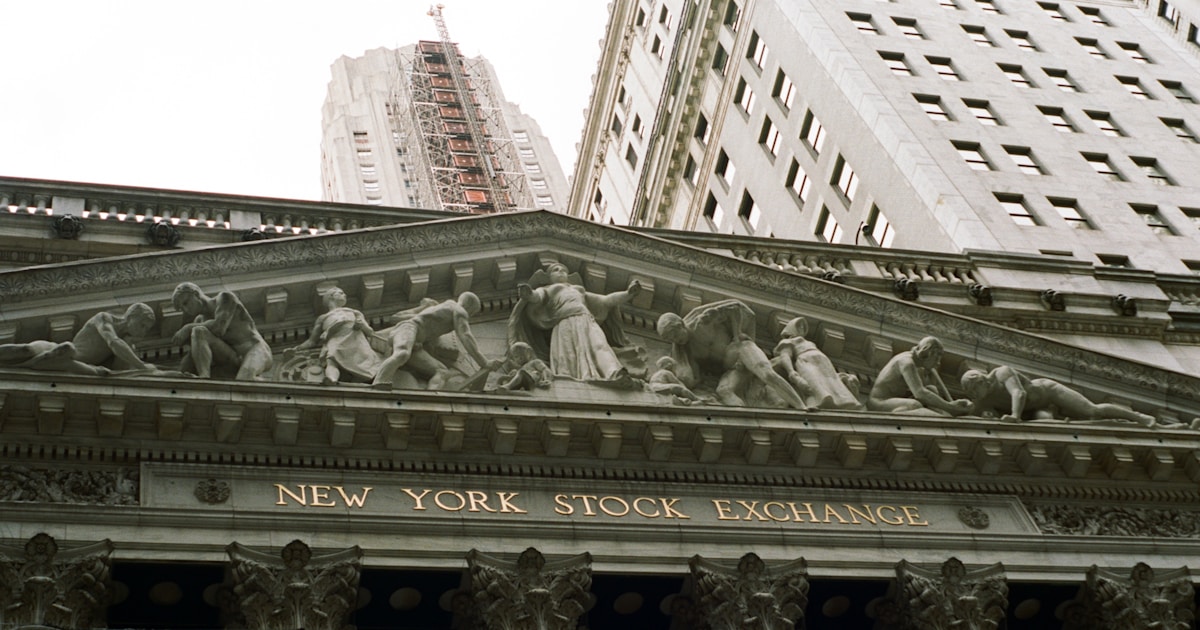
Robinhood is asking retail investors to fund the next generation of Y Combinator startups — through a $25 share, listed on the NYSE, with a 2-and-20 fee stack.
According to a preliminary N-2/A registration statement filed with the SEC on August 3, 2026, Robinhood Ventures Fund II (“RVII”) is a newly organized Delaware statutory trust that has elected to be regulated as a Business Development Company under the Investment Company Act of 1940. It is offering up to 8,000,000 common shares at $25.00 each — a gross raise of up to $200 million, or roughly $230 million if the underwriters’ over-allotment is exercised in full. The shares are expected to list on the New York Stock Exchange under the ticker RVII, with pricing telegraphed for August 13, per TechCrunch.
What RVII actually is
Strip the marketing away and RVII is a closed-end venture-capital vehicle wrapped in a publicly traded shell. The vehicle Robinhood chose is a Business Development Company (BDC) — a category of registered investment company created by Congress in 1980 specifically to channel public capital into private growth businesses. BDCs are 1940 Act funds, but they can hold illiquid private-company securities that a mutual fund cannot, and they list on exchanges like ordinary stocks.
The prospectus is unusually explicit about the investment universe: RVII will “primarily invest, under normal circumstances, in a diversified portfolio of early-stage and growth-stage private companies, with a focus on private companies that are current or previous participants in the Y Combinator startup accelerator program or companies with a founder or co-founder that has participated in the Y Combinator startup accelerator program.” It calls these “YC Companies.” That’s a first — no listed vehicle before has been marketed to retail as a proxy for a single accelerator’s alumni class.
Structurally, the fund intends to elect Regulated Investment Company (RIC) status, which requires it to distribute at least 90% of ordinary income and short-term gains each year to avoid entity-level tax.
The offering, in one table
| Offering term | Detail |
|---|---|
| Issuer | Robinhood Ventures Fund II (Delaware statutory trust; BDC under 1940 Act) |
| Ticker / Exchange | RVII / NYSE |
| Price per share | $25.00 |
| Shares offered | 8,000,000 (7.6M by Company, 400K by selling shareholder Robinhood Markets) |
| Gross proceeds | Up to $200M ($230M with over-allotment fully exercised) |
| Sales load | 4.50% of gross proceeds |
| Investor eligibility | No accredited-investor test, no minimum, no lockup |
| Distribution channel | Robinhood Financial (via IPO Access), TradePMR, and standard NYSE brokers |
The fee stack
This is where RVII gets expensive fast. The prospectus discloses a two-part management fee — a base and an incentive fee — on top of a hefty upfront sales load, and it does not net out fees embedded in the special-purpose vehicles the fund may use to buy shares of individual startups.
| Fee component | Rate | Applied to |
|---|---|---|
| Sales load (one-time) | 4.50% | Gross offering proceeds |
| Base Management Fee | 2.00% annualized | Net Assets, paid quarterly |
| Incentive Fee on Capital Gains | 20% of cumulative realized gains | Net of realized losses and unrealized depreciation |
| Acquired Fund Fees & Expenses | 0.11% (estimated) | Pass-through from SPVs and Private Vehicles |
| Total Annual Expenses | 4.18% | Company estimate, first year |
The prospectus’s own worked example, assuming a 5% annual return and full 4.18% expense ratio, projects that a $1,000 investment would cumulatively pay $85 in fees after one year, $166 after three years, $249 after five, and $461 after ten. In other words, before the fund’s private-company portfolio has generated a nickel of realized gain, roughly half the initial stake could be consumed by fees and load over a decade at only a modest gross return.
What Fund I is telling us
RVII is not Robinhood’s first attempt. Robinhood Ventures Fund I (CIK 0002085091, registered September 2025) launched at an IPO price of $21 and, per TechCrunch’s August 5 report, briefly traded above $56 in May 2026 before settling near $28 as of early August. That round-trip captures the core risk in listed-BDC mechanics: the market price of the shares can diverge sharply from underlying net asset value, both up and down. The SEC has long warned in its investor bulletins that “shares of BDCs frequently trade at a discount from their net asset value.” RVII’s own prospectus repeats that warning verbatim.
SEC filings show Robinhood has also registered Robinhood Ventures Fund III (CIK 0002144350) and Fund IV (CIK 0002144351), suggesting an intended series — each vehicle a themed slice of the private market.
Why Robinhood is doing this now
Two forces converge. First, retail appetite for private-tech exposure has grown loud enough to force a structural answer. Robinhood’s own 2025 experiment — issuing tokenized derivatives referencing OpenAI and SpaceX shares — drew public rebukes from both companies, who said the offerings were unauthorized. A registered BDC that buys equity or SAFEs directly, in agreements Robinhood negotiates with startups, is the compliance-friendly successor.
Second, Y Combinator’s alumni roster is a marketing asset in itself: Airbnb, DoorDash, Instacart, Stripe, Coinbase, Reddit and OpenAI are all past participants. Wrapping that brand halo into an NYSE-listed share aimed at the Robinhood app’s user base is a demand engine that traditional VC firms cannot copy. The catch, as the prospectus itself notes, is that RVII will only invest in a YC Company “contingent on those companies’ agreement to sell equity” — there is no guaranteed allocation pipeline, and hot names may prefer to keep their cap tables closed.
What retail buyers actually own
Practically, an RVII shareholder owns a share of a BDC that owns interests in private companies, often indirectly through SPVs. The buyer does not have direct equity in any startup, no information rights, no board seat, no pro rata participation in follow-on rounds, and typically no cash distribution absent a realized exit. Returns depend on two independent moving parts: the underlying portfolio’s performance, and the discount or premium at which RVII shares trade on the NYSE at the moment the investor sells.
What to watch
Three near-term markers matter. First, whether the offering prices at $25 as planned on August 13, and how many shares actually clear. Second, aftermarket trading in the first several sessions — BDC IPOs often open below issue price once the sales load evaporates, and RVII will face the same math. Third, disclosure over the next few quarters of which YC Companies actually agreed to sell equity to the fund; the underwriting story only holds up if the portfolio can access marquee names.
Bottom line
RVII is a genuine democratization play — the wealth barrier that historically defined private-market access is not present here. It is also an expensive one. Retail buyers get exposure to a portfolio manager, a fee stack, and a market-price wrapper, not to the underlying startups directly. Whether that trade-off is worth taking depends on the portfolio Robinhood builds, and on where RVII settles relative to NAV in the months after listing.
Sources
- Robinhood Ventures Fund II — Preliminary Prospectus (N-2/A, filed August 3, 2026)
- SEC EDGAR — RVII filing history (CIK 0002131040)
- SEC EDGAR — RVII Free Writing Prospectus, filed August 5, 2026
- SEC EDGAR — RVII N-54A election as a BDC, July 20, 2026
- TechCrunch — Robinhood to list a fund that lets anyone back Y Combinator startups (Aug 5, 2026)
- SEC Investor Bulletin — Business Development Companies
- Y Combinator
Disclosure: This article is for informational purposes only and is not investment advice.