
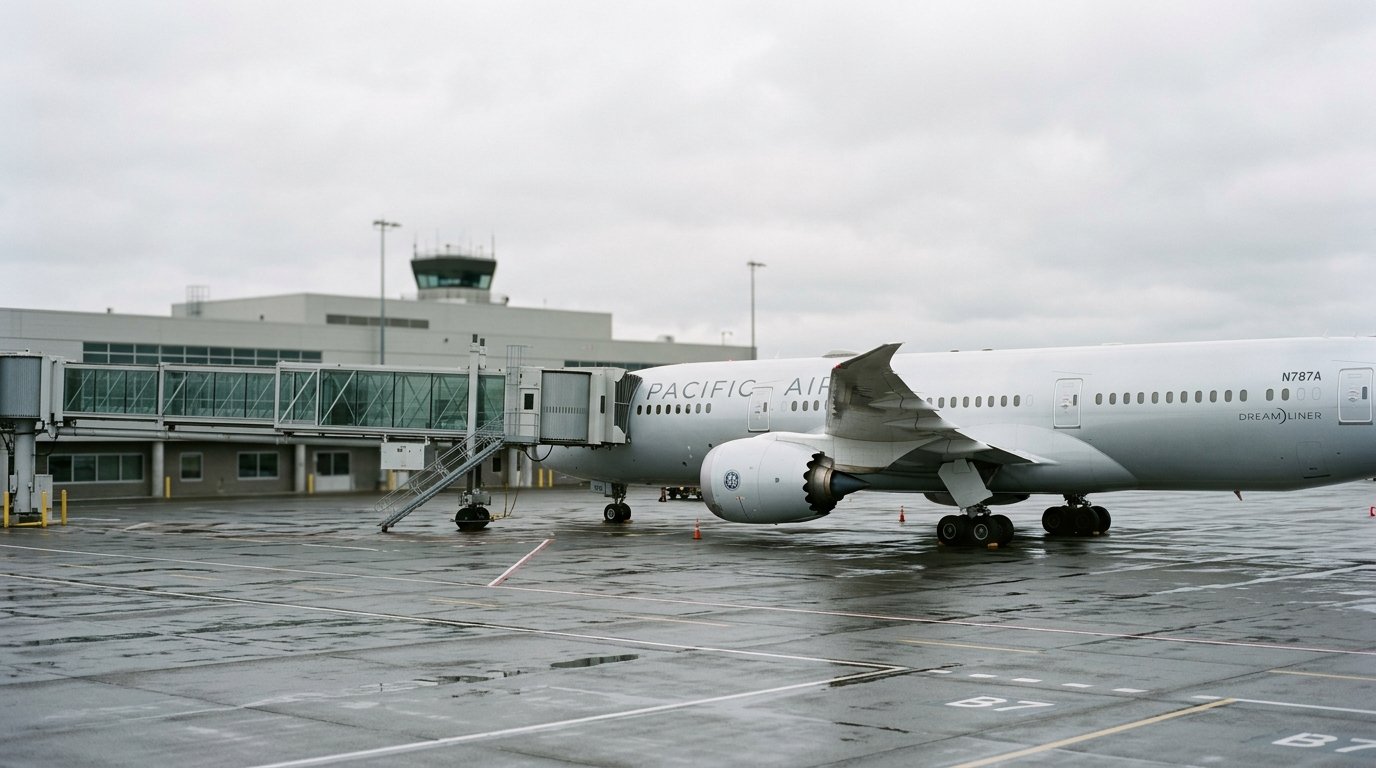
SEATTLE — Alaska Air Group outlined the next phase of its multi-year strategic transformation at its 2026 Investor Day, detailing a quantitative roadmap to achieve $1 billion in incremental annual profit by 2027 while accelerating its transition from a regional West Coast carrier into an international network airline following its acquisition of Hawaiian Airlines.
According to its Form 8-K filing with the SEC, the carrier disclosed that it has already captured roughly two-thirds of its $1 billion profit target. The $1 billion earnings plan includes $500 million in structural merger synergies from the Hawaiian combination, reflecting rapid execution across fleet, labor, and commercial platforms.
Integration Milestones and Network Repositioning
A central pillar of the Investor Day presentation in Seattle was the pace of Hawaiian Airlines operational integration. Management confirmed that Alaska Air Group has completed three of four major regulatory and commercial milestones: establishing a unified loyalty platform, securing a Single Operating Certificate from the FAA, and deploying a single passenger service system. Joint collective bargaining across represented union workgroups remains the final major integration phase currently underway.
Operationally, Alaska Air is using its hub dominance at Seattle-Tacoma International Airport—where it serves 110 destinations, nearly double its nearest competitor—to assemble a transatlantic and transpacific gateway. While past industry cycles were dominated by domestic point-to-point battles as explored in our coverage of airline network resets, Alaska is shifting capacity toward intercontinental service. Nonstop routes already operating from Seattle include London, Rome, Reykjavik, Tokyo, and Seoul, with Paris and Athens announced for launch in spring 2027. The company projects expanding from seven intercontinental destinations today to at least 15 by 2030, raising long-haul flying from approximately 8% of total capacity to 15%.
| Strategic Metric | Current Level | Target / Roadmap | Primary Driver |
|---|---|---|---|
| Incremental Annual Profit | Roughly Two-Thirds Captured | $1.0 Billion by 2027 | $500 million Hawaiian synergies and network optimization |
| Non-Main Cabin Revenue | 53% of Total Revenue | Approaching 60% by 2030 | Premium cabins (Aurora/Leihōkū), loyalty, and cargo |
| Atmos Rewards Cash Flow | 3% Historical Growth | Nearly $4 Billion by 2030 | Roughly 13% active member growth by 2027 and co-brand banking |
| Intercontinental Destinations | 7 Routes from Seattle | At Least 15 by 2030 | Widebody fleet redeployment and oneworld alliance feeds |
| Total Aircraft Fleet | 400+ Aircraft | 550 Aircraft by 2035 | Largest firm aircraft order in corporate history |
Loyalty Cash Flow and Cabin Premiumization
Beyond route maps, the airline’s earnings diversification plan hinges heavily on high-margin commercial revenue. As detailed in wider sector reviews such as our analysis of airline margin trends and cost structures, passenger airlines face volatile jet fuel and labor costs, making ancillary and program fees essential for earnings durability.
Alaska Air Group projects that non-main cabin revenue will rise from 53% today to approach 60% of total revenue by 2030. Within this mix, the newly unified Atmos Rewards program is modeled to generate nearly $4 billion in annual cash flow by 2030. Active membership expansion has accelerated from approximately 3% annually between 2019 and 2024 to roughly 13% projected by 2027, propelled by new co-branded credit cards and a newly launched travel debit card product.
To capture higher-yielding premium leisure and corporate business, Alaska and Hawaiian introduced new premium hardware tiers. The “Aurora” brand brings lie-flat suites to Boeing 787 widebodies and select transcontinental Boeing 737-10 MAX aircraft, accompanied by dedicated lounge facilities in Seattle. For Hawaiian flights, the “Leihōkū” premium concept anchors refreshed Airbus A330 interiors alongside a new 13,000-square-foot lounge in Honolulu. Management projects total premium seating revenue will cross 40% of corporate turnover by 2030, compared to 35% currently.
Cargo Growth and Fleet Capital Allocation
Cargo represents another non-passenger growth vector in the airline’s portfolio. Cargo revenue has expanded approximately 60% since 2024, and management identified a clear line of sight toward $750 million in dedicated cargo revenue by 2030. Growth drivers include dedicated inter-island freighter flights in Hawaiʻi, international belly space utilization across widebody transpacific routes, and postal logistics agreements.
To support this network geometry, Alaska Air Group is executing the largest fleet commitment in its corporate history, guiding total fleet size from more than 400 aircraft today to 550 aircraft by 2035. Even as Boeing delivery schedules face industry-wide oversight, Alaska executives noted at the Seattle conference that long-term fleet modernization remains fully funded through operating cash flows, keeping the carrier’s average aircraft age among the youngest in the domestic mainline peer group.
What Investors Should Watch Next
With roughly two-thirds of the $1 billion incremental earnings goal accounted for, Wall Street will focus on two operational proof points over the next twelve months: the conclusion of joint collective bargaining agreements with pilots and flight attendants, and initial unit-revenue performance on the newly announced 2027 Paris and Athens transatlantic routes.
If execution continues at the current pace, the successful absorption of Hawaiian Airlines will mark one of the few large airline mergers of the post-deregulation era to capture targeted synergies ahead of schedule while expanding intercontinental market share.
Sources
- U.S. Securities and Exchange Commission: Alaska Air Group, Inc. Form 8-K Exhibit 99.1 (September 29, 2026)
- U.S. Securities and Exchange Commission: Alaska Air Group, Inc. Form 8-K Current Report (September 29, 2026)
- CNBC: Alaska Airlines CEO on Boeing Delivery Timeline and Fleet Strategy (September 29, 2026)
Disclosure: This article is for informational purposes only and is not investment advice.