
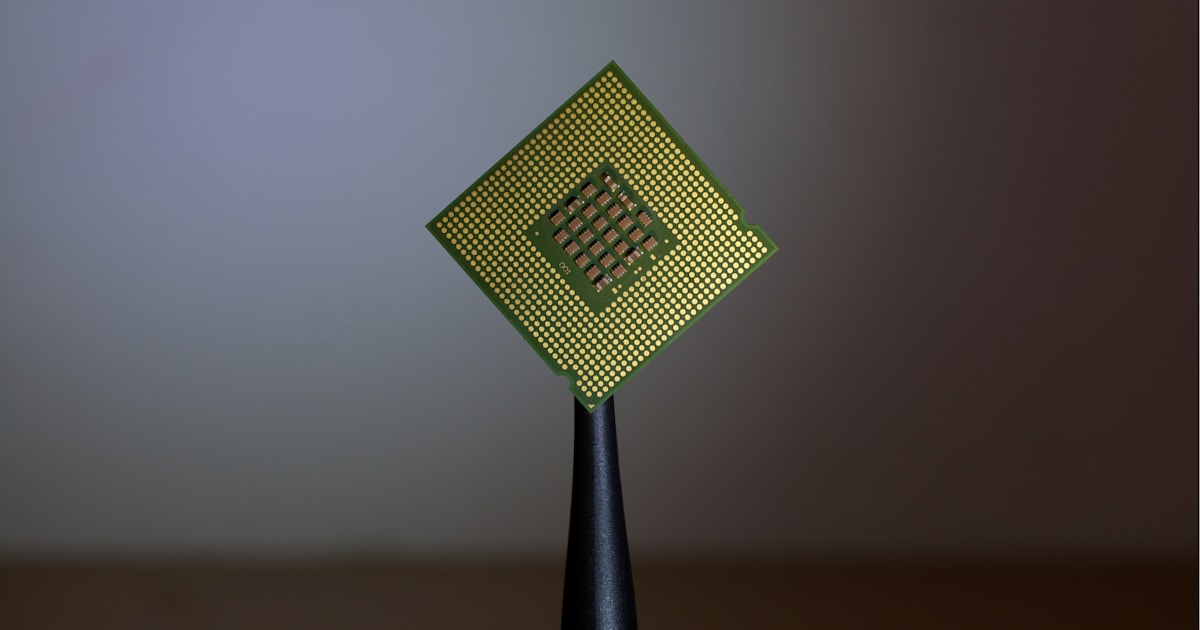
Intel shares surged nearly 14% on Friday — their biggest single-day gain in years — after The Wall Street Journal reported that Apple and Intel have reached a preliminary agreement for Intel to manufacture chips that power Apple devices. The news sent Intel to an intraday high above $130 and ignited a broad semiconductor rally, with Micron jumping 15.5% and AMD climbing 11.4% in sympathy.
The Deal: What WSJ Reported
According to the Journal, the preliminary agreement caps more than a year of intensive negotiations between the two companies. The deal would see Intel’s foundry operation — Intel Foundry Services (IFS) — produce chips destined for Apple hardware. Neither Apple nor Intel has officially confirmed the report, and the terms remain preliminary, meaning final production commitments have not been signed.
Analyst Ming-Chi Kuo, who has a strong record tracking Apple’s supply chain, had previously flagged Intel as a potential future supplier, projecting that Intel could begin manufacturing M-class chips for Macs and iPads as early as 2027. A separate note from analyst Jeff Pu suggested the partnership could eventually extend to iPhone application processors by 2028, though that scenario is further from confirmation.
The deal reportedly gained political momentum after President Trump personally advocated for Intel during a White House meeting with Apple CEO Tim Cook — a notable intersection of industrial policy and corporate strategy that underscores how chip manufacturing has become a national-security issue in Washington.
Why This Matters for Intel’s Foundry Ambitions
For Intel, landing Apple as a foundry customer would be transformational. CEO Lip-Bu Tan, who took the helm in early 2024, has made rebuilding Intel’s foundry credibility the centerpiece of his turnaround playbook. Intel has invested tens of billions of dollars in expanding domestic fab capacity — plants in Arizona, Oregon, and Ohio — and has been pushing its advanced Intel 18A process node as competitive with TSMC’s leading-edge offerings.
The challenge has been attracting marquee external customers willing to trust Intel’s manufacturing with their most critical chips. A contract from Apple — arguably the most demanding chip customer in the world — would serve as the ultimate validation. Apple’s chips consistently rank among the most sophisticated designs on the planet, and winning even a slice of that business would signal to other potential foundry customers that Intel’s manufacturing has truly come of age.
Apple has historically sourced virtually all of its custom silicon from Taiwan Semiconductor Manufacturing Co. (TSMC). That concentration creates supply-chain risk that Apple, the U.S. government, and investors have grown increasingly uneasy about. Diversifying to a domestic U.S. foundry partially addresses that exposure while aligning with Washington’s push to reshore advanced semiconductor production.
Market Reaction: Semis Catch Fire
The headline triggered one of the largest single-session volume surges in Intel’s history. More than 227 million shares changed hands Friday — roughly double the 90-day average — as investors repriced the stock’s foundry optionality. Intel’s market capitalization climbed to approximately $628 billion on the news.
| Ticker | Company | Price | Change | Volume |
|---|---|---|---|---|
| INTC | Intel | $124.92 | +13.96% | 227.7M |
| MU | Micron Technology | $746.81 | +15.52% | 58.3M |
| AMD | Advanced Micro Devices | $455.19 | +11.44% | 51.8M |
| DELL | Dell Technologies | — | +13.11% | — |
| NVDA | Nvidia | $215.20 | +1.75% | 112.5M |
Micron’s outsized move — up more than 15% — is partly explained by its own AI-driven demand cycle, but investors also read the Intel-Apple deal as broader validation of U.S.-based advanced chip manufacturing, a trend that benefits the entire domestic semiconductor ecosystem. AMD, which separately reported strong Q1 2026 earnings driven by AI chip demand, added another 11.4% as the sector caught a broad tailwind.
The Geopolitical Tailwind
The Apple-Intel talks did not happen in a vacuum. The Trump administration has made semiconductor reshoring a cornerstone of its industrial policy, pointing to Taiwan’s geographic vulnerability as a strategic risk that the U.S. cannot afford to ignore. Apple’s current concentration of chip production in Taiwan — where TSMC operates its most advanced fabs — is viewed in Washington as a single point of failure in the nation’s technology supply chain.
Intel, by contrast, manufactures chips on U.S. soil under the CHIPS and Science Act, which provided the company with billions in federal incentives to expand domestic capacity. Sourcing chips from Intel allows Apple to align with U.S. policy objectives while simultaneously reducing geopolitical concentration risk — a dual benefit that makes the partnership attractive beyond simple economics.
Caveats and Risks
Investors should note that this remains a preliminary agreement, not a signed manufacturing contract. Preliminary chip deals can fall through if yield, cost, or performance benchmarks are not met during qualification. Apple is famously demanding: any foundry partner must demonstrate that its process can reliably manufacture billions of chips at the required defect rates and die cost.
Intel’s 18A process node — its most advanced — has shown encouraging results in internal testing, but external customers will require their own qualification runs before committing production volumes. The timeline cited by analysts (2027 for M-class chips, 2028 for iPhone chips) implies Intel has at minimum one to two years to prove its manufacturing capabilities at scale.
Analysts also note that Intel’s average price target sits well below Friday’s close, suggesting the market is pricing in a successful outcome that is far from guaranteed. Still, even a partial win — Intel manufacturing a single chip family for Apple — would represent a seismic shift in the foundry landscape and the most significant external design win in IFS’s short history.
What Comes Next
Watch for official comment from either company — neither has confirmed the WSJ story. An earnings call from Apple or Intel in the coming months could shed light on the status of the deal. Investors tracking Intel’s foundry progress should also monitor the 18A qualification timeline: any signs of yield improvement or additional external customer announcements would reinforce the bull case.
For the broader semiconductor sector, Friday’s rally underscores a market that is hungry for signs that U.S. chip manufacturing can compete at the leading edge. If Intel succeeds in landing Apple as a customer, it could catalyze a re-rating of the entire domestic foundry ecosystem.
Sources
- 9to5Mac: Apple and Intel have reached a deal to produce future chips, report (May 8, 2026)
- Yahoo Finance: Most Active Stocks — May 9, 2026
- Investing.com: Intel Stock News — Apple chipmaking deal coverage
Disclosure: This article was produced with AI assistance and reviewed before publication. It is for informational purposes only and is not investment advice.