
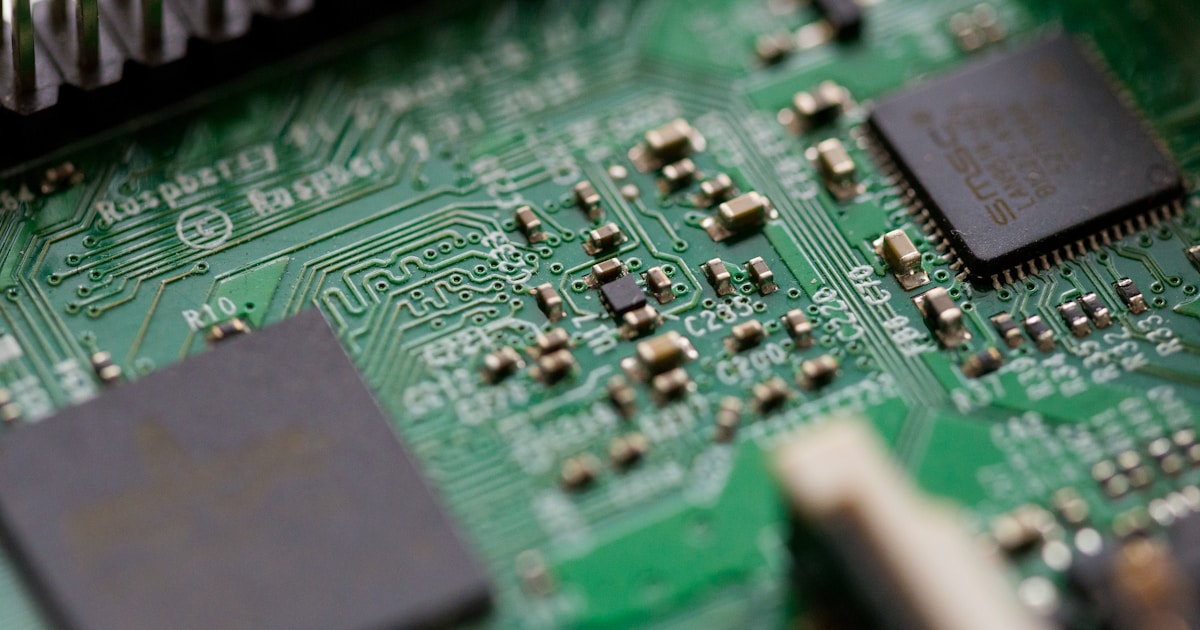
Cerebras Systems, the AI chip startup that spent years challenging NVIDIA’s dominance in machine-learning hardware, filed its S-1 registration statement on April 17, 2026, setting the stage for one of the year’s most closely watched initial public offerings. According to Bloomberg reporting cited by major financial news aggregators, the Santa Clara-based company is targeting a valuation of up to $40 billion and plans to raise as much as $4 billion in the offering.
The filing — tracked under the ticker symbol CBRS — marks the culmination of an eventful eighteen months in which Cerebras transformed from a company with precarious customer concentration into a platform embedded in two of the world’s most consequential AI ecosystems. The question now is whether investors will price the transformation at the level the company is seeking.
Who Is Cerebras Systems?
Founded in 2016 by Andrew Feldman and a team of Silicon Valley chip veterans, Cerebras built its business around a radical idea: instead of manufacturing AI chips the size of a fingernail, as NVIDIA does, it would fabricate processors the size of an entire silicon wafer. The resulting Wafer Scale Engine (WSE) packs hundreds of thousands of AI cores onto a single device and is optimized for one thing above all else — delivering inference outputs with minimum latency.
While NVIDIA dominates AI training, Cerebras has staked its claim on the inference layer: running already-trained models cheaply and quickly. As the AI industry matures and the volume of inference calls explodes, that distinction matters more than ever. The average enterprise no longer asks “which AI model is best?” — it asks “which model can respond fast enough to be usable in production?” Cerebras is betting its IPO on that question.
The OpenAI Catalyst
The pivotal moment in Cerebras’s pre-IPO story came on January 14, 2026, when OpenAI and Cerebras announced a multi-year partnership. Under the deal, Cerebras will deploy 750 megawatts of wafer-scale systems for OpenAI — described by the two companies as “the largest high-speed AI inference deployment in the world.”
The commercial logic is straightforward: large language models on Cerebras hardware deliver responses up to 15 times faster than equivalent GPU-based systems. For OpenAI, which serves hundreds of millions of users and competes directly on the quality and responsiveness of ChatGPT, a latency advantage of that magnitude is more than a spec sheet benefit — it is a product differentiator. For Cerebras, the deal solved a different problem entirely: it replaced a dangerous revenue concentration with a marquee customer that signals credibility at scale.
AWS Bedrock Extends the Reach
Less than two months after the OpenAI announcement, on March 13, 2026, Cerebras disclosed that its CS-3 processors would be available through AWS Bedrock, Amazon’s managed AI service used by enterprises worldwide. The integration relies on a disaggregated inference architecture: prefill computations run on Amazon’s Trainium chips, while the decode step — which generates each token of a response — runs on Cerebras wafer-scale hardware.
The result, according to Cerebras and AWS, is inference at up to 3,000 tokens per second, with five times more high-speed token capacity within the same hardware footprint. David Brown, a senior vice president at AWS, called it “inference that’s an order of magnitude faster and higher performance than what’s available today.” For investors, the AWS deal answers the distribution question: Cerebras now reaches enterprise customers through the channel they already trust and pay, without requiring a direct hardware sale.
| Company | Ticker | IPO / Filing Date | IPO Price | Target / Current Mkt Cap | 2025 Revenue | Rev Growth |
|---|---|---|---|---|---|---|
| CoreWeave | CRWV | Mar 28, 2025 | $40.00 | $64.6B (current) | $5.13B | +167.9% |
| Cerebras Systems | CBRS | S-1 Filed Apr 17, 2026 | TBD | $40B (target) | TBD | — |
Valuation: How Do You Get to $40 Billion?
A $40 billion valuation is a meaningful premium for a company still in its pre-revenue-disclosure phase of the IPO process. But context matters. CoreWeave — a GPU cloud infrastructure company that went public in March 2025 — now carries a market capitalization of more than $64 billion after generating $5.13 billion in 2025 revenue with 167.9% year-over-year growth, according to stockanalysis.com. CoreWeave’s current stock price of $119.01 represents nearly a 200% gain from its $40 IPO price.
The IPO market itself has improved significantly. According to stockanalysis.com’s IPO statistics, 2025 produced 347 public offerings — a 54% increase over 2024’s 225. As of May 2, 2026, there have been 119 IPOs in 2026, running approximately 5% ahead of the same point in 2025. A market that has absorbed both successful and disappointing technology listings is more capable of price discovery than the tight 2022–2024 window.
Risks to Watch
Despite the improved narrative, the Cerebras IPO carries genuine risks. NVIDIA’s moat in AI hardware is not just silicon — it is CUDA, a software ecosystem that developers and enterprises have built atop for more than a decade. Cerebras and other challengers face adoption friction that cannot be overcome by raw inference speed alone.
Valuation risk is equally real. At $40 billion, investors would be pricing in substantial future revenue growth, sustained speed advantages, and successful monetization of the OpenAI and AWS relationships. If NVIDIA or ARM-based alternatives close the inference gap, Cerebras’s premium compresses. Revenue concentration — even in blue-chip form — also remains a watchlist item: any deterioration in the OpenAI or AWS relationship would hit the numbers hard.
What This Signals for Capital Markets
The Cerebras filing is the latest evidence that the AI investment wave has migrated from model development into the inference layer. Training-centric names like NVIDIA have already been extensively re-rated by the market; inference-optimized architecture plays represent a fresher part of the AI capital markets opportunity set. Institutional investors who missed CoreWeave’s 197% post-IPO run will be paying close attention.
How the Cerebras roadshow is received will test whether the market is willing to apply premium multiples to specialized AI silicon — and whether the partnership-driven business model (large anchor customers like OpenAI and AWS) commands IPO valuations comparable to NVIDIA’s more diversified footprint. The answer will define the next chapter in AI capital formation.
Disclosure: It is for informational purposes only and is not investment advice.
Sources
- StockAnalysis.com — IPO Filings: Cerebras Systems Inc. (CBRS), filed April 17, 2026
- Cerebras Blog: “OpenAI Partners with Cerebras to Bring High-Speed Inference to the Mainstream,” January 14, 2026
- Cerebras Blog: “Cerebras is coming to AWS,” March 13, 2026
- StockAnalysis.com — CoreWeave (CRWV): IPO date, price, market cap, revenue as of May 2, 2026
- StockAnalysis.com — 2025 IPO Market Statistics: 347 total IPOs, 54% growth over 2024