
Oil supermajor Shell has agreed to acquire Canadian natural gas producer ARC Resources (TSX: ARX) at C$22 per share in a combination of cash and newly issued Shell shares. The deal, announced April 27, 2026, values ARC at approximately C$22 billion — roughly USD $16 billion at prevailing exchange rates — and represents a premium of approximately 20 percent over ARC’s pre-announcement close. It stands as one of the largest energy-sector acquisitions of 2026.
ARC shares surged on the announcement, converging toward the offer price as arbitrage capital moved in. For Shell, the transaction adds approximately 370,000 barrels of oil equivalent per day (boe/d) to its global production base — a meaningful expansion of its upstream portfolio at a time when long-duration, low-cost natural gas assets have become strategically valuable to any company with LNG export commitments to honour.
Deal Terms at a Glance
| Term | Detail |
|---|---|
| Offer price | C$22.00 per ARC Resources share |
| Total equity value | ~C$22 billion (~USD $16 billion) |
| Est. enterprise value | ~USD $16.4 billion |
| Premium to market | ~20% over pre-announcement close |
| Consideration | Cash and Shell shares (split to be disclosed in transaction circular) |
| Production added | ~370,000 boe/d |
| Key asset | Montney Basin, Alberta and British Columbia |
| Status | Announced; pending shareholder and regulatory approval |
How Shell Plans to Finance the Deal
Shell has structured the consideration as a blended cash-and-stock package. The exact proportions have not yet been publicly disclosed — Shell will detail the financing mix in the formal transaction circular it files with Canadian securities regulators in the coming weeks.
The financing split matters for capital markets participants. A heavily cash-funded deal draws directly on Shell’s balance sheet, while a larger stock component limits immediate balance-sheet pressure but dilutes existing Shell shareholders. Rating agencies will assess how the transaction shifts Shell’s leverage profile before reaffirming its investment-grade bond ratings. Shell has been an active buyer of its own shares in recent years; investors will look for guidance on whether its buyback programme continues at pace post-close or moderates while the company rebuilds its cash position after the acquisition.
What Shell Is Really Buying: The Montney Basin
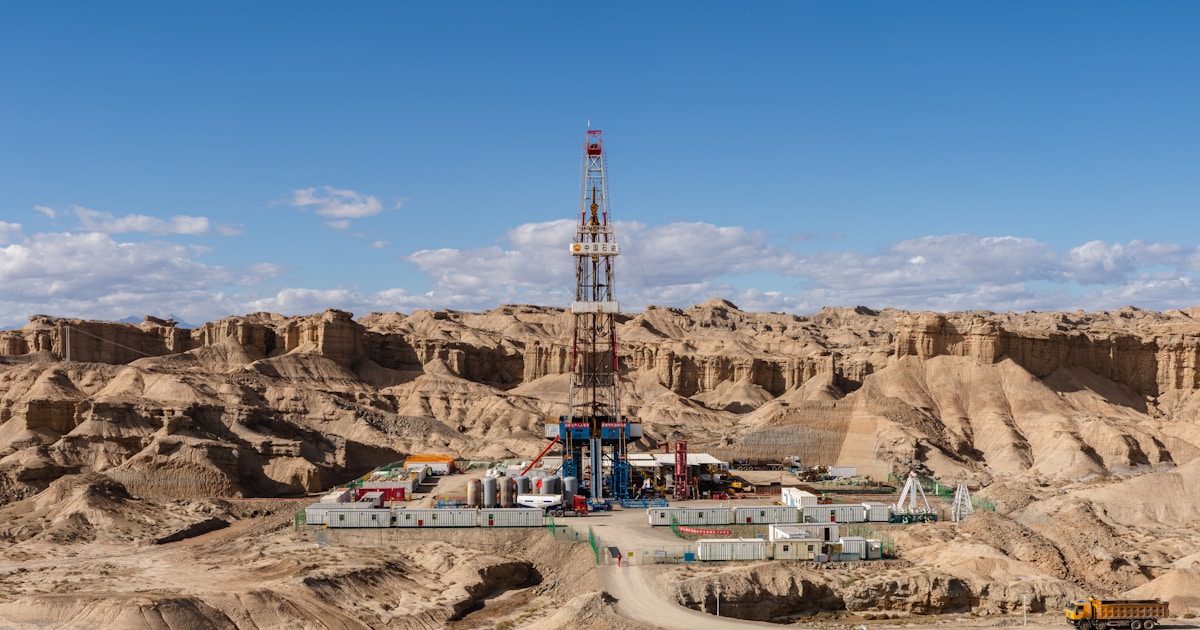
ARC Resources controls roughly one million net acres in the Montney Formation, a deep shale play straddling Alberta and British Columbia that ranks among the most prolific and economically competitive natural gas resource plays in North America. ARC has spent more than a decade consolidating its Montney position alongside a fully integrated infrastructure network — gathering lines, compression, and processing capacity — that allows it to move gas to market at well economics that hold up even at lower commodity prices.
That cost structure is the strategic prize. Shell is acquiring not just reserves but a fully operational, low-breakeven production system. For a company with long-term LNG export commitments to honour, that kind of upstream certainty carries a premium — and the roughly 20 percent offer premium signals the market agreed the asset was worth paying up for. According to reports, the deal adds the equivalent of approximately 370,000 boe/d to Shell’s global output.
The LNG Canada Connection
Shell is the operator and a 40 percent interest holder in LNG Canada, one of the largest liquefied natural gas export facilities built in the Western Hemisphere this decade, located at Kitimat, British Columbia. Its joint venture partners include Petronas, PetroChina, Mitsubishi Corporation, and Korea Gas (Kogas). Phase 1 of the project shipped its inaugural LNG cargo in 2025; Phase 2 expansion, which would materially increase throughput capacity, remains under active evaluation.
ARC’s Montney position sits directly in the upstream gas supply corridor feeding the Kitimat terminal. By controlling the feedstock supply, Shell eliminates its dependence on third-party gas contracts for LNG Canada and gains pricing visibility across the entire value chain — from the wellhead to the tanker. For LNG buyers in Asia and Europe seeking long-term supply certainty beyond 2030, this kind of vertical integration is exactly what makes Shell’s LNG commitments credible.
How This Deal Fits the Energy M&A Cycle
Shell’s move on ARC Resources arrives at the tail end of a historic wave of North American energy consolidation. The 2023–2024 cycle was dominated by Permian Basin transactions: ExxonMobil’s $59.5 billion acquisition of Pioneer Natural Resources, Chevron’s approximately $53 billion bid for Hess, Diamondback Energy’s $26 billion takeover of Endeavor Energy Resources, and ConocoPhillips’ $22.5 billion deal for Marathon Oil. Those transactions reshaped the U.S. shale landscape and set a new benchmark for what it costs to add meaningful scale in a competitive upstream basin.
Shell’s ARC deal shifts the geographic focus from U.S. oil to Canadian gas — and signals that LNG-driven demand is turning Montney acreage into a strategic asset class, not merely a commodity resource. With European and Asian LNG buyers seeking supply certainty beyond 2030, producers with Montney exposure and LNG export infrastructure are increasingly attracting major-company attention. Other Montney independents may find themselves fielding acquisition inquiries as a result.
What Comes Next
ARC Resources shareholders must formally vote to approve the transaction. Given the roughly 20 percent acquisition premium, shareholder approval is widely expected. Regulators in Canada will review the deal under the Investment Canada Act, which governs large foreign direct investments in the country — energy transactions at this scale typically trigger a national interest review that can add several months to the timeline. The Competition Bureau of Canada will run a parallel antitrust review, though Canadian energy upstream consolidation has rarely resulted in a blocking order.
Shell will file the formal transaction circular — including the full financing breakdown, fairness opinions, and shareholder vote date — with Canadian securities regulators in the coming weeks. Key items to watch: the cash-to-stock ratio, any updated Shell production guidance for the combined entity, and whether the company signals any adjustment to its capital return programme. A close in the second half of 2026 appears most likely, absent unforeseen regulatory obstacles.
Sources
- Shell Newsroom — April 27, 2026 acquisition announcement
- ARC Resources Investor Relations — company confirmation and shareholder materials
- LNG Canada — joint venture structure, Phase 1 and Phase 2 project details
- Alberta Energy Regulator — Montney formation production and resource data
- SEC EDGAR — ExxonMobil/Pioneer, Chevron/Hess, ConocoPhillips/Marathon, Diamondback/Endeavor deal filings
- Competition Bureau of Canada — merger review framework
Disclosure: It is for informational purposes only and is not investment advice.