
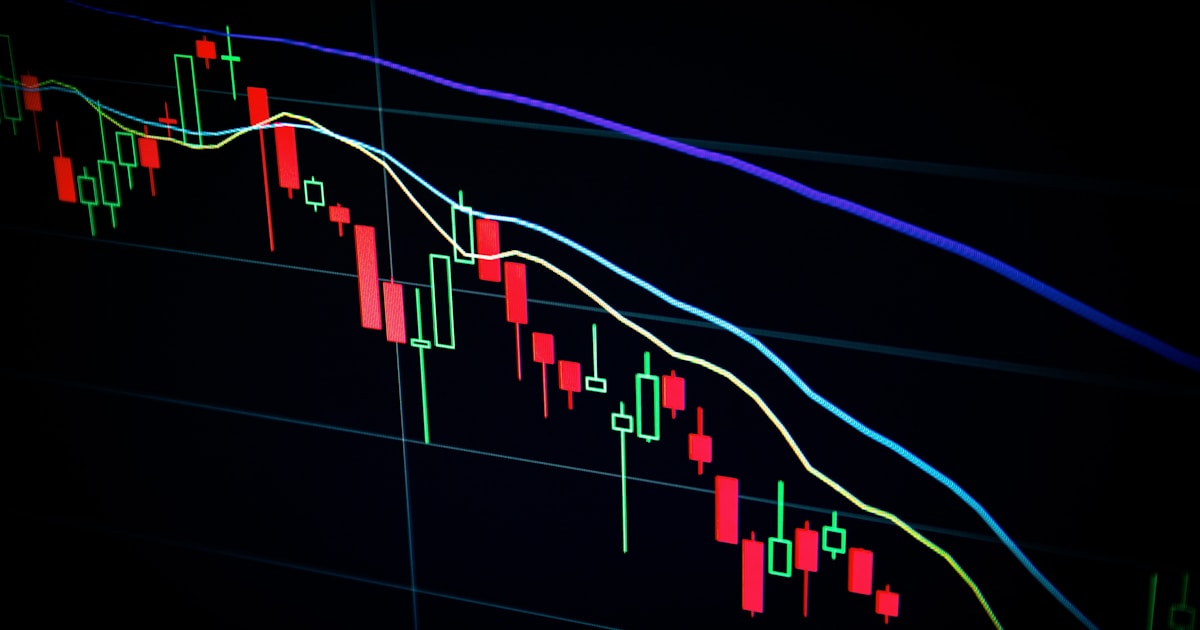
The S&P 500 has a concentration problem. By most measures, the top 10 holdings in a standard cap-weighted index fund now account for roughly 35 percent of the entire index — a historically elevated share that means a handful of mega-cap technology names effectively steer the returns of what most investors assume is a diversified portfolio.
In 2026, that concentration is starting to backfire. The Nasdaq Composite has entered correction territory, pulling down the cap-weighted S&P 500 alongside it. Meanwhile, a cohort of equal-weight ETFs — funds that distribute assets evenly across all constituents regardless of market capitalization — has been quietly outperforming. At least three equal-weight ETFs have outpaced the S&P 500 year-to-date in 2026, according to data from 247 Wall Street.
For many investors, this divergence is overdue. But understanding why it’s happening — and whether it’s likely to persist — requires a closer look at how index construction shapes returns.
The Problem with Market-Cap Weighting
When you buy SPY (SPDR S&P 500 ETF Trust) or a similar cap-weighted index fund, you are buying more of the companies that have already gotten biggest. Apple, Microsoft, Nvidia, Amazon, Alphabet, Meta, and Tesla — collectively dubbed the “Magnificent 7” — at their peak represented nearly 30 percent of the S&P 500’s total market capitalization. The top 10 holdings, including Berkshire Hathaway and Broadcom, accounted for more than a third of the entire index.
This creates a structural tension: the bigger a stock gets, the more index funds must hold of it. Conversely, when these giants stumble, the damage cascades through virtually every passive vehicle tied to the S&P 500. That is exactly what has happened in 2026, as Middle East tensions, Federal Reserve uncertainty, and geopolitical risk disproportionately hammered high-valuation technology names.
The S&P 500 has posted a negative six-month return — down roughly 1.8% — while the industrials sector, a lower-concentration corner of the market, gained 10.2% over the same period. Companies in that sector, from Quanta Services to Eaton, have benefited from infrastructure buildout and power grid investment: areas that a cap-weighted fund structurally underweights.
What Equal-Weight ETFs Do Differently
An equal-weight fund solves the concentration problem by assigning the same portfolio percentage to each constituent. In a 500-stock equal-weight S&P 500 fund, Apple receives the same weight as any smaller company: roughly 0.2 percent each. The fund rebalances periodically — usually quarterly — which forces a systematic “sell high, buy low” dynamic: trimming into winners that have appreciated and adding to laggards that have cheapened.
The most widely held equal-weight vehicle is the Invesco S&P 500 Equal Weight ETF (RSP), launched in 2003 and one of the largest smart-beta funds by assets. RSP has historically outperformed the cap-weighted index during periods of narrow market leadership, particularly when mega-cap concentration begins to unwind.
Two other funds have drawn particular attention in 2026:
- Invesco S&P 500 Top 50 Equal Weight ETF (EQWL): Concentrates on the 50 largest S&P 500 constituents but equalizes their weights, offering a middle ground between pure mega-cap exposure and full equal-weighting.
- iShares MSCI USA Equal Weighted ETF (EUSA): Tracks the broader MSCI USA index on an equal-weight basis, providing exposure to mid-cap and small-cap companies within the U.S. equity universe that standard S&P 500 funds largely ignore.
All three have outpaced the cap-weighted S&P 500 year-to-date in 2026 — a notable reversal from 2023 and 2024, when mega-cap dominance kept equal-weight strategies persistently behind.
The Macro Case for Equal-Weight Right Now
Several forces are converging to favor the equal-weight approach in the current environment.
Interest Rate Uncertainty Weighs on High-Multiple Tech
The Federal Reserve’s most recent minutes — released last week — indicated that a rate hike remains on the table despite geopolitical uncertainty surrounding the fragile U.S.-Iran ceasefire. Higher rates compress the discounted cash flow models that support stretched valuations in technology stocks, the heaviest weights in cap-weighted indices. Equal-weight funds, with their reduced tech concentration, are naturally less exposed to rate-driven multiple compression.
The Nasdaq Correction Is Doing the Math
With the Nasdaq Composite in correction territory — down more than 10 percent from its recent high — the gap between tech-heavy and equally-weighted indices has been widening in real time. RSP’s relative outperformance against SPY tends to accelerate precisely during these rotation episodes, as capital moves from crowded mega-caps into the broader market.
Industrials and Financials Are Benefiting from Real-Economy Tailwinds
Defense spending, infrastructure investment, and energy transition buildout are creating durable demand for companies that cap-weighted investors have structurally underweighted for years. Equal-weight indices assign these companies the same starting allocation as any tech giant, and their 2026 returns reflect that structural fairness.
The Risks Worth Watching
Equal-weight is not a free lunch. These funds tend to underperform significantly during periods of strong mega-cap leadership — precisely the multi-year run that made passive investing in SPY so attractive from 2019 through 2024. An investor who rotated into RSP in 2021 would have left substantial gains on the table before finally being vindicated in 2026.
There are also cost and liquidity trade-offs to consider. RSP carries an expense ratio of 0.20 percent annually, compared to SPY’s 0.09 percent — a modest but meaningful difference over long holding periods. Because equal-weight funds hold far larger positions in smaller companies, they can also experience wider bid-ask spreads and higher rebalancing friction than their cap-weighted counterparts.
The structural rebalancing advantage — the systematic buy-low, sell-high mechanic — is real but not infallible. It depends on mean reversion: the assumption that today’s underperformers will eventually catch up and today’s outperformers will cool. Markets can stay concentrated and momentum-driven for extended periods, as the years from 2019 to 2024 clearly demonstrated.
What the Current Divergence Is Signaling
The outperformance of equal-weight ETFs in 2026 is less a verdict on the strategy itself and more a reflection of what is happening to the companies that dominate traditional indices. When a small cohort of stocks is responsible for most of the index’s gains — or losses — passive investors who never realized how concentrated they were tend to discover that fact precisely when it hurts most.
The current environment — a Nasdaq correction, elevated valuations, an uncertain rate path, and a rotation into industrials, financials, and other sectors — is exactly the kind of market that makes equal-weight construction valuable. Whether the divergence persists depends on whether technology leadership reasserts itself or the broadening of market participation continues.
For context, analysts at Vanda Research noted Thursday that retail investors bought just $196 million worth of U.S. stocks and ETFs on a net basis during Wednesday’s big ceasefire rally — just 15 percent of the daily average over the past year. The bulk of the buying came from professional investors covering short positions. When retail sentiment is cautious and institutional money is rotating, breadth strategies tend to benefit.
The funds designed to capture that breadth are, for now, keeping score. The question for long-term investors is whether their portfolios are positioned to benefit — or still overexposed to the concentration that drove the last cycle but may be fading in this one.
Disclosure: It is for informational purposes only and is not investment advice.