
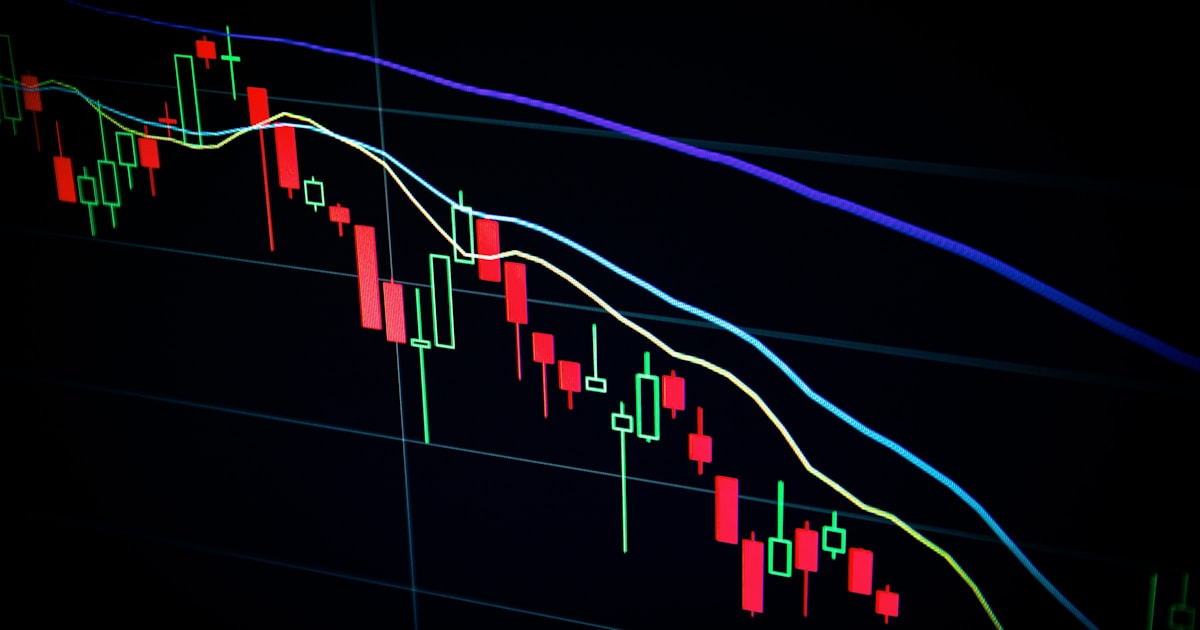
For months, the U.S. dollar had been a safe harbor. As missiles flew between the United States and Iran and oil prices spiked above $120 a barrel, investors did what they always do in a crisis: they fled to the greenback. The dollar surged. Everything denominated in other currencies got cheaper. The world went risk-off.
Then came the ceasefire — and the dollar started falling.
On the day the U.S. and Iran announced a fragile truce, the DXY index — the benchmark that measures the dollar against a basket of six major currencies — dropped sharply. The euro, yen, and British pound all gained ground. Gold hit a three-week high. Treasury yields fell. Stocks rallied. The script for a geopolitical unwind was playing out almost textbook-fashion.
But behind the headlines, something more interesting is happening. The dollar’s slide isn’t just a reflex reaction to good news. It’s a signal — one that touches virtually every corner of global capital markets.
How the Dollar Functions as the World’s Risk Barometer
The U.S. dollar is the world’s reserve currency, accounting for roughly 58% of global foreign exchange reserves as of late 2025, according to the International Monetary Fund. It is also the currency in which most international trade is invoiced, most commodities are priced, and most sovereign debt is denominated. When the dollar strengthens, it tightens financial conditions globally — even in countries that never touch U.S. monetary policy directly.
Currency strategists often describe the “dollar smile”: the dollar tends to strengthen at the extremes — either when the U.S. economy dramatically outperforms, or when global risk aversion spikes and investors flee to safety. It weakens in the middle, when global growth is synchronized, confidence returns, and investors are willing to venture outside U.S. assets.
The current slide puts the dollar squarely in that middle zone. The Iran ceasefire, however fragile, has removed one major tail risk from the global outlook. And with that removal comes capital rotation: out of safe havens, into risk assets — and out of dollars, into everything else.
What Dollar Weakness Does to Capital Markets
Commodities Get a Complex Lift
Most commodities are priced in U.S. dollars on global exchanges. When the dollar weakens, it takes more dollars to buy the same barrel of oil, ounce of gold, or bushel of wheat — which is one reason commodity prices often move inversely to the greenback. Gold’s push toward a three-week high following the ceasefire reflects both the easing of war premium and the mechanical effect of dollar softness.
Oil is the interesting exception. Brent crude remained above $120 even after the ceasefire announcement, with traders noting that a diplomatic pause does not instantly restore the roughly 1.5 to 2 million barrels per day of Iranian supply that has been disrupted or sanctioned. Dollar weakness provides a floor under energy prices even as geopolitical risk premium partially unwinds.
Emerging Markets Get Room to Breathe
Dollar weakness is generally a tailwind for emerging market economies, and the effect can be dramatic. When the dollar strengthens, countries that hold dollar-denominated debt face a double squeeze: their local currencies weaken, making debt repayments more expensive, while capital tends to flee toward higher-yielding U.S. assets.
The reverse is equally powerful. As the dollar softens, emerging market currencies from the Indian rupee to the Mexican peso tend to strengthen. That eases debt service burdens, lowers imported inflation, and gives developing-country central banks more room to cut interest rates and stimulate growth. According to the Institute of International Finance, emerging markets absorbed over $1.1 trillion in portfolio inflows in 2024; a sustained period of dollar weakness could accelerate that trend through 2026.
The FTSE Emerging Markets Index has already shown sensitivity to the dollar’s recent moves, rallying in parallel with the ceasefire announcement — a signal that global funds are beginning to rotate back toward higher-beta opportunities outside the United States.
U.S. Multinationals Benefit at the Margin
For American companies with substantial international revenue — technology giants, consumer staples firms, and industrial conglomerates — a weaker dollar is a quiet earnings tailwind. When overseas revenues are translated back into dollars, a weaker greenback makes those foreign sales worth more. S&P 500 companies collectively generate roughly 40% of their revenues outside the United States, according to S&P Global data, meaning currency translation effects can meaningfully move the needle on earnings per share.
This is why strategists sometimes describe dollar weakness as a stealth stimulus for equities — it doesn’t show up in any central bank statement, but it quietly boosts the earnings of hundreds of large-cap companies.
What the Bond Market Is Saying Simultaneously
The dollar’s decline is happening alongside a sharp fall in U.S. Treasury yields — and that combination deserves scrutiny. In a typical risk-off-to-risk-on rotation, you’d expect yields to rise as investors sell bonds and buy equities. Instead, Treasury yields have fallen even as stocks rallied.
That’s telling. It suggests the bond market is not just reacting to the ceasefire — it’s also pricing in something more fundamental: the possibility that the Federal Reserve will be able to resume its rate-cutting cycle sooner than feared. Fed officials, per the most recent meeting minutes, still anticipate at least one rate cut in 2026 despite the inflation pressures that accompanied the Iran conflict. If that cut materializes, the rate differential between U.S. and international debt narrows, and foreign investors have less incentive to hold dollars to capture that yield advantage.
The result is a reinforcing loop: expectations of Fed easing weaken the dollar, which raises imported commodity costs, which creates its own inflationary pressure, which the Fed must weigh against an uncertain growth outlook. Currency markets are essentially betting the Fed leans dovish from here.
The Risks of Reading Too Much Into One Week
Dollar moves are famously difficult to predict with precision. The Iran ceasefire has already shown signs of strain, with both sides accusing each other of violations in the days following the initial announcement. If hostilities resume, the classic safe-haven bid for dollars would likely return quickly, reversing gains in risk assets and emerging markets.
There’s also the tariff variable. The Trump administration’s posture — including threats of 50% tariffs on countries supplying weapons to Iran — has introduced persistent uncertainty into global currency markets that doesn’t disappear with a single ceasefire. A tariff escalation targeting major trading partners could easily strengthen the dollar again by reducing foreign appetite for U.S. exports while maintaining demand for dollar-denominated safe assets.
Currency strategists at several major banks have cautioned against overinterpreting short-term DXY moves when the geopolitical backdrop remains this fluid. The dollar’s medium-term trajectory will ultimately depend on the Fed’s actual rate path, the durability of the Iran deal, and whether global growth outside the U.S. can convincingly accelerate.
The Bigger Picture
The dollar’s slide is not just a foreign exchange footnote. In a world where capital flows across borders in milliseconds and every asset class is priced relative to the reserve currency, what happens to the DXY matters — for bond investors in Tokyo, equity managers in London, central bankers in Jakarta, and corporate treasurers in Chicago.
For those tracking global capital markets, key signals to watch include whether the DXY sustains a break below key technical support, how emerging market fund flows respond in the weeks ahead, and whether the two-year Treasury yield — the most rate-cut-sensitive point on the curve — continues its descent. Together, these indicators will say far more about the durability of the current risk-on environment than any single headline from the ceasefire talks.
The ceasefire may have set the current dollar move in motion. But the forces now at work are much larger than any single geopolitical event.
Disclosure: It is for informational purposes only and is not investment advice.