
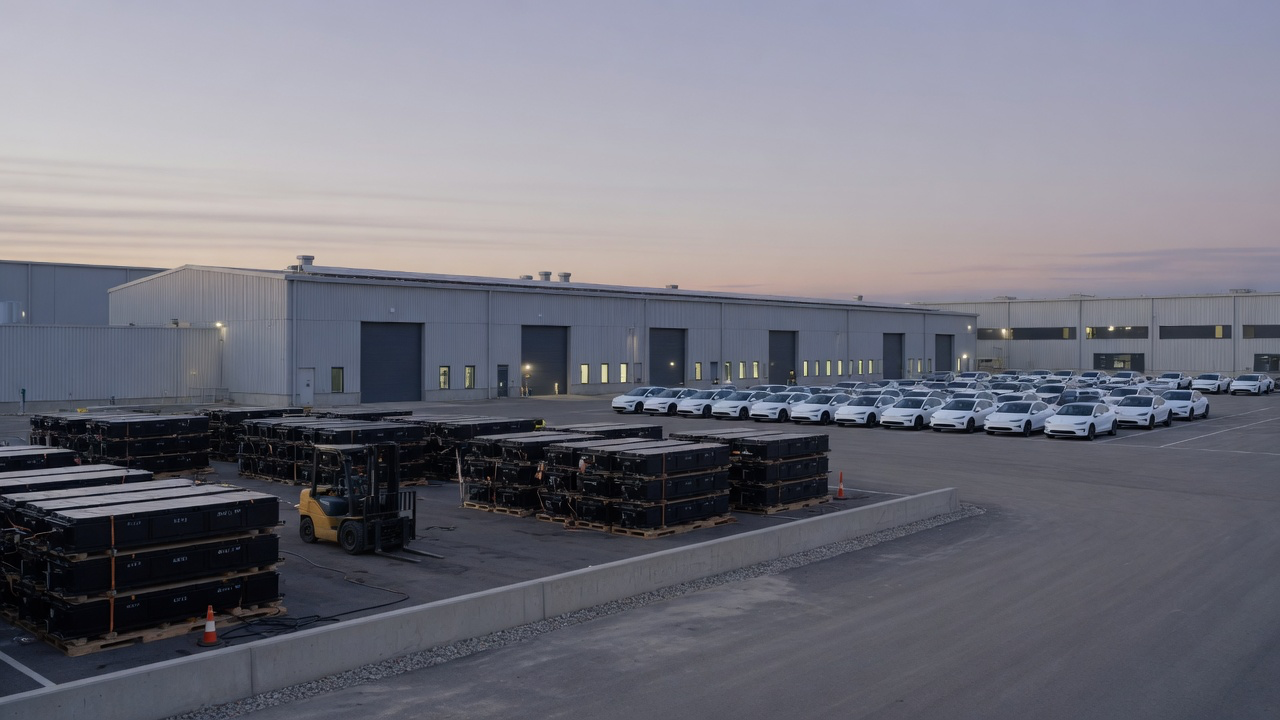
On October 2, 2026, Tesla, Inc. reported third-quarter 2026 vehicle deliveries of 486,532 units and vehicle production of 464,391 units in an SEC Form 8-K filing, beating company-compiled consensus expectations of 461,974 vehicles. The report marks a sequential rebound from the second quarter, led by Model 3 and Model Y deliveries of 478,237 units. As of the October 2 market close, investors focused on an inventory drawdown of 22,141 vehicles and record energy storage deployments.
Key Takeaways
- Consensus Beat: Deliveries of 486,532 vehicles exceeded analyst consensus expectations of 461,974 units, rising 1.33% sequentially from 480,126 units in the second quarter.
- Inventory Drawdown: Deliveries exceeded quarterly production (464,391 units) by 22,141 units, reflecting steady absorption of in-transit inventory.
- Energy Storage Expansion: Energy storage deployments totaled 13.7 GWh, up from 13.5 GWh in Q2 2026, demonstrating continued growth in Megapack utility installations.
- Earnings Catalyst Ahead: Tesla scheduled the release of its third-quarter financial results for Wednesday, October 21, 2026, after market close.
Production and Delivery Mix: Model 3/Y Drives Volume
In its regulatory disclosure furnished under Item 2.02, Tesla reported total third-quarter 2026 vehicle production of 464,391 units and total vehicle deliveries of 486,532 units in a regulatory filing. The high-volume Model 3 and Model Y vehicle lines formed the overwhelming foundation of deliveries, as Model 3 and Model Y accounted for 457,387 vehicles produced and 478,237 vehicles delivered during the third quarter. Approximately 1% of total Model 3/Y deliveries were subject to operating lease accounting.
The “Other Models” category—encompassing the Model S sedan, Model X SUV, Cybertruck, and Tesla Semi—contributed 7,004 units of production and 8,295 deliveries, with 4% subject to operating lease accounting. This compares with 8,822 units produced and 12,364 units delivered in the prior quarter, indicating that Tesla concentrated assembly output on mainstream platforms to satisfy global quarter-end retail orders.
By comparison, in the second quarter of 2026, Tesla produced 451,758 vehicles, delivered 480,126 vehicles, and deployed 13.5 GWh of energy storage products. Sequentially, vehicle production expanded by 2.80%, while total deliveries grew by 1.33%.
| Metric / Vehicle Category | Q2 2026 | Q3 2026 | Sequential Change (%) |
|---|---|---|---|
| Model 3 / Model Y Production | 442,936 | 457,387 | +3.26% |
| Model 3 / Model Y Deliveries | 467,762 | 478,237 | +2.24% |
| Other Models Production | 8,822 | 7,004 | -20.61% |
| Other Models Deliveries | 12,364 | 8,295 | -32.91% |
| Total Vehicle Production | 451,758 | 464,391 | +2.80% |
| Total Vehicle Deliveries | 480,126 | 486,532 | +1.33% |
| Delivery Surplus over Production | +28,368 | +22,141 | -21.95% |
| Energy Storage Deployed (GWh) | 13.5 | 13.7 | +1.48% |
Inventory Absorption and Margin Implications Ahead of October 21
The gap between production and deliveries provides critical clues for market participants modeling third-quarter cash flows. In Q3 2026, deliveries exceeded production by 22,141 vehicles, marking the second consecutive quarter of inventory drawdowns following the 28,368-unit delivery surplus in Q2. Selling down finished goods inventory reduces logistical holding expenses and improves operating cash conversion, though Wall Street analysts will examine whether regional discounts and zero-interest financing programs weighed on automotive gross margins.
Tesla explicitly emphasized in its filing note that delivery and storage metrics represent only two operational indicators of financial health. Net income, average selling prices, cost of goods sold, and foreign currency impacts will be detailed in the upcoming quarterly report. Tesla scheduled the release of its third-quarter financial results for Wednesday, October 21, 2026, after market close, accompanied by a live executive webcast at 5:30 p.m. Eastern Time.
The operational delivery update follows recent capital-structure activity. In late September, Tesla secured $30B in new unsecured bank credit facilities to enhance corporate liquidity and support ongoing manufacturing automation. Across the broader automotive tape, investors have also been tracking competing retail demand, such as Ford’s Q3 sales results, for broader clues on North American consumer spending. Readers seeking to understand financial statements and volume disclosures can explore the ECMSource market education hub.
Energy Storage Deployments Reach New High
Beyond passenger automotive operations, Tesla’s energy division maintained its expansion trajectory. The company reported that energy storage product deployments reached 13.7 GWh in the third quarter of 2026, up from 13.5 GWh deployed in the second quarter. The energy generation and storage business has become an increasingly significant contributor to overall gross profit, dampening the cyclical earnings swings traditionally associated with vehicle manufacturing.
Sources
- Tesla, Inc. Form 8-K Exhibit 99.1 — Q3 2026 Production, Deliveries & Deployments (October 2, 2026)
- Tesla, Inc. Form 8-K Exhibit 99.1 — Q2 2026 Production, Deliveries & Deployments (July 2, 2026)
Disclosure: This article is for informational purposes only and is not investment advice.