
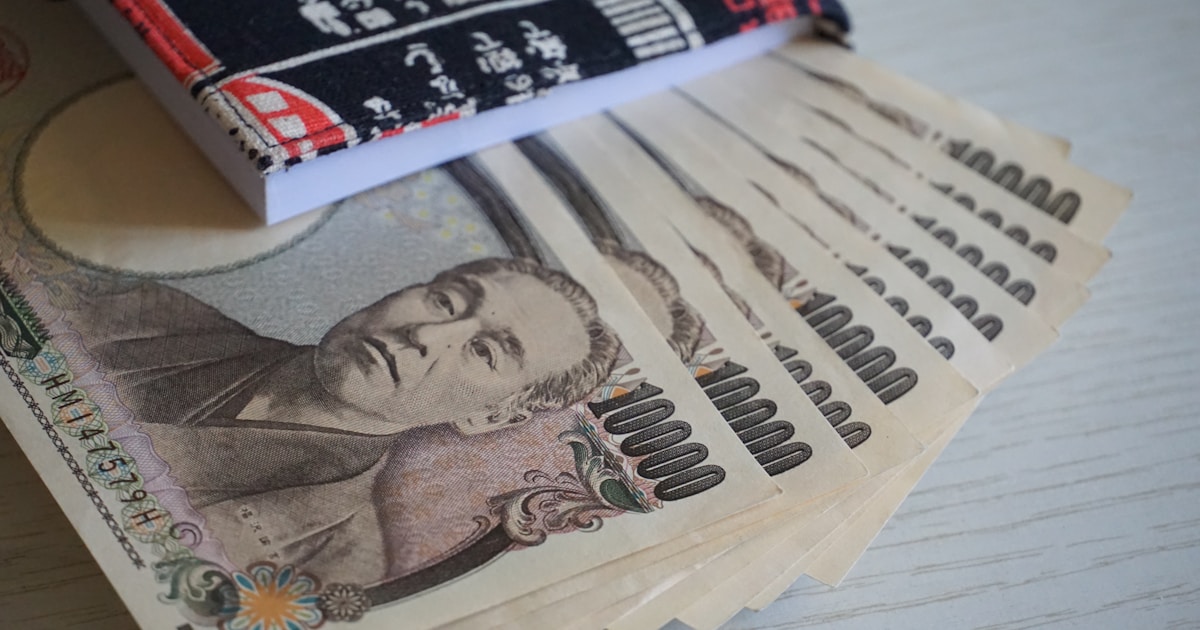
The U.S. Treasury on Friday joined the Bank of Japan in a coordinated intervention to buy Japanese yen, marking the first time in more than a decade that Washington has intervened to prop up the currency. The Federal Reserve Bank of New York, acting as Treasury’s agent, sold euros to buy yen through Goldman Sachs and Morgan Stanley, according to a Financial Times report relayed by Yahoo Finance.
The dollar had briefly touched roughly ¥164 in recent sessions — its highest level since 1986 — before Japanese and now U.S. officials moved to reverse the slide. On the day of the U.S. operation, USD/JPY fell from about 158.9 around 4:14 p.m. ET to roughly 157.6 just before 5 p.m., an intraday move of more than a full yen inside a 45-minute window.
What Washington actually did
The operation was executed through the Exchange Stabilization Fund (ESF), the Treasury’s off‑balance-sheet vehicle for foreign-exchange operations. Treasury Secretary Scott Bessent’s notepad, glimpsed by reporters, showed a target range of “$5–10 bil”. Rather than sell dollars for yen — which would drain Treasury’s dollar liquidity — the New York Fed chose the more efficient route of selling euros for yen, using ESF euro holdings.
The mechanics matter because the ESF’s headline size is misleading. Total assets are large, but most sit in Special Drawing Rights at the IMF. Truly deployable currency reserves — euros and yen the Treasury can sell on short notice — are a small fraction of that. Selling euros lets Washington pressure USD/JPY without touching its main dollar or SDR position, and it gives Tokyo a partner that isn’t simply printing yen to defend the fix.
Japan moved first — and much bigger
Tokyo triggered the sequence on Thursday. The Ministry of Finance instructed the Bank of Japan to sell dollars and buy yen in an operation Yahoo Finance sized at roughly $58.97 billion based on central-bank data, followed by additional intervention during New York hours on Friday. That solo action alone was one of the largest single-day yen-buying operations Japan has ever conducted.
It fits the pattern Tokyo has established since the yen began its multi-year slide against the dollar. In the September–October 2022 episode, the Bank of Japan sold more than ¥9 trillion of dollars to buy yen. In April–May 2024, it again spent more than ¥9 trillion defending the currency. Both were solo operations — the U.S. Treasury declined to participate, effectively signaling that a weak yen was not, at that moment, Washington’s problem.
Why the U.S. joined this time
Direct U.S. intervention in the yen market is genuinely rare. The most cited precedent is 1998, when Treasury Secretary Robert Rubin approved a joint operation to strengthen the yen after it had weakened to roughly ¥147. A 2011 coordinated intervention with the G7 went the opposite direction, selling yen after the Tohoku earthquake sent the currency to a post-war high near ¥76. In both directions, the U.S. participates only when Washington judges that a currency dislocation threatens something beyond one country’s export competitiveness.
Three factors likely tipped the calculus this time:
- Disorderly one-way move. USD/JPY had risen through ¥160 and pushed toward ¥164 in a stretched, low-liquidity move. Coordinated language from the G7 typically calls out “excessive volatility and disorderly moves” as the trigger — that box was checked.
- Carry-trade risk to global markets. A yen that keeps sliding fuels the yen carry trade — borrow cheaply in yen, buy higher-yielding assets. A sudden reversal, as in August 2024, has historically detonated risk positions worldwide. Backstopping the yen is, in part, backstopping U.S. equities.
- Political optics. A dollar this strong against a G7 ally raises tariff and trade tensions. A visible show of coordination cools that pressure.
Recent yen intervention history
| Episode | Direction | Who Intervened | Approx. Size |
|---|---|---|---|
| Sept–Oct 2022 | Buy yen | Japan (solo) | > ¥9 trillion |
| Apr–May 2024 | Buy yen | Japan (solo) | > ¥9 trillion |
| Jul 31, 2026 (Thu) | Buy yen | Japan (solo) | ~ $59 billion |
| Aug 1, 2026 (Fri) | Buy yen | Japan + U.S. (joint) | ~ $5–10B U.S. |
| Mar 2011 | Sell yen | G7 coordinated | Not disclosed |
| Jun 1998 | Buy yen | Japan + U.S. (joint) | ~ $6 billion (est.) |
What the price did
Does intervention actually work?
Academic work on FX intervention is mixed but has coalesced around a few things. Solo, sterilized interventions — a central bank buying or selling its own currency without changing monetary policy — tend to have short-lived effects unless they are large, unexpected, and reinforced by policy fundamentals. Coordinated operations are more durable because they signal that multiple sovereigns are prepared to defend a level, which raises the risk for traders on the other side.
The math for the yen is unforgiving. As long as U.S. two-year yields sit meaningfully above Japan’s, the carry differential pays traders to be long dollars against yen. A 100-basis-point yield gap is roughly a 1%-per-year cushion for the carry trade — and the current gap remains multiple percentage points. Intervention can knock USD/JPY off a top and buy time; it does not, on its own, close the fundamental gap.
That is why market attention now shifts to two questions. First, how quickly can the Bank of Japan credibly signal that the next policy move is another rate hike — not a pause — to narrow the differential? Second, does Washington actually follow through with a second or third round of intervention if USD/JPY grinds back above ¥160? A single joint operation is a warning shot. A pattern would be a regime change.
What to watch next
- Monday Tokyo open. The first real test. If USD/JPY holds below ¥158, the operation has done its short-term job. If it snaps back above ¥160, the market will conclude intervention was a one-off.
- BOJ commentary. Any hint of an accelerated rate-hike path is the durable counterpart to intervention.
- Treasury’s next quarterly ESF report. That is where the actual settled U.S. size will be disclosed, and where the currency composition of the operation (euros sold, yen bought) will be confirmed.
- Carry-trade positioning. CFTC Commitments of Traders data on JPY futures will show whether speculators are covering shorts — the tell that intervention is biting.
Sources
- Yahoo Finance / FT report: U.S. Treasury undertakes intervention for yen
- U.S. Treasury — Exchange Stabilization Fund overview
- Federal Reserve Bank of New York — Quarterly Report on Foreign Exchange Operations
- Historical context on yen interventions (BOJ / MoF data)
- Exchange Stabilization Fund — statutory background
Disclosure: This article is for informational purposes only and is not investment advice.