
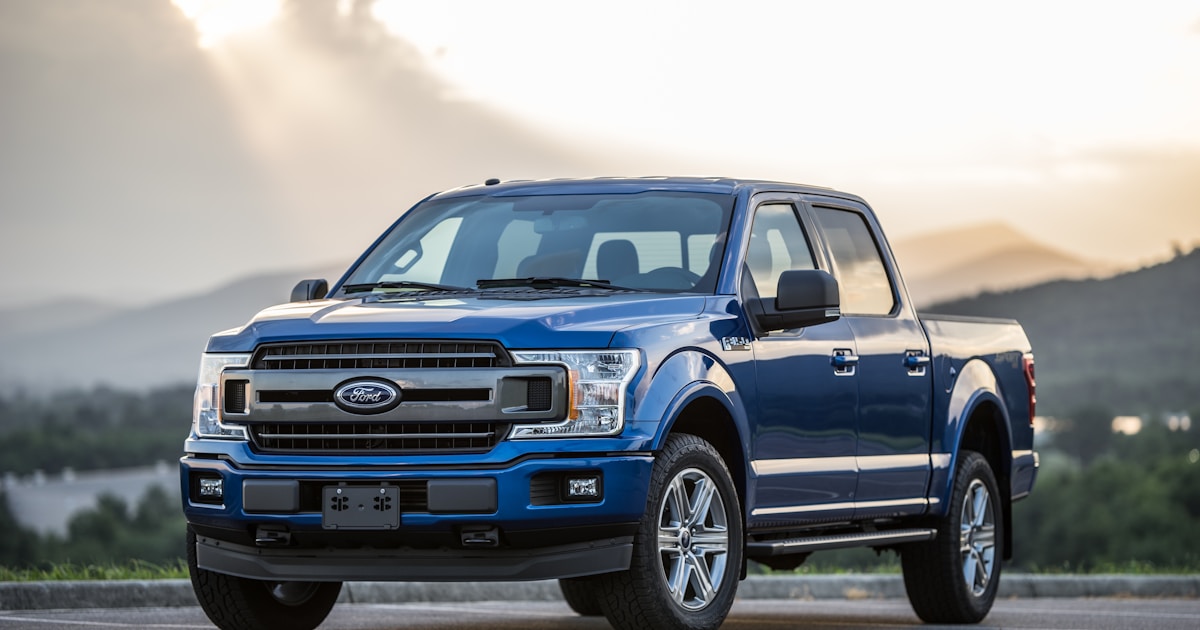
Ford Motor Company (NYSE: F) reported second-quarter 2026 results after the close on Tuesday, July 28, that topped Wall Street expectations on both the top and bottom line and drove management to raise full-year guidance. Shares climbed roughly 5% in pre-market trading Wednesday, quoted near $15.72 versus a Tuesday close of $14.96, according to Yahoo Finance.
The print delivered a rare combination for the U.S. legacy automakers this cycle: revenue that held up, margins that expanded despite ongoing tariff headwinds, sharp loss narrowing at the money-losing EV unit, and a guidance raise that shifts the full-year adjusted EBIT range to $10–11 billion — roughly $1 billion higher at the midpoint than the prior outlook.
Q2 by the numbers
Revenue came in at $48.3 billion versus consensus of roughly $47.5 billion. Adjusted diluted EPS printed at $0.42, comfortably above the $0.35 analyst consensus. On a trailing basis, the company’s GAAP EPS remains negative — Ford’s reported price-to-earnings ratio was −9.69 heading into the print, per Investing.com — a reminder that the ongoing EV losses at Ford Model e have kept reported earnings suppressed even as the auto and services businesses generated cash.
| Metric | Q2 2026 Actual | Consensus | Beat/Miss |
|---|---|---|---|
| Revenue | $48.3B | $47.51B | +$0.8B |
| Adjusted diluted EPS | $0.42 | $0.35 | +$0.07 |
| Ford Blue segment EBIT | $1.1B | n/a | +72% YoY |
| Ford Model e segment EBIT | −$919M | n/a | Loss narrowed 31% YoY |
Segment story: Blue cash-generative, Model e loss narrowing
The segment mix is where the print really turned. Ford Blue — the internal-combustion and hybrid business housing the F-Series pickups, Explorer, Bronco, and the balance of the ICE lineup — posted $1.1 billion of EBIT, up 72% year over year. That is the profit engine that funds everything else at Ford. Management pointed to pricing discipline and a “resilient” consumer as the drivers, according to reporting from Investing.com.
The other side of the segment story is Ford Model e, the pure-EV unit. Model e still lost $919 million in the quarter, but that loss was 31% narrower than the year-ago period. For a business that has been the biggest overhang on Ford’s reported earnings and its equity multiple, a narrowing loss is arguably the single most important disclosure in the release. Management has been re-architecting the EV portfolio around lower-cost platforms and reduced spending; the Q2 number is the first significant evidence that the plan is showing up in the P&L.
The guidance raise
Management now expects full-year 2026 adjusted EBIT of $10–11 billion, versus the prior outlook that implied roughly $1 billion less at the midpoint. Full-year adjusted free cash flow guidance moved to $6–7 billion. Ford said it expects roughly an additional $1 billion of EBIT improvement weighted toward the second half of the year, per Investing.com’s summary of the release.
Raising guidance mid-year is a strong signal from any auto CFO, and it is a particularly strong signal in 2026. The industry has spent the first half of the year absorbing tariff-related cost inflation, working through inventory imbalances at dealers, and defending pricing against high inventories at import-heavy competitors. A guidance raise anchored in disciplined pricing and narrower EV losses is the version of the Ford story bulls have been waiting for since the Model e write-downs of 2024–25.
Tariff and macro backdrop
The Q2 release lands on the second day of a two-day Federal Open Market Committee meeting scheduled for July 28–29, 2026, with markets primarily focused on the Fed’s posture on rates given hot inflation prints and geopolitical stress in the Middle East. Auto affordability has been a running theme in the FOMC minutes throughout 2026, and Ford’s ability to hold pricing without ceding share is a real-time signal on consumer resilience.
Tariffs remain the single biggest known variable in the P&L. Ford’s 2026 results have absorbed cost pressure from the reworked tariff schedule announced earlier in the year, but the ability to raise guidance despite that overhang argues that the mitigation playbook — sourcing shifts, higher-margin mix, and price — is working better than the sell-side had assumed.
What to watch into the second half
- Q3 and Q4 Model e trajectory. A 31% narrowing in Q2 is a data point; two more quarters of the same makes it a trend and reshapes the EV write-down debate.
- Pricing versus incentives. The industry has been discounting inventory-heavy models aggressively; Ford Blue’s pricing discipline is the equity thesis, not incentives.
- Free cash flow print. The $6–7 billion FCF guide is what funds the dividend and any capital return; watch for management’s tone on buybacks vs. balance-sheet strengthening.
- Ford Credit. The finance arm is a swing factor as used-car values normalize and delinquency trends develop; treat any weakening as a leading indicator on consumer credit.
- Fed on rates. A dovish shift lowers the discount rate on Ford Credit’s book and helps affordability at the dealer; a hawkish hold does the opposite.
Bottom line
Ford put together the kind of quarter that changes the near-term narrative: a top- and bottom-line beat, a guidance raise anchored in operating performance rather than accounting, and the first meaningful evidence that Model e losses are inflecting. None of that resolves the longer-term questions about EV strategy, tariff volatility, or where auto affordability lands in a 5%-mortgage economy. But it gives management a stronger platform going into the second half of 2026 and it gives the equity a reason to trade off its recent lows.
Sources
- Yahoo Finance — Ford Motor (F) quote page and Q2 2026 coverage
- Investing.com — Ford Motor summary with Q2 2026 numbers
- Investing.com — Ford Motor news feed, July 28–29, 2026
- Federal Reserve — FOMC meeting calendar (July 28–29, 2026 meeting)
Disclosure: It is for informational purposes only and is not investment advice.